'If you are leading with that people-first consideration, you can have that growth mindset,' says GHD people leader for Americas
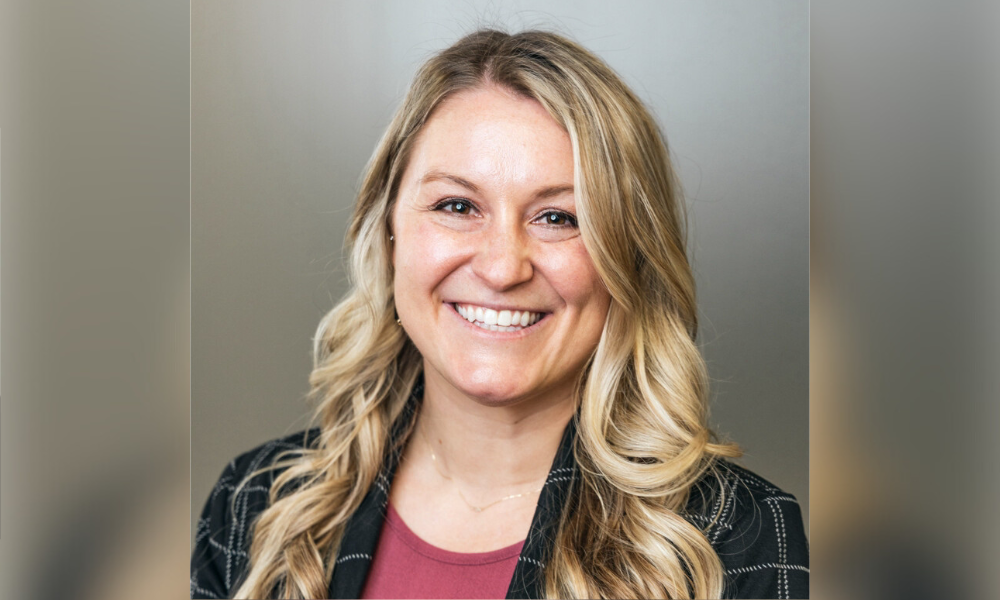
Danielle Huffman’s journey to becoming an HR executive is rooted in her formative years in central Pennsylvania, where she grew up in a farming community.
Her family’s transition from agriculture to running a business provided her first exposure to the intricacies of working with people and managing a business.
Initially, Huffman set her sights on finance, declaring it as her major at university with the intention to “make a lot of money.” However, a summer spent working in finance shifted her perspective and reinforced her interest in the people side.
She added human resources as a double major, and after completing her Bachelor of Science in Business Administration in Human Resource Management and Finance from Shippensburg University, she also pursued an MBA at Lebanon Valley College.
Huffman went on to work for nearly 12 years at global engineering and professional services firm WSP USA, where she most recently served as senior vice president of HR.
And in July 2025, Huffman took on a new role at a new company: people leader for the Americas at GHD. She now oversees human resources for 4,500 professionals across more than 130 offices in the U.S., Canada and Chile.
Addressing HR challenges in the AEC industry
The decision was driven by an alignment with its focus on people and strategic integration of HR into its core operations, according to Huffman.
“I was really impressed with ... their emphasis on people; I would say that they would consider that a differentiator in the external market as well,” she says, adding the company’s chief people officer is also the chief strategy officer, which “felt like a really good indicator to me of how core people were to the strategy of GHD and what they wanted to do.”
GHD’s Americas region represents 40% of the company’s global workforce, and the company has been recognized as a top employer in both Canada and the U.S. The professional services company operates in the global markets of water, energy and resources, environment, property and buildings, and transportation and has a network of 11,000+ professionals connected across 160 offices on five continents.
The AEC industry (architecture, engineering and construction) presents unique HR challenges, from ensuring technical excellence to addressing broader societal issues. Huffman points to recent events, such as the flooding in Texas, as examples of how the industry’s work impacts both large-scale and everyday life.
“When we think about being in that industry, and how do we, from a function [standpoint], partner with and think about that technical excellence, [it's about] how can we solve those problems in terms of resilience, [being] sustainable, the coastal impact of that, and the challenge linked to that, to ensure true technical excellence and solving some of the world's biggest problem — making sure our people are ready for those types of things, that we have systems and processes in place to support our clients in those moments.”
Beyond industry-specific challenges, Huffman acknowledges the broader shifts affecting all sectors, including digital transformation and the need for ongoing skills development.
“Digital is going to change the way that we work, fundamentally… that's going to change the plan designs, how we deliver to our clients,” she says. “It's also continuing to think about how we will work smarter, more effectively and continue to be profitable as well. There's the reality of that component.”
‘Success and winning is contagious’
Underlying Huffman’s HR leadership is the need to understand what motivates and challenges employees, she says.
“The ticket to entry is understanding what makes our people tick. So, some of that has to do in terms of, of course, what motivates them, what challenges them, what's keeping them up at night, what excites them [and] ultimately, spillover — if they're excited and engaged, how can we better serve our clients?”
Huffman emphasizes the importance of fostering a culture of high trust and high accountability within her teams.
“If you are doing those things and leading with that people-first consideration, you can have that growth mindset because you're ensuring that you're prioritizing the right things to get to the growth that you ultimately want, depending on whatever measure you're tracking that growth towards.”
She draws on her sports background to illustrate the importance of making growth enjoyable.
“Success in business, it can be really enjoyable, too; success and winning is contagious. So, if you're bringing people along and helping them understand the ‘why’ behind doing things, what you're trying to do, I think that growth can be fun... and it doesn't necessarily feel like it's one or the other, that you have that operational excellence at the expense of your culture — you can have both of those existing.”
What’s meant by ‘culture’ in mergers and acquisitions
Having gone through mergers and acquisitions (M&As) during her career, Huffman emphasizes the importance of understanding what’s meant by “culture” in those times of upheaval.
While cultural alignment is frequently cited as a priority, it is easy to conflate systems and processes with culture itself, she says.
“I call it the work of integration. And there's a lot of stuff — systems, processes, benefits, all of that HR stuff — and I think it's really easy to spend the time there in terms of ‘How are we going to do benefits harmonization? How are we going to align career titles?’ and think that that is culture, when it is not — that's not the culture of the organization.
"Those are systems and processes that hopefully enhance your culture and support it, at a minimum, but that is not the culture."
However, Huffman also stresses the importance of investing time in understanding and integrating cultures.
“I always say you're going to spend double the amount of time that you think that you need on that culture piece of the strategy piece, to make sure that you're really understanding at the beginning the differences, truly, so that as you move forward, it's that true combination, and you're moving forward together, you're bringing people along with that… [and] communicating consistently.”
Success as a female HR leader
Reflecting on her career, Huffman attributes her success to mentorship and a growth mindset.
“I have been the beneficiary of a lot of great mentors over my career… and especially in the human resources field, we have the opportunity to work with a lot of leaders and see different leadership styles,” she says. “We support leaders and employees in mapping out their own career journey, so there's so much opportunity for learning ourselves as we're doing our day-to-day job.”
Huffman also emphasizes the importance of continual self-improvement and goal setting.
“I continually challenge myself in terms of making sure there’s some of that hustle: ‘What skills am I developing? How am I stretching myself?’” she says. “I've been pretty systematic throughout my life, both personally and professionally, around ‘What are my goals? What am I working towards?’ And I feel like that's really helped me stay aligned towards meeting some of those objectives.”
Huffman’s perspective on work-life balance is shaped by her own experience as a mother of three young children. She acknowledges the challenges and the importance of organizational support and home support, and encourages women to believe that they can be both successful professionals and dedicated parents.
“I want women to really believe [that] you can be both of those things.”