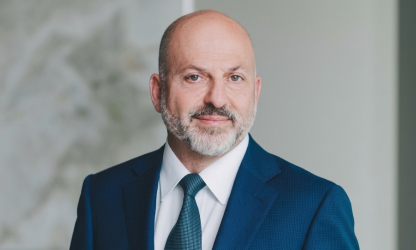
'Success is still about good leadership, team building and supporting individuals'

“I was shocked at how many teams hadn’t had these discussions.”
So says Thomas O’Neill, industrial organizational researcher and psychology professor at the University of Calgary, in talking about employers that are still unclear about the hybrid model of working, combining at-home and in-office work.
And today, hybrid is not only wanted by the majority, it’s in the must-have category, he says.
“If you want to attract the best people, they are asking about and insisting on hybrid options. We’ve lost people at the university because of having too stringent of policies and you’re at risk for losing the best people. That’s one of the biggest issues.”
The positives of hybrid work
Whether hybrid is working well or not, 60% of respondents say they prefer its implementation, according to the Global Hybrid Working Report 2023 from Insights, a people development company in Dundee, Scotland.
“It’s not a panacea; it’s not a curse, it doesn’t change everything but that hybrid context is something else to be considered and navigated whether you’re an individual employee or a team or a leader, so it’s just something else that now has to be added into the mix of people in the working environment,” says Tanya Boyd, product and learner experience architect awareness at Insights.
The results were based on a survey of 1,750 professionals from seven countries between Aug. 1 and 8, and this included about 250 from Canada.
Encouragingly, 50% of managers say that the hybrid environment has had a positive impact on team performance and agility, she says.
“The counterpoint to that — that’s just as important — is that only 15% saw hybrid as having a negative impact; so, really, you could say 85% of managers saw hybrid as either positive or having no impact on team performance and agility whereas only 15% saw it as negative,” says Boyd.
“Hybrid itself is neither good nor bad and success is still about good leadership, team building and supporting individuals so that they can be as personally effective as possible. Hybrid is just another component of context to consider for both for individuals, for teams and for leaders.”
Leaders are in a “burnout sandwich” when it comes to trying to manage the new realties, says an employee engagement expert.
Supporting the hybrid model
However, when it comes to organizations offering support, the story is different.
“Some companies are taking steps to really support employees and managers in that hybrid space but most of them aren’t,” says Boyd.
In order to get it right, it comes down to pre-planning before a model is implemented, which can take from six months to a year, says O’Neill.
“The organizations having a well-designed programming policy will go a long way, because leaders will naturally have to defer to the policies, and if those policies are clear and thoughtful, that’s going to put the leader way ahead. Instead, if they’re having to clean up a mess that the executives made, right away they are way behind.”
There are varying perceptions out there about which is better, remote or in-office, found another survey.
Training materials should be provided for managers as well, says O’Neill and these can take many forms.
“We might have workshops in person or virtual, or leader journeys or pathways where they can work through the key issues like ‘How do you establish and maintain trust and rapport in a hybrid work environment?’”
As well, establishing a hybrid and remote team charter can help, he says. That can involve leaders helping their teams decide on the key activities and behaviours that are expected before, during and after a meeting.
“How do we decide if a meeting is going to be a hybrid meeting, remote meeting or in-person meeting?” says O’Neill.
Strengthening bonds between workers and leaders
Three in 10 workers in the Insights survey reported it was harder to make personal connections at work with the hybrid model — but that responsibility lies most heavily with managers, according to O’Neill.
“This is the importance of leaders, knowing their direct reports on a personal and professional basis — they have to take the time to get to know what makes them tick,” he says.
“[It’s about] those empathetic kinds of conversations, just learning how to listen. So many leaders, they think in a leadership role what you do is you just talk and tell people what to do and it’s actually the reverse: less talking and more listening. I think if leaders can feel that kind of trust and connection, and be available for people when they need it, then people will return that investment in terms of engagement and productivity.”
For HR leaders grappling with the way to do hybrid well, they should provide “flexibility within a framework,” says O’Neill.
“They need some guardrails, signposts, guiding principles… and from there, empowering and trusting and training leaders to make decisions that are best for their teams.”