
Israel-Hamas conflict raises issues around off-duty conduct, political expression and workplace conflict
Recently, several Moxies employees were filmed outside their restaurant, cheering on a protest passing by through downtown Toronto. The participants were part of a National March for Gaza on Oct. 21.
But their employer wasn’t happy: “We sincerely apologize to anyone impacted negatively by these actions. We ask that our team behaves respectfully & demonstrate empathy & sensitivity & can assure you that a formal investigation has been launched & appropriate disciplinary actions will be taken for all involved.”
The actions of these employees did not reflect the company’s views, said Moxies on X (formerly Twitter).
“Participating in demonstrations is not permitted in uniform/on premises, and is certainly not reflective of our corporate culture.”
We are deeply committed to a safe & respectful space for our team, guests & community. The actions of our employees do not reflect our company views. Participating in demonstrations is not permitted in uniform/on premises, and is certainly not reflective of our corporate culture.
— Moxies (@moxies) October 22, 2023
Once again, politics had entered the workplace and generated controversy. As we’ve seen with the “trucker protest” in Ottawa or the election of former U.S. president Donald Trump, conflicts arise – and employers face a tough challenge in dealing with the issue.
‘Tricky and difficult terrain’
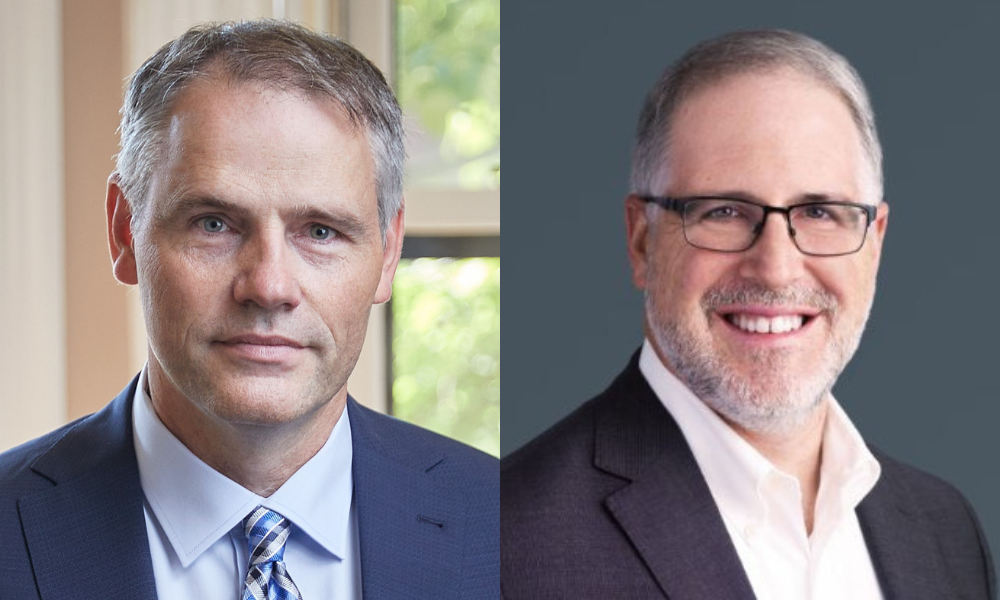
“It's tricky and difficult terrain for employers,” says Paul Champ, principal lawyer at Champ & Associates in Ottawa.
“Employers should be careful about jumping to conclusions and taking hasty actions, and they should just try to consider things from the perspective of their employees and try to deal sensitively with these matters.”
The other challenge? The court of public opinion when an employer takes remedial action, even if legally justified in doing so, says Dave McKechnie, partner at McMillan in Toronto.
“People get incredibly confused about the concept of freedom of speech. When it comes to discipline by your employer, they say, ‘Well, isn't this a violation of the freedom of speech?’ Well, no, it's not; freedom of speech doesn't mean freedom from consequences for such speech.
“So this is not government eliminating freedom of speech, this is an employer saying, ‘We paid you to do job X, not to appear at this rally in our uniform and implying any kind of support by the company or the store or the restaurant’ or whatever the case may be.”
Off-duty conduct and discrimination
So, what are the legal considerations when it comes to employees taking a political stance – whether on social media or in the workplace?
When it comes to off-duty conduct, it could involve, for example, “extreme speech which is clearly offside,” says McKechnie, such as an identifiable person in a workplace, with workplace followers, who posts something that is blatantly antisemitic or Islamophobic.
“That's one end of the spectrum where clearly your workplace harassment discrimination policies might be engaged.”
Then you have the majority of off-duty cases, which is a grey area, where somebody might say, for example, that what's happening in Palestine with the Israeli bombings is a humanitarian crisis, he says.
“That, to me, doesn't land under discrimination; that's somebody's opinion. And you can disagree with it, not disagree with it, but it doesn't engage an employer’s workplace discrimination or harassment policies.”
Exceptions for off-duty conduct
Generally, if it’s considered off-duty conduct, an employer cannot discipline or take action, says Champ. But there are exceptions.
“If the employees, on their social media posts, are referring to their employer, saying where they're employed, then that can be potentially an issue, or if it's an employee whose work duties require a high level of public confidence and trust, like a teacher or police officer.”
As an example, a Canadian teacher who was a Holocaust denier was terminated for cause after writing articles and op-eds in the 1980s, he says.
When it comes to the Moxies example, that involved a nexus with the workplace as the individuals were wearing uniforms and on the restaurant premises, says Champ.
“A reasonable member of the public could infer that it's in some way associated with the business.”
Internal discussions about politics
When it comes to internal discussions between employees or posting on a group chat at work, that can easily spiral into a workplace issue, says McKechnie, especially with something like the Israel-Hamas situation, which “is an exceptionally difficult issue.”
There are two big considerations, says Champ.
“Does it somehow harm the employer’s public reputation or does it harm the employer’s operations? So someone is making comments internally in the workplace, and other employees are upset and maybe don't want to work with that employee; well, that affects the employer’s operations.”
It’s also really important to understand what discriminatory language is, says McKechnie.
“What's the basis for a discrimination complaint claim? And then, for those jurisdictions that have protections for political speech, is this something that comes under political [belief]?”
Some provinces – such as Nova Scotia, New Brunswick and B.C. – have human rights legislation, meaning there’s a protection against discrimination on the grounds of political beliefs, says Champ.
“If an employer lets you go, paid you notice, because they didn't like that you went to a pro-Palestinian protest, you likely would have a solid human rights claim for discrimination on that ground and political belief.”
What level of discipline is appropriate?
Following the incident, the Moxies employees were dismissed, said a company spokesperson.
“Moxies is a hospitality company, not a political organization. Any actions we have taken with our team members are solely related to employee behaviour while at work and in uniform.”
This is where you have to divorce the cause from the action, says McKechnie.
“This is on-duty conduct — they're actually working; they're participating in a demonstration, however minor; that's not what they're getting paid for. So that's an easier piece of this to deal with.”
It’s reminiscent of cases where an employee was seen with their company vehicle, with its logo, at the “freedom convoy” in Ottawa, for example, he says, “which can be taken by a member of the public as the company supporting whatever that cause is.”
It's definitely not cause, says Champ, but unless someone is unionized, they can be let go for basically any reason.
“In most provinces in Canada, if the employer finds out that you're posting about Palestine or Israel and doesn't agree with your views, they can let you go, provided they pay you fair compensation, like reasonable notice.”
But if an employer said to an employee “Hey, I saw from your social media that you were at a protest last night, I don't want you going to any more protests,’ that would be a problem. I think that would be beyond the bounds of an employer,” he says.
However, if an employer like Moxies told employees they cannot be wearing a company uniform and cheer on a protest from their establishment, and those employees did it again, “that's insubordination,” says Champ.
Contextual approach to controversial comments
You have to take a contextual approach, says McKechnie.
“If it's abundantly clear that it's Islamophobic comments that are being made, or antisemitic comments that are being made, you may jump right to cause depending on how they were made, where were they made, where they made them public,” he says.
“If somebody is on Instagram and publicly identifies themselves as a member of a company and makes truly antisemitic comments… uses slang, uses racist terminology, it's quite easy to make an argument that that person can't be in the workplace anymore… particularly if they're working with members of the faith that they've just disparaged, then that's an easy decision.”
But if somebody is saying, “I think Israel has now gone too far in dealing with this issue,” that's not antisemitic, that's an opinion, says McKechnie.
“It's not discriminatory. And so the employer wants to take a more nuanced approach to say, ‘Look, we make widgets, you come in, you pull this lever, the widget comes out, we ship the widget to our customer, we make money. We are not here to solve the Middle East crisis. We're not here to have these debates. We want everybody to have professional speech, please keep your personal opinions personal and outside of the workplace.’
“And you deal with it that way.”
Why policies matter to prevent workplace conflict
In terms of workplace policies around politics in the workplace, there should be two, according to McKechnie. One would be a workplace discrimination policy, which is often mandated and should be “relatively robust and up to date.”
The second would be a social media policy or code of conduct that would govern whatever the speech is, he says.
“A number of employers would have policies about your solicitation in the workplace, about proper use of company vehicles, company uniforms, etc.”
If an employer doesn’t have a policy, then they have less of a case, says Champ.
“But let's be clear — it has to be a policy that's governing what you're doing while you're working. So let's say someone wanted to wear a Palestinian keffiyeh [or] the Palestinian scarf while they're working, and it's a public-facing job — like you're working at Staples or whatnot — I think reasonably an employer might be able to say… ‘I don't want you wearing political statements, etc, while you're working,’ and would have to communicate that to the employee, either by policy or otherwise, before they could take discipline.”
Preventing toxicity in the workplace
The most challenging situation that employers may face is if someone sends around a work email to everyone saying they’re upset about what’s happening in Gaza, while another employee who’s a firm supporter of Israel accuses their colleague of creating a toxic workplace, he says.
“That’s much harder for an employer; I think an employer has to be really sensitive when they approach those kinds of issues.
“There isn't much case law guiding us right now on those kinds of situations. And I think an employer just needs to be very empathetic and sensitive, and maybe try to facilitate dialogue if people really are insistent expressing political views in the workplace.”
Over the last two years, particularly in the United States but increasingly in Canada, these political issues are coming up in the workplace, says McKechnie, and employers really need to start thinking now about how to prepare.
“Employers need to have a really clear concrete action plan; they need to have really clear policies and they need to engage in training with their employees about ‘How do we have respectful communications?’”



