Experts highlight importance of succession planning, mentorship in advancing women of colour
Women remain largely underrepresented in executive and leadership roles in corporate Canada — and for women of colour, the numbers have dropped even further.
Representation of women of colour in leadership fell from 19.7 per cent to 14.6 per cent year over year — the largest single-year decline recorded — according to the Prosperity Project. At the executive officer level, women of colour hold just four per cent of seats, despite making up 13.6 per cent of senior management roles.
The report raises a question — what is preventing women of colour from reaching the top?
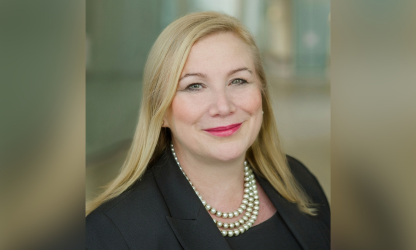
Julie Savard-Shaw, executive leader of the Prosperity Project in Canada, says the decline is mainly due to intersecting identities. Women in the workplace already must navigate gender bias — but for women of colour, that experience is compounded by racial discrimination.
“Combined, I do think that is explaining the decline in representation,” she says.
Why women of colour hit the celling
One of those complexities, Savard-Shaw says, comes down to how promotion decisions are made.
“The higher up you go the leadership ladder, the less promotion is about pure performance and the more it’s about who you know, who you have access to, and how an individual is seen as the ideal leader,” she says. “Women with intersecting identities simply aren’t being tapped on the shoulder for those roles.”
Savard-Shaw also points out it has to do with the roles women tend to be concentrated in overall — support roles such as communications and HR — that make it hard to move up beyond the senior management pipeline. To be a CEO, you need operational experience, and that is partly why there are fewer women CEOs, she says.
So, employers need to think differently.
“When a company is doing succession planning, if a woman has many of the qualities you want in a CEO but lacks operational experience, work to give it to her. She may not be your immediate CEO, but think five to 10 years out,” Savard-Shaw adds.
Why it matters who sits at the top
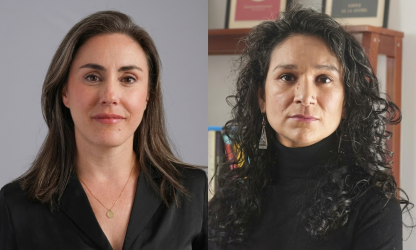
Barnini Bhattacharyya, an assistant professor of organizational behaviour at Ivey Business School at Western University in London, Ont., says getting women of colour into executive roles is about more than optics.
“There is actually a lot of research that finds that organizations with a diverse employee base tend to demonstrate not just more creativity and innovation, but actually a stronger bottom line — better revenue," she says.
Leaders with different backgrounds and lived experiences can bring different perspectives to decision-making, Bhattacharyya says. That can shape workplace culture well beyond employees who share their identities.
“When you have someone in a leadership role who understands the experience of being othered, of navigating systems that weren’t built for them, they tend to be more empathetic leaders,” she says. “They tend to create more inclusive cultures, which benefits everyone in the organization.”
The access problem
So, how do we move women past middle management?
Savard-Shaw points to proper mentorship and sponsorship — but from leaders who share similar representation, who have walked a similar path and can share how they navigated it, she says.
“It’s the whole idea of ‘See her to be her,’” she says. “If there are fewer Black women in positions of leadership, you automatically have fewer potential mentors and sponsors.”
Research shows that women of colour tend to prefer support that comes from outside their own organizations — out of a real fear that reaching for advancement internally will see them labelled as either too ambitious or too aggressive, says Savard-Shaw.
A 2024 McKinsey & Company Women in the Workplace report found that women of colour have comparatively less access to mentorship, sponsorship, and career-development opportunities, even though they identify those relationships as important to career advancement.
What organizations need to do differently
For Bhattacharyya, the change comes through organizations restructuring how they approach promotion. That includes looking at who is identified for high-potential programs, who has access to senior projects and stretch assignments , she says.
“If those processes are not intentionally designed to be inclusive, they will default to replicating whatever has always existed."
Savard-Shaw supports that point, discussing how organizations need to rethink succession planning. Whether someone is identified as high-potential often comes down to one manager’s opinion — and if that manager holds any bias, the woman of colour on their team simply never is put forward, she says.
Even then, Bhattacharyya says advancing women of colour is only half the job.
“Getting in the door is one thing — staying, succeeding, and having your voice actually heard is another,” she adds.