‘The expectations of the employer may outpace advancements in the technology’: Experts discuss legal risks such as constructive dismissal amid soaring AI use

Recently, a Robert Half Canada survey found that 62 percent of Canadian professionals are burned out – up from 47 percent just months earlier.
More alarming: AI is a significant factor, with 37 percent saying it adds pressure "to have even higher productivity." Respondents also reported that AI is “creating concerns around job security if new tools aren’t adopted” (32%), alongside “overwhelm and fatigue from having to constantly learn new tools” (29%).
The struggle was shared on popular tech podcast Lenny's Podcast recently, when tech pioneer Simon Willison shared that the pace at which he's been operating AI agents has seen him burned out by 11 a.m., with colleagues losing sleep to keep their AI agents running overnight and qualities of gambling and addiction emerging.
"AI is supposed to make us more productive. It feels like the people that are most AI-pilled are working harder than they've ever worked," said the veteran software engineer and AI pioneer who founded the software that powers Instagram and Pinterest.
How AI burnout works
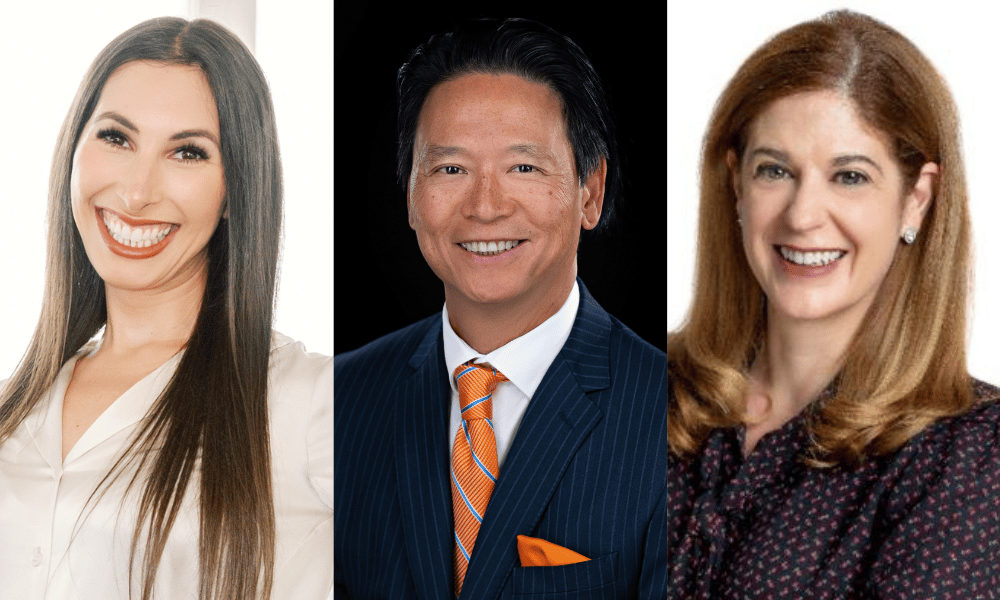
Randy Ai, the Toronto employment lawyer who represented a Toronto area corporate recruiter whose AI-induced delusions were reported by Canadian Lawyer and later the New York Times – says the dynamic driving AI burnout is not new.
Technology has consistently given employers a reason to raise expectations, he says, and AI is only the latest iteration.
"The technology doesn't actually make people have more time, it just gives employers a reason to give you more things to do," Ai says, pointing to digital design software in the 1990s as a template: work that once took three days was suddenly expected in six hours, because the tool made it possible.
That same logic now applies to nearly every knowledge work task, he explains.
"If a human needed eight hours for data entry on an Excel spreadsheet, or to type up a document five years ago, that same employer could now expect that human being to do it in two hours with the assistance of AI."
The burnout risk then compounds, because the output still requires significant human judgment to verify and correct – a step many employers are not accounting for when they set new productivity expectations.
"At a certain point, the expectations of the employer may actually outpace the advancements in the technology or what the technology is actually capable of,” Ai says.
“Because when you're prompting, it doesn't always necessarily give you the right answer, so it's not just a miracle pill where you can click your fingers and something just appears."
AI training with legal benefits
Lisa Stam, founding partner at Toronto law firm Spring Law, points out the elephant in the room: a lack of AI-specific talent pipelines or graduates with enterprise credentials. Basically, experts on this technology (outside of the AI-development world) don’t exist yet. So it’s up to employers to create them.
"There is no program on this, [no-one] who's gone through a whole program and graduated and comes to the table with pre-existing skills," she says. "We are all learning this on the fly right now."
She says the most immediate risk for Canadian employers isn't AI adoption itself – it's the failure to support employees through the transition.
"If you throw all kinds of tasks at someone that they haven't been trained for, and then you fire them because they fail to do the job, then you're looking for trouble," Stam says.
"It's a new frontier right now, and so anybody who wants to evolve their workplace to stay relevant and have skilled employees, they can't go on the market to find those employees, they don't exist yet. All of us benefit from just training our own existing employees, because it's all new for everybody. There's no AI experts out there. Nobody knows what they're doing in AI yet."
Documenting every training effort, says Stam, is "often a very powerful defense against allegations of individually targeted discrimination or constructive dismissal."
Complicating matters, she adds, is the "interesting philosophical question about the future of work" and around how to handle varying outcomes and expectations while not unfairly penalizing high performers or letting low performers fly under the radar.
This dynamic, she elaborates, presents a difficult challenge for employers.
"If you have an employee who's very clever and very adaptable, and they cut their job in half because they've adopted AI, and then they sit around and watch Netflix for the rest of the day ... they've really engaged in all the tools that you provided them, and they're doing it all very well. If they [don't] put their hand up and say, 'Please give me twice as much work,' are they engaging in time theft?"
Constructive dismissal risk: it’s already happening
There is some good news: for non-unionized employees, the constructive dismissal bar tied to AI job changes is high – and that training piece is crucial to making sure it stays there, she says.
It would be “hard to claim” constructive dismissal for that reason right now, Stam says, if an employer is asking their workforce to evolve skills “to keep up with the market.” But that changes if training or a record of training is absent.
However, according to Ai, what many employers don't realize is that AI-related claims are already being filed – they're just not public yet; most are resolved through private negotiation before reaching the courts, which means the absence of published decisions should not be read as an absence of risk.
"It's already happening. People like Alan Brooks are already claiming constructive dismissal based on AI overuse,” he says. “It's just not so public right now, but it's happening on the ground for sure.”
Ai says there’s a direct connection between workplace culture and those claims, as employees who can't speak up about overwork often end up on short- or long-term disability leave rather than raising the issue directly.
"If you have a culture of fear where your junior employees are afraid to speak up, then they're going to overload, and they're going to quit,” Ai says.
“Or they're going to claim constructive dismissal.”
'AI psychosis' and discrimination
Ai believes that AI psychosis should eventually be treated as a disability under human rights law. Ontario's Human Rights Code already recognizes mental health conditions and addictions as disabilities, and documented cases of chatbot addiction are emerging, he says.
"It's like asking an employee to go into a casino to work, but they have a recognized gambling addiction,” says Ai.
“If you're forcing someone to work in a casino where they're close to that environment, and they're saying, 'I can't be here because this triggers my addiction,' and the employer says, 'I don't care, you have to work at the casino,' then that could be a discrimination lawsuit."
AI psychosis is not yet an enumerated ground under any Canadian human rights code, says Ai, who is pushing for it to be a recognized grounds for discrimination.
For now, the prudent approach is to treat an employee's refusal to use AI as a potential accommodation request first, and a performance issue second, say both experts.
Communicating AI rollout
If employees have any concerns about AI use at work, both experts point to the same first step: talk to your employees before rolling out new tools.
"I think the first order is having that conversation, like, 'Do you agree to use AI?' I think employers should have that conversation with their employees," Ai says – and if there are doubts or refusals, it's HR's cue to dig further and discover the reasons why.
"Because they don't know how? Is that a skills thing where they haven't been trained? Is it based on ethical grounds, where they refuse based on an ethical stance on, say, environmental grounds, or is it based on discrimination, disability grounds?"
Employers should stick to first principles approaches around accommodations, employee mental health and safe work environments, says Stam.
"It really should be an overall recognition of employee mental health, overall recognition of accommodation, overall recognition of an employee's load capability, overall reasonable hours," she says.
"And it's important to have the correct policies in place, so that you don't overload your employees with anything, inclusive of AI."
A psychologically safe culture, she adds, is not optional: "That culture of communication and transparency is really important for healthy organizations."