‘There continues to be a need to grow in knowledge and awareness on these issues right across the board’

Human trafficking and gender-based violence are not only a horrible reality but have direct implications for workplace retention, productivity and risk management.
Employees affected by trafficking or abuse are already present in workplaces across the country, often without employers’ knowledge, according to one expert.
“There are workers in the workplace who are impacted by human trafficking either in their past, or they may be experiencing something and still continuing to show up for work,” says Janet Campbell, president and CEO of the Joy Smith Foundation.
These situations can manifest as attendance, performance or engagement problems that are typically managed through standard HR processes, rather than being recognised as potential indicators of exploitation or violence.
Vancouver restaurants are being urged to take human trafficking training ahead of FIFA 2026 — though some experts question the necessity of such efforts.
Scale of trafficking and gender-based violence
Figures from the Joy Smith Foundation indicate that the average age at which a person in Canada is lured into providing sexual services is 13. The foundation estimates that a single victim of sex trafficking can generate an average of $280,000 a year in profit for their trafficker, and that 93 per cent of sex trafficking victims in Canada are Canadian born.
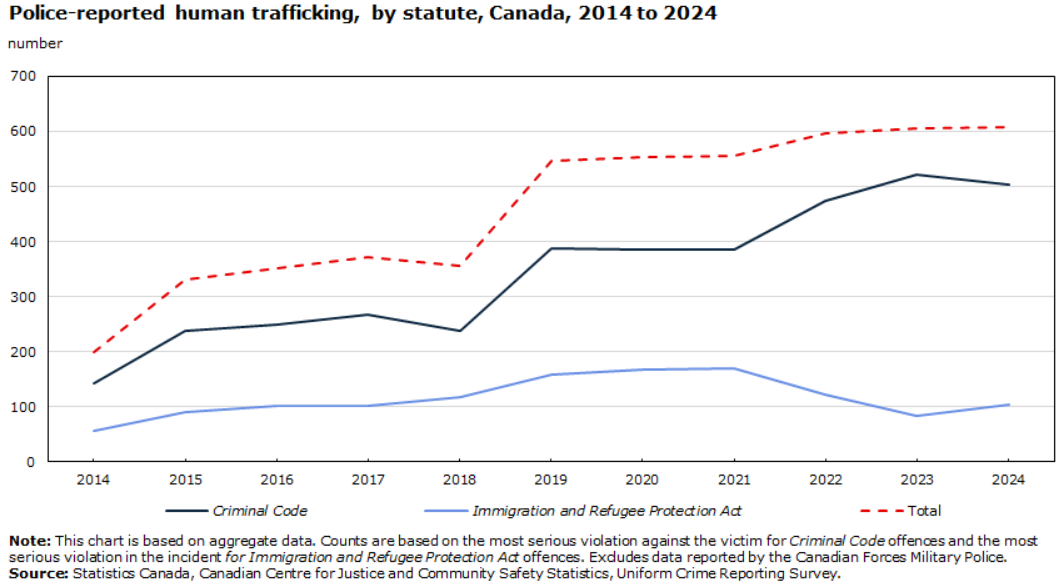
Police‑reported data from Statistics Canada show that from 2014 to 2024, there were 5,070 human trafficking incidents recorded by police services across the country, representing an average annual rate of 1.2 incidents per 100,000 population. About two in five (39 per cent) of these incidents involved multiple violations, most commonly offences related to the sex trade, followed by physical assault offences.
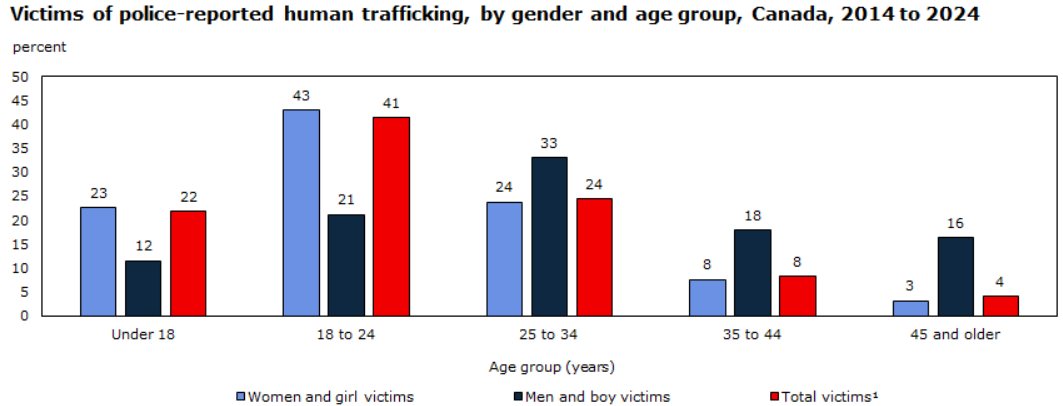
Over the same period, 93 per cent of identified victims of police‑reported human trafficking were women and girls, and two‑thirds were younger than 25. The type of relationship between victims and accused differed by gender: women and girls most often shared an intimate relationship with the accused, while men and boys were most often trafficked by someone with whom they shared a business relationship.
Implications for employers and HR
Campbell says the impact of trafficking and gender-based violence is visible in day‑to‑day people management, even when the underlying cause is not disclosed. “It certainly can impact the way that employee shows up for their position,” she says.
Potential workplace indicators, according to Campbell, include frequent or unexplained absences, sudden changes in schedules, declines in productivity or work quality, and noticeable behavioural changes such as withdrawal, anxiety or hyper‑vigilance. She says high‑performing employees may resign abruptly, leaving employers uncertain about the reasons for their departure.
Employees affected by trafficking or abuse may also be reluctant to engage with standard HR processes, complaint mechanisms or employee assistance programmes because of fear of retaliation or control by another party. Campbell says these dynamics can contribute to higher turnover, pressure on teams and challenges in maintaining a safe and inclusive workplace.
What should employers do?
Campbell says the first requirement for employers is to build their understanding of human trafficking and gender-based violence as workplace and workforce issues. “There continues to be a need to grow in knowledge and awareness on these issues right across the board and how it is affecting the workplaces and the supply chains,” she says.
She says increased awareness should be followed by concrete measures, including reviewing harassment and violence policies, training HR and managers on indicators of trafficking and coercive control, and ensuring employee assistance and benefit providers have expertise in gender-based violence and trauma. Campbell says there are “straightforward things” employers can implement that make “a big difference in employee retention” and productivity when staff are experiencing violence.
Campbell also points to the importance of HR input into wider anti‑trafficking efforts. She says HR leaders understand hiring processes, workplace culture and accommodation practices, and that their participation in research and surveys can help align survivors’ needs with employers’ realities.
To address employment‑related challenges faced by survivors, the Joy Smith Foundation has launched EmpowerHER, a national initiative examining how survivors of human trafficking and gender-based violence can achieve stable employment and economic empowerment.
Human trafficking is a serious issue that needs addressing, according to Julia Drydyk, executive director at the Canadian Center to End Human Trafficking (CCEHT).