Bank of Canada survey highlights hiring plans, wage trends as tariffs, trade tensions continue to have impact

The share of employers planning for a recession in Canada—for example, by tightening their budgets or pausing investments—has increased slightly, from 28% to 33%.
“This share remains above the low levels seen in 2024, likely reflecting ongoing concerns about the impacts of trade tensions,” says the latest Business Outlook Survey from the Bank of Canada.
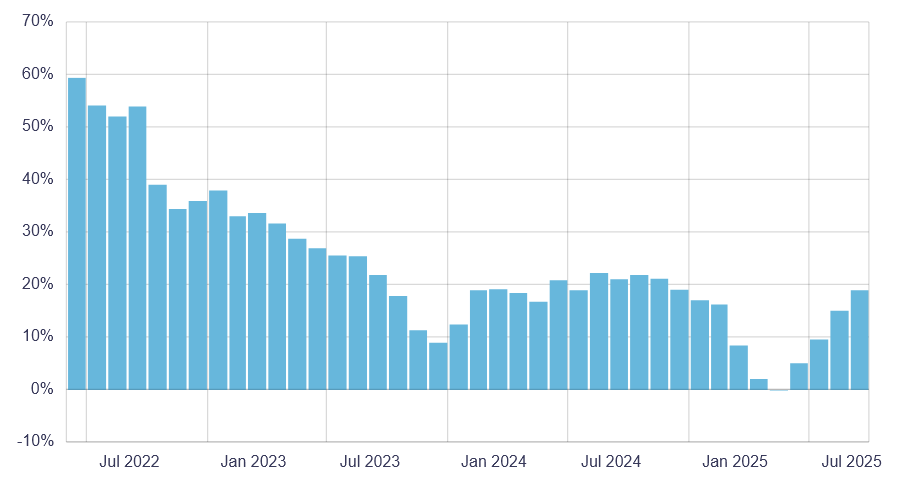
Nevertheless, business sentiment is gradually recovering from recent lows, as seen with the chart showing how employers would rate their current business conditions (excluding normal seasonal patterns). It shows the percentage of firms reporting positive sentiment minus the percentage reporting negative sentiment.
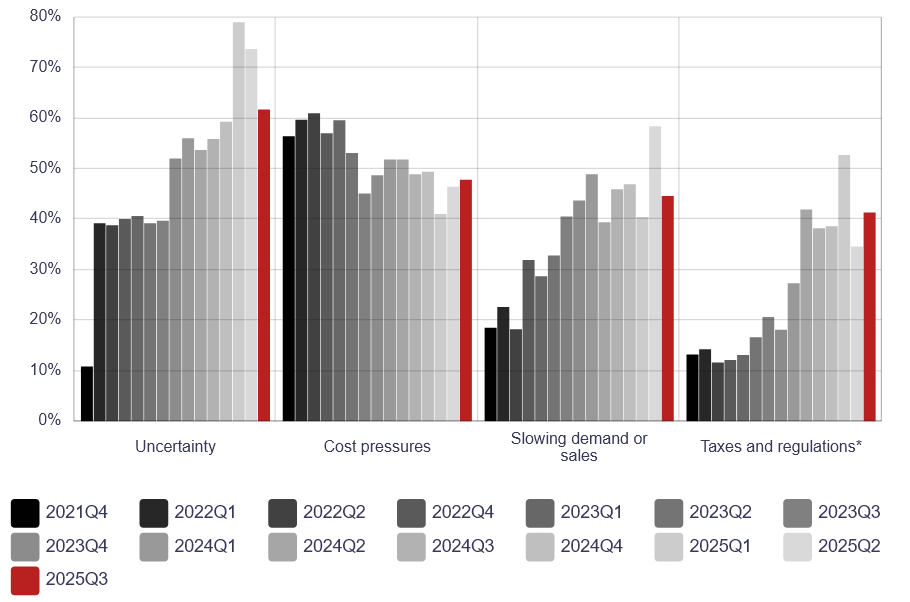
“Uncertainty surrounding financial, economic and political conditions remains the most pressing concern for firms, but fewer cited it this quarter than in previous quarters,” says the Bank of Canada.
“Cost pressures, slowing demand, and taxes and regulations (including duties and tariffs on international trade) also continue to weigh on firms. Businesses often link their uncertainty to domestic economic growth, costs and international trade—underscoring that the trade conflict and its spillover effects are still top of mind.”
Employers continue to anticipate weak demand
Sales expectations remain weak. Businesses no longer expect sales growth to strengthen over the coming year as tariff-related impacts continue to hold back demand, found the survey. Firms attribute this anticipated weakness largely to broad spillover effects from the trade conflict, such as:
- weak spending by business customers on services and capital goods
- low consumer spending or concerns that consumers could start to spend less
- weak outlooks in the housing sector.
However, the balance of opinion on indicators of future sales (e.g., order books, advance bookings, sales inquiries) has improved marginally and now sits near zero, says the Bank of Canada: “In other words, the number of firms that reported their indicators have deteriorated is about the same as the number that said they have improved.”
Plans to expand capacity still on hold
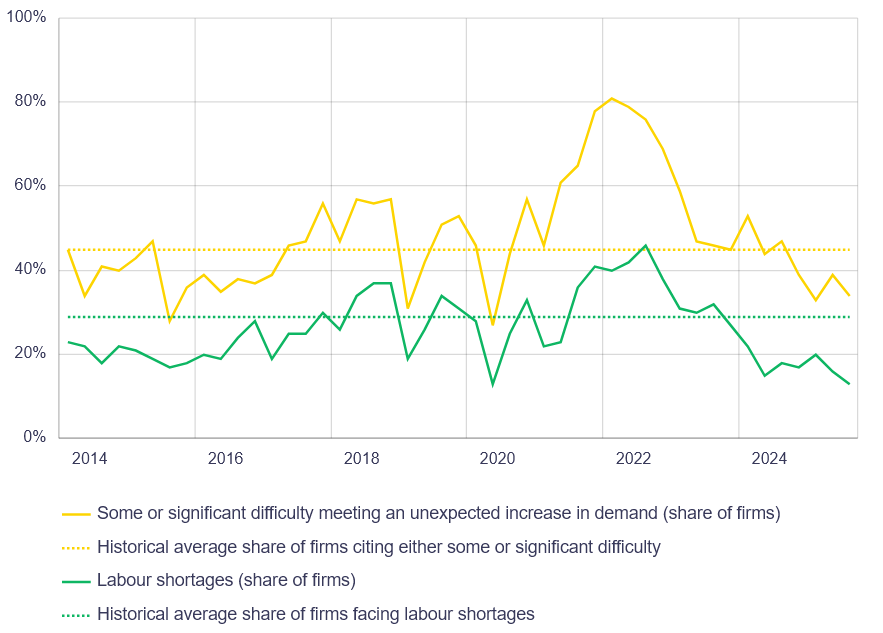
Amid an environment of weak demand, most employers reported they have ample capacity, including physical capacity and labour, says the Bank of Canada. Further, the share of businesses that would have difficulty meeting an unexpected increase in demand is still below the historical average for the fourth consecutive quarter.
“Few firms are struggling with supply chain disruptions or difficulties sourcing critical inputs. Businesses said they can find workers more easily now than a year ago, and the share of firms that reported binding labour shortages fell to its lowest level since 2020.”
Many businesses are scaling back their investment plans or putting new investments on hold because of soft demand and uncertainty related to trade tensions, found the survey: “More firms than usual continue to focus their investments on routine maintenance rather than expanding capacity.”
Hiring intentions, wage growth
Hiring intentions remain subdued, says the Bank of Canada, as soft demand, ongoing tariff uncertainty and minimal capacity pressures mean few businesses need to add staff.
“Most firms do not plan to increase the size of their workforce over the next 12 months,” it says. “The share of firms planning outright staff reductions remains similar to that in previous quarters. However, special consultations this quarter with firms in the aluminum and steel industry revealed that the impacts of US tariff increases are leading to significant layoffs.”
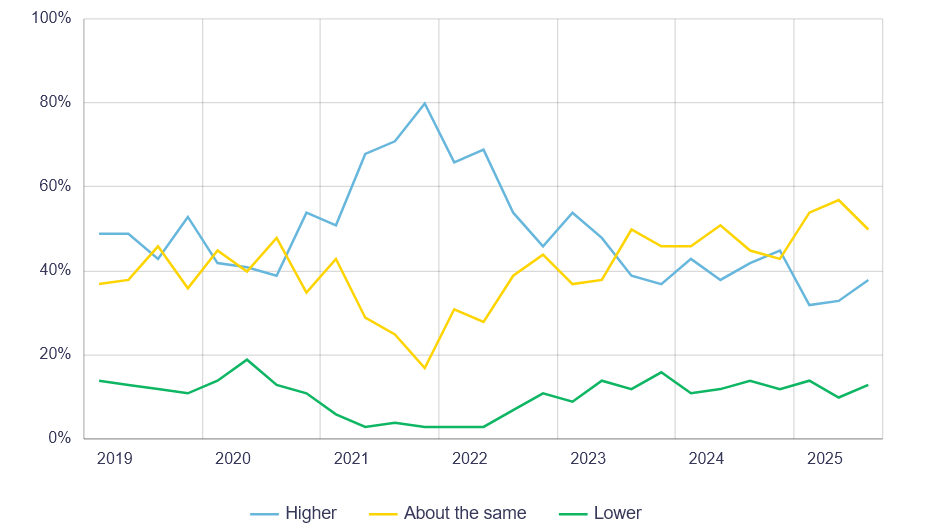
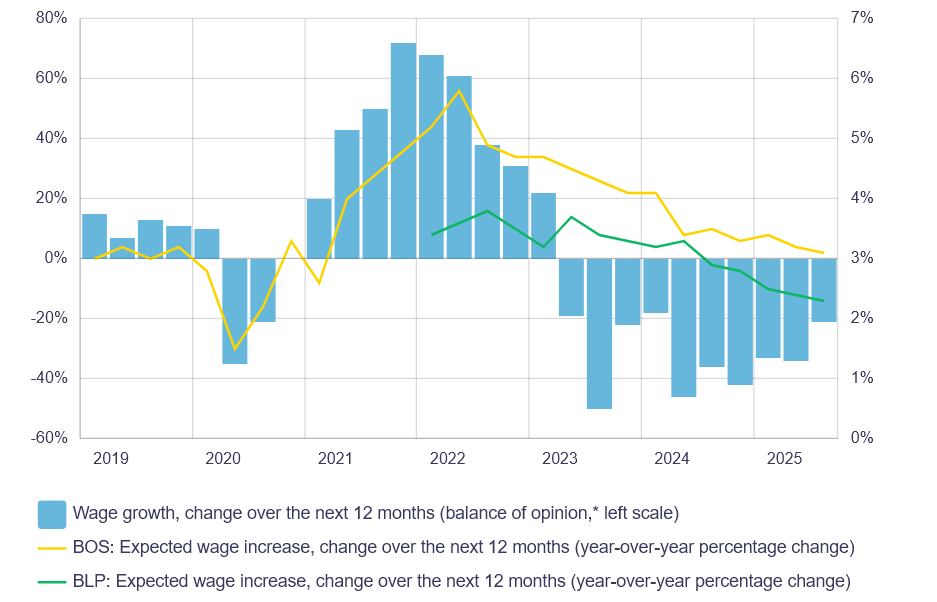
Expectations for wage growth over the next 12 months in Canada continue to trend lower, but they are slowing less sharply than in previous quarters and are near levels seen before the COVID‑19 pandemic, found the survey.
“As cost-of-living adjustments ease and demand weakens, firms anticipate their wage adjustments will be lower.”
The Bank of Canada’s Business Outlook Survey is conducted by the Bank’s regional office staff through interviews with the senior management of about 100 firms selected to reflect the composition of the gross domestic product of Canada’s business sector.