‘Cutting the program doesn't hand jobs to youth, it creates staffing crises and puts even more Canadian jobs in jeopardy’

The hiring of temporary foreign workers (TFWs) in Canada is not the reason behind the continuing high youth unemployment rates, according to a report.
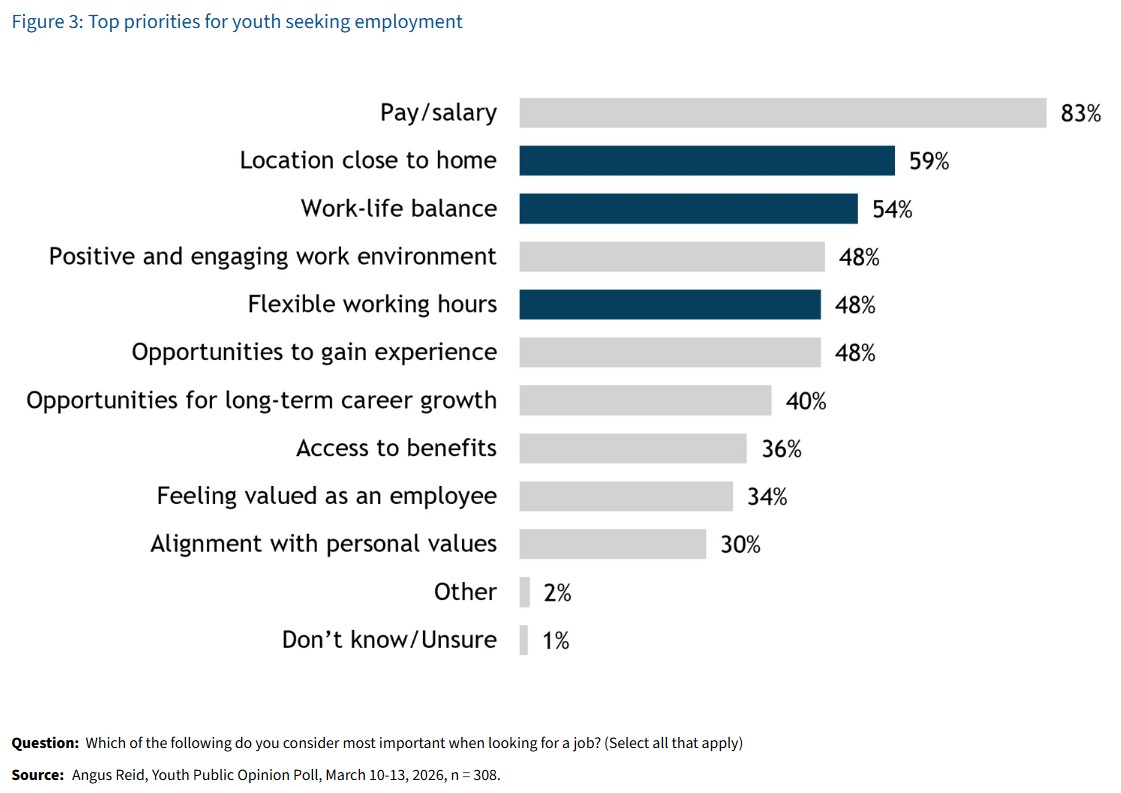
That's because nearly half of youth surveyed would not look for jobs requiring regular overnight shifts or frequent heavy physical effort, finds a survey from the Canadian Federation of Independent Business (CFIB).
More than a third also ruled out outdoor jobs exposed to weather, or positions paying at or near minimum wage.
Harvesting labourers account for nearly a third (32%) of all TFW positions in Canada, CFIB said, followed by nursery and greenhouse labourers, food service supervisors, cooks, and livestock labourers.
Nine in 10 small businesses relying on the program said they cannot fill those roles with local employees.
"The Temporary Foreign Worker Program has become a convenient scapegoat for a tighter job market for Canadian youth, but the argument just doesn't hold up," said Dan Kelly, CFIB president. "Cutting the program doesn't hand jobs to youth, it creates staffing crises and puts even more Canadian jobs in jeopardy."
Geographic and structural barriers
CFIB found willingness to work does not extend to relocating. Only 19% of youth would move to a different city or town for a service-sector job, 8% would consider a small town or rural community, and 3% would take a remote or isolated posting.
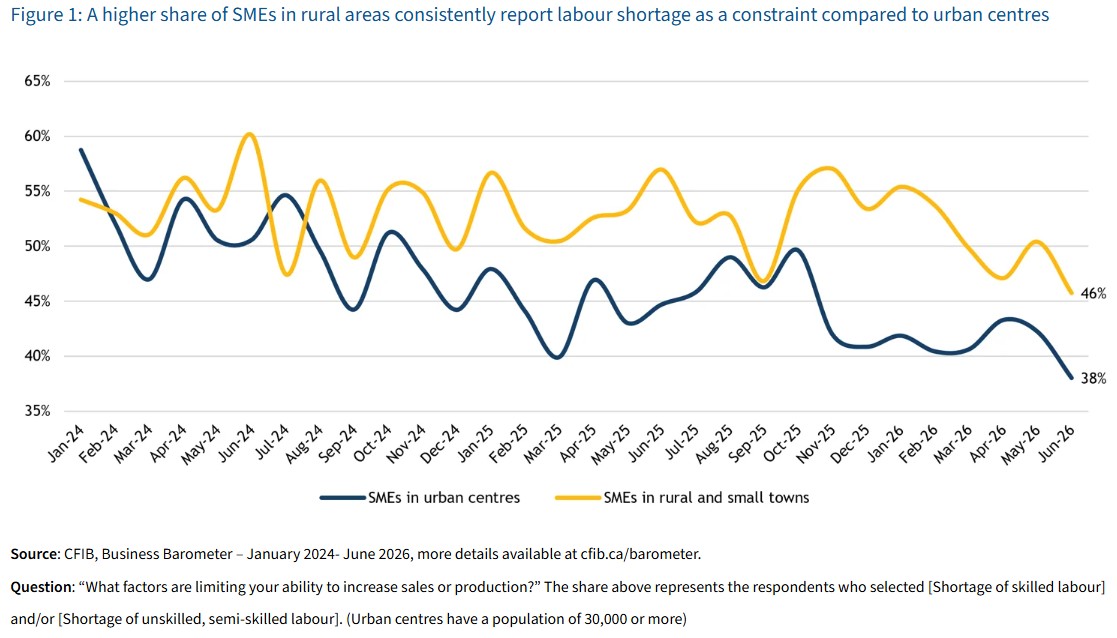
Youth make up a larger share of the urban population (12.3%) than the rural and small-town population (10.6%), Statistics Canada data cited by CFIB shows, while 46% of rural and small-town businesses reported labour shortages in June, compared with 38% of urban businesses, per CFIB's Business Barometer.
"There's no lineup of young people from urban areas applying for a 5 a.m. bakery shift in rural Saskatchewan," said Molly MacCormack, CFIB policy analyst. "High youth unemployment does not guarantee a readily available local workforce."
When it comes to youth unemployment, the minimum wage may be part of the problem, according to a previous report.
Program's role and CFIB's recommendations
More than half (52%) of small firms using the TFWP said it has helped them stay open and keep employing Canadians, rising to 76% among hospitality businesses, CFIB reported. Bérengère Fouqueray, CFIB research analyst, said businesses relying on TFWs are often the same ones hiring young Canadians for other roles.
"When businesses close, everyone loses, including the young Canadians who work there," Fouqueray said.
CFIB is calling on Ottawa to create an occupation-based category within the TFWP for consistently hard-to-fill jobs, with adjusted caps and wage rules reflecting persistent shortages regardless of location. The organization also wants nationally consistent program rules rather than provincial variation.
Other recommendations include grandfathering existing foreign workers under prior permit rules, scaling back refusal-to-process policies and prevailing wage increases, and expanding permanent residency pathways for TFWs already in Canada.
How to solve Canada’s youth unemployment?
Here’s what stakeholders can do to help solve Canada’s youth unemployment problem, according to Tricia Williams, director, research, evaluation and knowledge mobilization at the Future Skills Centre:
- Make work-integrated learning the norm. Every student should have a chance to get hands-on experience while in school, not just in tech or business but across all fields.
- Support small businesses to hire youth.
- Modernize and extend career guidance to young people.
- Invest in the right mix of skills—digital skills, but also social-emotional skills to work with AI, and green skills to support Canada’s transition.
- Build networks to connect the youth to mentors, employers, and opportunities.
- Tailor interventions with the right community partners. “Indigenous, newcomer and racialized youth all face separate and distinct challenges in navigating the postsecondary system, finding work and advancing in their roles,” says Williams.
A previous study published by the Fraser Institute links Canadian government policies to a sharp rise in youth unemployment, warning the situation could have lasting consequences for an entire generation of workers.