High fuel costs are reigniting the RTO debate — but reactive flexibility could come at the expense of long-term workforce strategy

With the war in Iran continuing to drag on, gas prices in Canada are still at peak rates.
We’re looking at an average “low” of 164.4 cents per litre in Alberta and 169.9 in Saskatchewan compared to a high of 195.9 in British Columbia, according to gasbuddy.com.
That, of course, translates into some costly commuting for many workers across the country. As a result, some unions are pushing for expanded work-from-home.
The Canadian Association of Professional Employees (CAPE) is calling on Ottawa to implement recommendations from the International Energy Agency (IEA).
“Canadians are suffering right now, and the IEA has provided a solution to ease this pain,” says CAPE president Nathan Prier. “Carney must break his silence and explain why he is intent on enforcing a return-to-office order for the country’s largest employer when remote work could save billions of taxpayer dollars, improve productivity, and reduce emissions and transportation network pressures.”
In British Columbia, the BC General Employees’ Union (BCGEU) is making a parallel case as fuel prices climb, calling on the provincial government to allow provincially regulated employees, where possible, to work from home full time.
At first glance, these requests seem like a logical response to an ongoing crisis — help people out with the cost of living by allowing them to skip the car commute and work from home — even if it’s just for a few days off the usual office schedule each week.
But a deeper drive into the issue highlights the grey areas of the argument, and the not-so-easy answers for HR and employers.
Pros to WFH amid high oil prices
So, yes, there’s the obvious cost reductions with buying less gas, along with not paying for parking or any auto maintenance required, which hopefully would boost employees’ financial wellness, at least temporarily.
For belt-tightening organizations that have been limited with raises, letting employees work from home can put a bit more money in people’s pockets — which will be especially appreciated by lower-income employees.
And unlike HR changes to increases to salaries or hourly wages, or cuts to staffing, temporary WFH policies can be implemented and rolled back quickly as conditions change — as long as HR clearly communicates the situation.
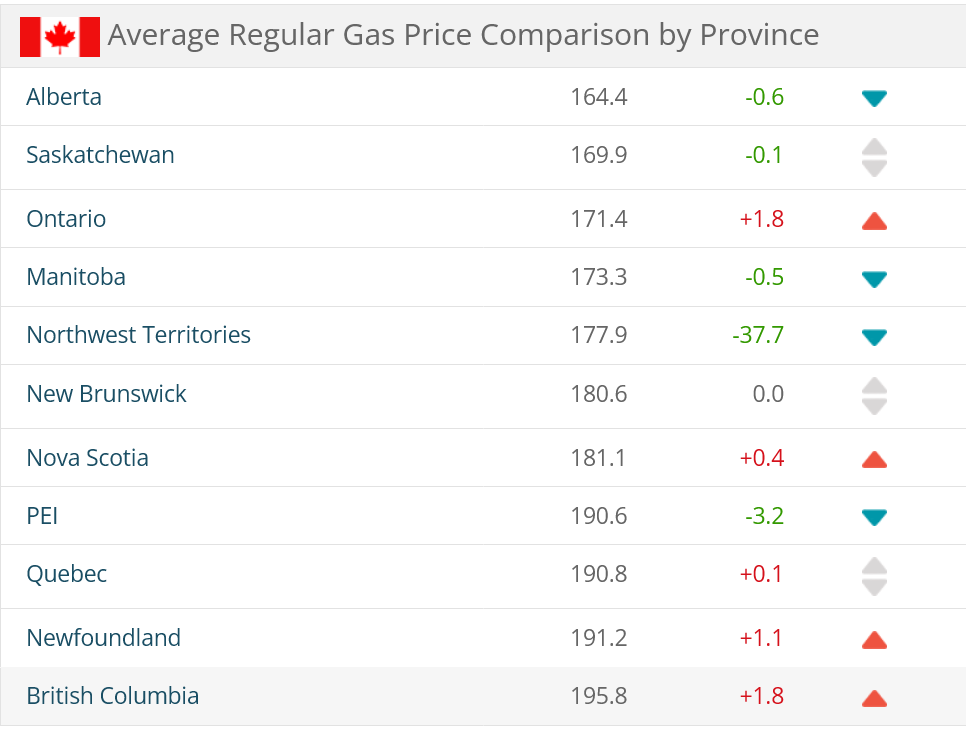
Source: Gasbuddy.com
Then there’s the accompanying boost to employee attraction and retention, as people appreciate the new “perk” — especially if HR does a good job conveying the reasons behind the shift.
And if you’re an employer that has made environmental commitments or touts its green policies, lowered emissions from fewer car commutes or buses will obviously have an impact.
Cons to offering work from home
This all sounds promising and could make sense for a lot of employers — but they should know the potential downsides before going ahead with such an offer.
For example, as amplified during the pandemic, not everybody can work from home. So, if you’re allowing some employees to avoid the office while salespeople or manufacturing workers or front-line support must show up on-site each day, the perceived inequity could cause major morale issues.
These shifts back and forth between office and remote work can also create coordination and productivity challenges, especially among teams or leadership. If you’re an employer that has finally transitioned everyone back to three, four or five days a week back at the office, to suddenly reverse the policy will mean major disruptions to strategies around culture, collaboration, business projects or customer outcomes.
Then, there are timing issues. When would this start and when would it end? If oil prices suddenly drop, would employees be expected back at the office within a couple of days? That can be challenging with issues such as daycare or elder care.
As for financial wellness — if employees are struggling with commuting costs, that suggests their pay is already low or not meeting the cost of living and should be higher anyway. So, a temporary adjustment by the employer may not be seen as sincere or a long-term gesture and could lead to staff resentment.
Again, referring back to the post-pandemic work world, we have seen — and continue to see — major issues when it comes to recalling people back to the office. Unless clearly outlined in HR’s messaging or some kind of agreement, a temporary offer to WFH may be difficult to rescind. Employers could face major pushback from employees, in addition to the usual arguments against the true benefits to productivity or creativity with the RTO.
Short-term vs. long-term gains
While remote work can be seen as a practical way to ease employee strain, tying workplace policies to fluctuating market conditions clearly has its risks.
There may be some short-term gains in financial wellness and retention, but the WFH focus could also lead to resentment about the inequity in how it was applied or inevitable RTO mandates that follow.
And there will always be volatility in the economy — leading to food inflation or rent spikes, for example — so picking and choosing which problems to respond to is a risky game.