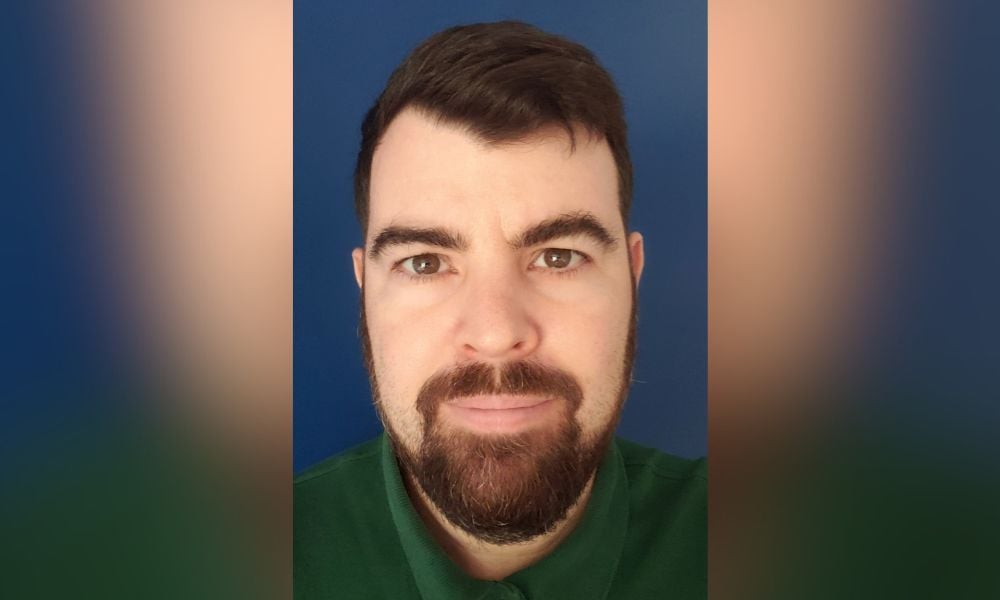
News website features 3 AI journalists — including one posing as Inuk reporter covering Nunavut, say reports

A Hong Kong-owned website has created at least three fake AI "correspondents" with Indigenous identities — including one posing as an Inuk reporter covering Nunavut, say reports
She has a name, a biography, and a writing style described as "warm, precise, and deeply local." Leah Qammaniq is introduced to readers of We-News.com as an Inuk journalist raised in Nunavut, someone who understands first-hand the stories she covers: Inuit self-governance, food security, daily life in the territory.
She also does not exist.
As Nunatsiaq News first reported, Qammaniq is one of 121 "AI correspondents" deployed by We-News.com, a website that presents itself as a news outlet but uses generated personas to republish work from real media organizations around the world. The reporting attributed to Qammaniq belongs to genuine northern newsrooms: CBC North, Nunavut News and Nunatsiaq News.
CBC News subsequently reported that Qammaniq is not alone. We-News has also created Kaylee Johns, described on the site as "a member of Yukon First Nation," and Warren Lafferty, described as "of Dene heritage.”
The discovery has drawn condemnation from Indigenous media leaders, journalism advocates, and publishing figures.
'Blatant' theft at industrial scale
We-News is owned by Hong Kong-based company AZ Medias Ltd., with a publisher listed as David Dragesco and a hosting provider located in France, Nunatsiaq News reported. When the outlet attempted to use the contact email listed on the We-News website, it bounced back. An attempt to reach Dragesco — identified as a search-engine optimization expert whose separate business website, DiscoReady, is also published by AZ Medias Ltd. — also went unanswered. CBC News similarly sent multiple emails and received no reply.
The site's process, CBC News reported, appears to consist largely of taking articles from legitimate news outlets, rewording them, and republishing the result under AI-generated bylines alongside AI-generated images.
Paul Deegan, president of News Media Canada, which represents print and digital news publishers across the country, was unsparing in his assessment.
"The theft is blatant and it's happening on an industrial scale," he told Nunatsiaq News.
The practical problem, Deegan said, is that the only current remedy available to newsrooms is a lawsuit — an option that is neither affordable for most publishers nor straightforward when the accused party is operating across multiple international borders.
The theft also has a direct financial dimension. Corey Larocque, managing editor at Nunatsiaq News — one of the outlets whose articles have been extensively mined by We-News — told CBC News that the operation may be siphoning advertising revenue that would otherwise flow to legitimate newsrooms.
"It's hard enough for news organizations to make a go of it without having an outside artificial intelligence news source using our own content to conceivably take away advertising dollars that could be ours," Larocque said.
AI-generated headshots
What makes sites like We-News particularly effective at deceiving readers, researchers say, is the combination of AI-generated headshots and plausible-sounding biographical details that give invented journalists the appearance of legitimacy.
Ahmed Al-Rawi, director of the Disinformation Project at Simon Fraser University, told Nunatsiaq News that the human-looking profile images are the central mechanism of confusion.
"The problem is that they actually have a picture of the alleged author of each news article, and that picture is a human, so it's confusing," Al-Rawi said. "One has to read the fine lines in order to figure it out."
We-News does include a disclosure stating it uses AI, but Al-Rawi told CBC News that a small-print transparency notice at the bottom of each article is not sufficient.
"A lot of people might read the article … and think that it's real," he said. "The other problem is a lack of attribution, or at least clear attribution, to the original authors. It's very unfortunate that they depend on the original work of real journalists in order to generate revenue."
The site's own About Us page claims it "relies on artificial intelligence technologies" and that every story "is confirmed by multiple sources before publication."
'Manipulated' by AI
Brent Jolly, president of the Canadian Association of Journalists, described the challenge of combating these sites as "a game of whack-a-mole," telling both Nunatsiaq News and CBC News that shutting down one operation does little when new ones can be created immediately, particularly when they are hosted in other jurisdictions.
"As a journalist, it frankly disgusts me to see the public's right to know being manipulated by algorithms and artificial intelligence," he told Nunatsiaq News.
He called on the federal government to strengthen copyright law to make the repurposing of stolen news content not merely unacceptable but explicitly illegal, and said the public needs to become more media literate in the meantime.
"This is about protecting the craft and upholding the public's right to know," Jolly told CBC News. "We need to take this very seriously … Technology moves so fast and it's extremely difficult to keep up with, but we have to keep this in the driver's seat right beside us all the time."
Both Jolly and Deegan told Nunatsiaq News they were disappointed that copyright protections for news content were absent from Canada's new AI strategy, released by the Liberal government earlier this summer. The strategy commits more than $2 billion in funding to expand the country's AI capacity, but does not address whether AI systems should be permitted to republish copyrighted journalism.