HR exec Cindy Khimji on building HR from scratch, making a difference in health care and taking AI slowly
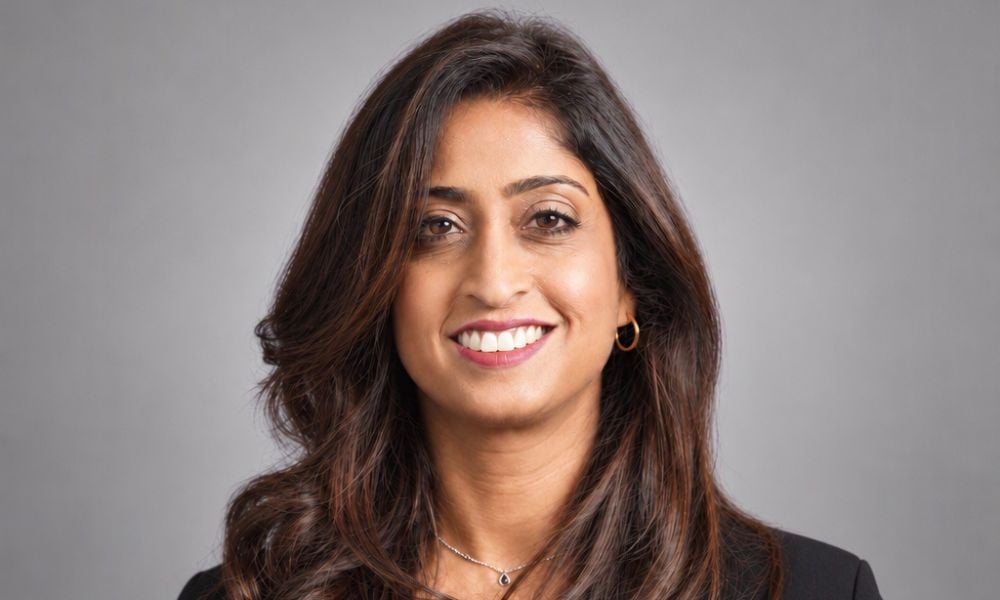
When OntarioMD's talent acquisition specialist started meeting candidates in person after their phone screens, something didn't add up, according to Cindy Khimji, executive director of human resources.
"She said, ‘The person we met in person was not the person I was talking to on the phone,’" says Khimji. "She said, ‘The answers, you could tell they're literally typing in what you've asked them and they're waiting for the response.'"
That scenario is “dangerous,” says Khimji, who admits she is in no hurry to bring AI into hiring on the employer side.
"We've been a little gun-shy, I'll be honest, with using AI in recruitment because I'm a bit old school," she says. "I'm just not ready to let go of that review of people's resumes as opposed to having AI filter. We have filters. But at OntarioMD, we still fish through applicants, which a lot of companies don't."
OntarioMD has rolled out an AI governance framework covering what's acceptable in terms of Copilot versus ChatGPT, and HR is working with the governance team on lunch-and-learns for staff. HR is also exploring chatbots for its intranet, says Khimji.
"The biggest thing is education, and how you use these tools in a safe way. Because, no doubt, people are using them."
The organization also helps physicians navigate AI tools in their electronic medical records (EMRs), but privacy adds an important layer, she says.
"We typically don't touch patient information because we're B2B. But, from time to time, things come through on an email and it's dangerous. We have to be super careful and our staff have to be trained."
Long career in healthcare
Those privacy concerns are familiar ground for Khimji. She has spent her whole career in health care, starting long before she moved into HR, despite an undergraduate degree in marketing.
"I was always what they call a healthcare baby," she says. "My mom was a nurse, got me a job in the early '90s for the summer. I started that in high school and never left."
Khimji completed her degree while working at Sunnybrook Health Sciences Centre in Toronto, where she ended up in the finance department. "I did decision support, workload analysis and reporting into the ministry for a number of years."
When she went back for her MBA at York University's Schulich School of Business, Khimji focused on strategy and organizational behaviour: "I always had a real interest in people. I liked interacting with folks."
Taking on HR through M&A
The move into HR came through networking. A former boss from Markham Stouffville Hospital, where Khimji worked in workload measurement, was starting an HR department at the Ontario Telemedicine Network, then a small organization of about 30 employees.
"She knew that I had this interest and I was doing my MBA. And she said, 'Cindy, did you want to help me kick off an HR department?'"
Khimji says she took “a leap of faith” because she was single, not married or with kids, and took a six-month opportunity, leaving behind a full-time job: "It turned into an 11-year stint."
As part of the new role, Khimji built the HR team and the processes. The organization eventually brought in two others — from the London and Ottawa areas — and merged into one.
"It was integrating benefits, integrating different pension plans, and three cultures," she says. "Interestingly enough, you're all in Ontario, but it's very different — how people operate and the cultures that people create in an organization."
Proudly, Khimji says she grew the company from 30 employees to about 250.
Building culture at OntarioMD
Khimji joined OntarioMD in 2015 as manager of human resources. A subsidiary of the Ontario Medical Association, it supports physicians with EMRs and other digital health tools, and its size was part of the appeal.
"I realized when you become a bigger organization, you lose that family interaction," she says. "The organization had some processes but needed structure and rigour, and didn't have salary bands, didn't have any of that compensation framework."
"What really draws me to HR is that ability to build that culture, build process. I love building from scratch."
Employee relations is also a specialty, says Khimji: "I have a coaching mindset, and I try to impart that wherever I go."
That means rejecting the idea of HR as an administrative function in the background, in only doing paperwork and being there for people when they’re in trouble.
"I've kind of flipped it on its head. We're here to support you at the beginning so that if you are ever in a place to struggle or have those issues, you feel that HR is safe."
When Khimji arrived, she made a point of walking the floor, and says many people were taken aback.
“They were like, ‘Why are you here?’ The big joke was always, 'Do you have a pink slip?' I'm like, ‘First of all, it's not pink, it's usually a big envelope,’” she says.
"It was building a culture [that says] ‘Don't be afraid of me. I'm actually there to partner with you.’”
While that trust has a cost, it’s worthwhile, according to Khimji.
"When people really love you and trust you, your door is always swinging. You're always seeing people, and when do you get the work done?" she says. "But for me… that is your biggest asset. If people trust you in an organization, it will take you a long way.”
A seat at the executive table
Khimji became director of human resources in 2017 and executive director in June 2026. The title formalized something that was already in place.
"I always sat at the table from day one," she says. "When I became a director, they had me sitting at the executive meetings. That was very telling for me."
She reported to the chief administrative officer, with a dotted line to the CEO. "Business partnership was huge, and I needed to ensure I was in a company that evolved that way. But there's lots that don't."
OntarioMD has about 150 employees. About a third are fully remote and in the field; the rest work a hybrid model. Office staff were in five days a week before the pandemic, went fully remote for about two years, then returned gradually. In January 2026, the organization moved to two days a week.
"People initially said, ‘Well, I can get so much more work done at home.’ And I'm like, ‘That's not why I'm asking you to come in the office.’ It's really around the engagement piece," she says. "We see strong performance, but we like seeing people in the office. It's good for all of us."
Focused on patient-centric care
Given her success in the healthcare sector, it’s perhaps not surprising that Khimji says she has no plans to leave.
"It's very satisfying to be a part of something where I may not directly affect healthcare, but indirectly we affect patient care."
She’s a big fan of the huge focus on patient-centric care.
“That's really exciting to be a part of," she says. "I'll be honest — the system's a bit broken. So, to be a part of an organization that does electronic medical records and gives those tools and technology is exciting. It's healthcare, but it's technology."
But the people side is also changing, says Khimji, citing the complexities of employees being in the sandwich generation.
“There's lots of that going on, where people are dealing with their children, but they're also dealing with their elderly parents," she says. "COVID just brought a whole other spin to HR."
Focused on leadership development
Talent development and succession planning top Khimji's priorities for the coming year, along with formalizing learning and development. OntarioMD has built out several development streams.
"Not everybody is a leader in terms of formal leadership," she says. "You might be looking to just continue to be an individual contributor, but individual contributors still can be leaders."
The streams range from indirect leadership and influence, to people who are "absolutely going to be our leadership in the future," to technology leadership, says Khimji: "I want to build out learning specific to those areas to help people grow."
The other major project is an HRIS overhaul at OntarioMD.
"A lot of our tools are not all integrated, they're not one system. Our applicant tracking is one, our performance management is another, and our HR system," she says.
"It's, first and foremost, a change management initiative because it's going to be really changing the way people work. Exciting. But daunting — but fun."