Academic cites need for psychological safety, trust in building supportive culture
For 56 per cent of workers, AI in the workplace is making it feel “riskier” to admit they don’t know something at work.
Forty-nine per cent said there is an expectation or assumption from managers and colleagues that they have asked AI before asking them questions, while 43 per cent report they have done so, according to a Use.ai survey of 10,417 working adults across the United States, United Kingdom, Canada, Australia, the European Union and Latin America.
This fear of seeming uninformed is also shaping how employees handle gaps in their knowledge, with 37 per cent admitting to pretending they know something at work in the last six months.
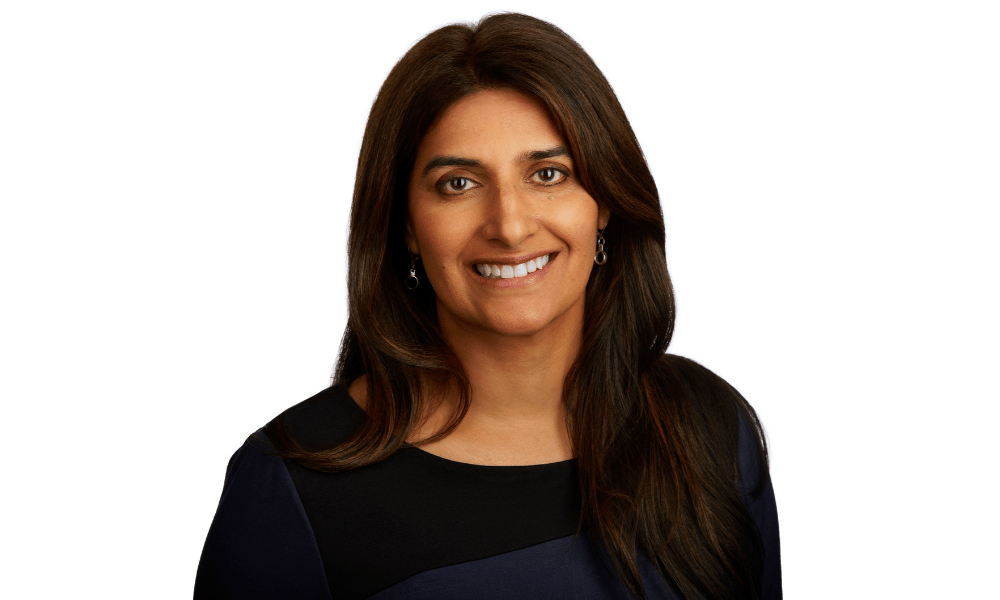
Harjinder Gill, associate professor in the department of psychology at the University of Guelph in Ontario and founder of the Guelph Organizational Trust (GOT) lab, says the survey speaks to how AI could affect workplace culture and the connections people build there.
Trust and psychological safety
Trust is one of the conditions that makes psychological safety possible, Gill says.
There are two kinds of trust important to the workplace — cognitive trust, built on competence and reliability, and affective trust, built on genuine connection and care between people. Affective trust is the most important for creating the conditions where employees feel safe to be vulnerable and ask for help, she says
“If you feel like in your organization, people care about you, they care about your wellbeing, that you have a bond with them, those are the kinds of situations where you’re going to be willing to be vulnerable and deal with that uncertainty,” Gill says. "When you’re uncertain, that’s when you’re vulnerable, and that’s your opportunity to build a better workplace".
Workers who rely on AI always instead of a colleague miss the chance to build those connections — and the opportunities for sharing ideas and mentoring that come with them, she says.
New employees and confidence gap
While AI can be a useful tool, it makes mistakes and its outputs often need to be contextualized for a specific workplace, Gill says. That risk can be harder to navigate for employees who are new to an organization or earlier in their careers.
“I think people who have a lot of experience, when they use AI, because of the experience they already have, they’re able to see where AI might be missing something or might be misleading them,” she says. “But for somebody new who maybe hasn’t done a work term report before or done this kind of report, they might not have the same experience to be able to identify the flaws with AI.”
She points to a common experience with students on projects, where instead of coming to her for help, they end up going down the wrong road and making assumptions that could have been avoided.
Over time, that lack of openness about uncertainty can lead to the production of “suboptimal work,” she says.
The report highlights a generational divide, with 71 per cent of Gen Z workers aged 18 to 29 saying that admitting uncertainty now feels riskier, compared with 44 per cent of workers aged 45 and older. The gap, the report suggests, may come down to credibility. Younger workers are still proving themselves — and that could make them less likely to ask questions that AI could easily answer, while more experienced colleagues feel freer to admit what they don’t know without it reflecting on their competence.
There is also a broader concern around what relying on AI first does to employees over time, Gill says. She points to research suggesting AI use can reduce workers’ own self-confidence.
“Even managers could feel like, ‘Oh, maybe people are checking up on me by, asking AI'. And, so, it could make a lot of people feel unsure about their abilities, and that's a concern”” she says.
How HR can help build psychological safety
So, how can organizations create psychological safety when employees are afraid to admit what they don’t know? Gill says it starts with expectations and leaders being open about their own vulnerability.
Part of the issue with AI in the workplace is unclear expectations, leaving employees to navigate it on their own, she says.
“People have very different reactions to people using AI. Sometimes people think that that person is technologically savvy, an admirable trait,” Gill says. “And then for other people, when they hear that something was done with AI, they think it’s sloppy, lazy, incompetent. And, so, people hesitate to share that they’re using AI.”
Leaders can help shift that by being honest about their own uncertainty and gaps.
“I think leaders could do a better job of sharing their uncertainty and showing their vulnerability — even with AI use. Like, ‘Okay, so I’m using AI to do this, I’m not really sure if this is working,’” she says.