
Fishery employer paid flat rate instead of normal percentage of catch to worker who quit
The New Brunswick Labour and Employment Board has upheld an order requiring an employer to pay more than $12,000 in unpaid wages to former employee who abandoned his employment, ruling that the employer couldn’t unilaterally change the worker’s wage rate because he quit.
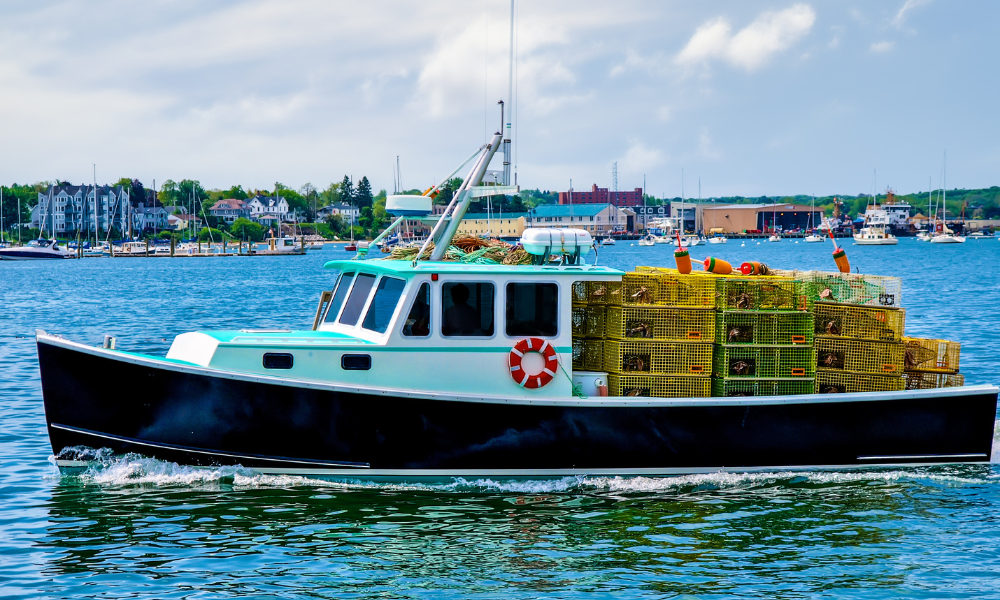
The worker worked as one of two shareman deckhands on a lobster boat operated on Grand Manan Island in New Brunswick by Seven Seas Fishing, a Richmond, BC-based seafood wholesaler, starting in July 2023. His duties included assisting in the preparation of the fishing boat and gear for the start of lobster season, and then during the season going on the boat to set, inspect, and haul traps. He also helped the boat bring each day’s catch to shore.
Seven Seas paid the worker 12 per cent of the market value of the lobster catch each week, paid at the end of the following week. There was no written employment contract, but the company made statutory deductions from his pay including taxes, CPP, and employment insurance premiums. After the two sharemen were paid their share, the rest of the value of the catch went to the boat, with the captain taking a weekly salary from it.
The boat left the wharf every morning at 6:30 a.m. On Nov. 27, the worker wasn’t there so the boat left without him. The worker arrived soon after and, when he discovered that the boat had left, texted the captain, who was also the owner of Seven Seas, asking if he still had a job.
Job abandonment
The owner was on another boat that day and the worker’s boat had a different captain, so the owner texted back that he needed to talk to the worker and it wasn’t a conversation to have over text messaging. However, the worker didn’t respond and didn’t show up at the boat again.
The owner instructed the company secretary to pay the worker $2,000 for the four days he had worked the previous week instead of a 12-per-cent share of the catch. According to the owner, it was common practice among fishermen that when a shareman “ghosts” them before the end of the season, they were paid the daily deckhand rate of $500 for the last week worked.
The worker went to pick up his paycheque on Dec. 14 and discovered it was for $2,000 rather than his share of the catch. He filed an employment standards complaint for unpaid wages and an employment standards officer investigated, interviewing the worker and representatives from Seven Seas, along with reviewing the company’s employment records.
The officer determined that the worker should have been paid his 12-per-cent share of the catch for the last week he worked, as Seven Seas didn’t have the right to unilaterally change the worker’s wage rate without the worker’s consent. Seven Seas was ordered to pay the worker more than $12,000 in unpaid wages.
Seven Seas made a request to refer the matter to the board, contesting the officer’s decision and the order to pay.
No written agreement
The company’s owner reiterated that it was common practice in the fishing industry to reduce a departing shareman’s final pay to a daily rate if they left before the season ended. However, the board found no evidence of a written agreement permitting such a change and ruled that Seven Seas had no legal basis to alter the worker’s established pay structure.
The board also agreed with the officer that the worker was an employee rather than an independent contractor and confirmed that there was no advance agreement or fresh consideration allowing the company to change his wage rate. In addition, the actions of both parties confirmed the practice of paying sharemen a percentage of the catch, said the board.
The board found that the evidence indicated that the worker abandoned his position and could be determined to have quit his employment, but it noted that the New Brunswick Employment Standards Act (ESA) doesn’t permit unilateral deductions from pay for poor performance or when an employee quits.
The board upheld the officer’s determination that Seven Sea’s unilateral change in pay wasn’t permitted under the ESA and the order to pay. As a result, Seven Seas was on the hook for the outstanding amount of $12,580.87 in unpaid wages. See Cole v. Seven Seas Fisheries Inc., 2024 CanLII 137742.



