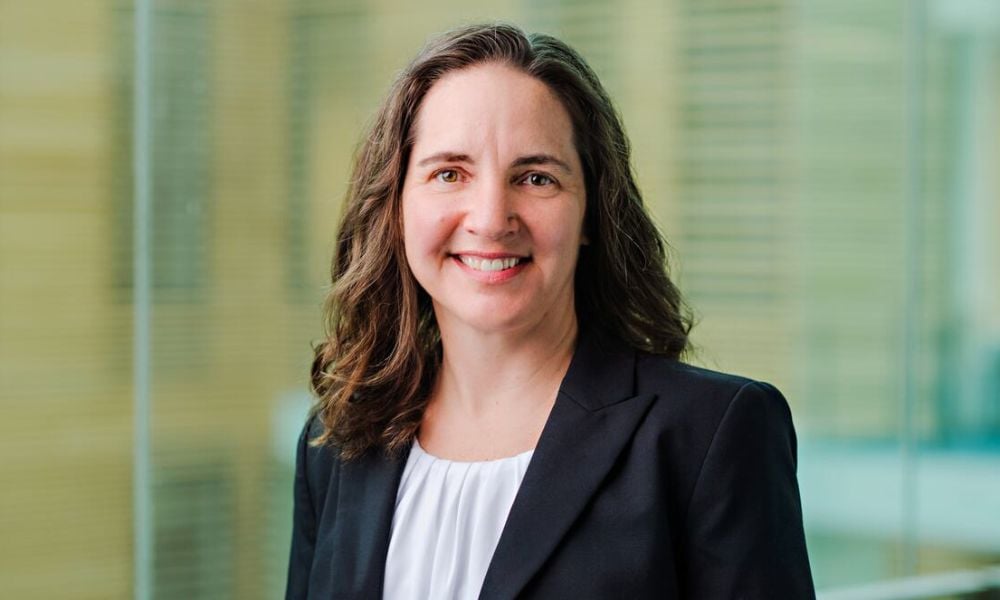
With expanded fertility and mental health coverage, company is using data and feedback to engage employees, says head of HR Cailey Brown

“I would say it became what I needed it or wanted it to be, but not necessarily what I expected.”
So says Cailey Brown, head of HR at Skip, in looking back at her career thus far.
Born in the Canadian prairies, Skip is now part of a global network as a division of JustEatTakeaway.com, which is owned by Prosus Group. It has roughly 1,200 employees, with an HR team of about 20 and head offices in Amsterdam and London.
“It definitely has its challenges, balancing different time zones, different teams,” says Brown.
“The leaders I work with are very people focused, which I always say makes my job easy… And then I work with an incredible team of HR professionals… and they’re what makes all of this possible. So, definitely not a one-person role. I definitely have a solid team to work with.”
From retail general manager to HR at Skip
Brown’s path into HR started on the business side, leading large teams in restaurants and retail. She was a general manager at Coach in Toronto for six years overseeing everything from merchandising to sales.
“I was also responsible for all of the HR activities, so, everything from talent acquisition to development, training,” she says. “And I really enjoyed that intersection of thinking about the business while also being really people focused.”
But a move back home prompted a career shift.
“When I moved back home to Winnipeg, I started looking for roles that had more of that HR lean to them, I wanted to get a little bit more of a deeper focus into that space and see if I could thrive,” says Brown. “And that’s really how I stumbled into Skip.”
Building HR by adding value
While Coach was “very established, very corporate,” she says, Skip was more like a startup when she joined the company in 2017 as talent development manager.
“I really had to learn on the job. I was running around with a laptop. It was a little bit less structured.”
The HR team was really small and in its infancy in terms of structure and being set up, says Brown.
“I was brought in to come in and add value. And I looked for different areas of the business where there were challenges. And then I created people solutions at pace.”
About eight months in, Brown moved into the HR business partner role. The position gave her both proximity to the business and ownership of people strategy.
“That’s where I find I really thrive in HR,” she says. “It has sort of given me the best of those both worlds, of being really embedded in the business and having a voice at the table on all topics, while also creating people strategies that support our business objectives.”
Her role expanded from supporting the logistics organization locally to a global one, spanning over five countries, says Brown.
“I’m supporting everything from frontline specialists and data analysts to project managers and senior directors. And then I work really closely with our global VP.”
In late 2024, Brown expanded her scope by taking the HR leadership role at Skip.
“It’s been incredibly rewarding, honestly, coming back and being a part of that local Canadian team again and [with] our homegrown app.”
Making people feel heard
Asked how Skip works to maintain a strong culture amid gig-style turnover, Brown points first to listening, “and really being intentional about the employee experience,” she says. “We focus a lot on creating an environment where people feel heard, respected.”
One-on-ones are a cornerstone of the approach. “We have a really good culture of one-on-one conversations with leaders, with managers,” says Brown. “And that really trickles up and into the work that I do.”
Formal engagement surveys add another layer, with a strong comment section providing plenty of data, she says: “It gives us a really rich amount of detail as to where things are going to add the most value for our team members.”
Evolving benefits around mental health, fertility
Brown says Skip’s benefits have long been grounded in flexibility, with employee feedback often guiding the offerings, in terms of the different life stages employees go through “and meeting them where it matters most,” she says.
Rather than layering on generic perks, Brown says the goal is to place “strategic bets” where they will matter most, which helps with engaging and retaining top talent.
For 2026, the company has invested in areas flagged as high priority in employee surveys:
- Fertility coverage: Skip has expanded its offering from drug-only coverage to include fertility treatment coverage with a $20,000 lifetime maximum.
- Doubling mental health support: Skip has increased its maximums from $500/$1,000 to $1,000/$2,000.
- Targeted mid-career support: New coverage includes bone density scans to support employees in perimenopause/menopause.
“I always say turnover is very expensive,” says Brown. “So, as an HR professional, it’s great to build this really strong business case around how those initiatives are going to improve that retention and reduce costs for the business. And then they see that return on investment over time.”