
'What it's really is doing is encouraging people to lie,' says academic on sick note requirement from employees
Ontario employers will no longer be allowed to ask workers for a sick note when they want to use their three provincially mandated sick days, Health Minister Sylvia Jones announced last week. But some experts say sick notes, and maybe even sick days, should be replaced altogether by personal days.
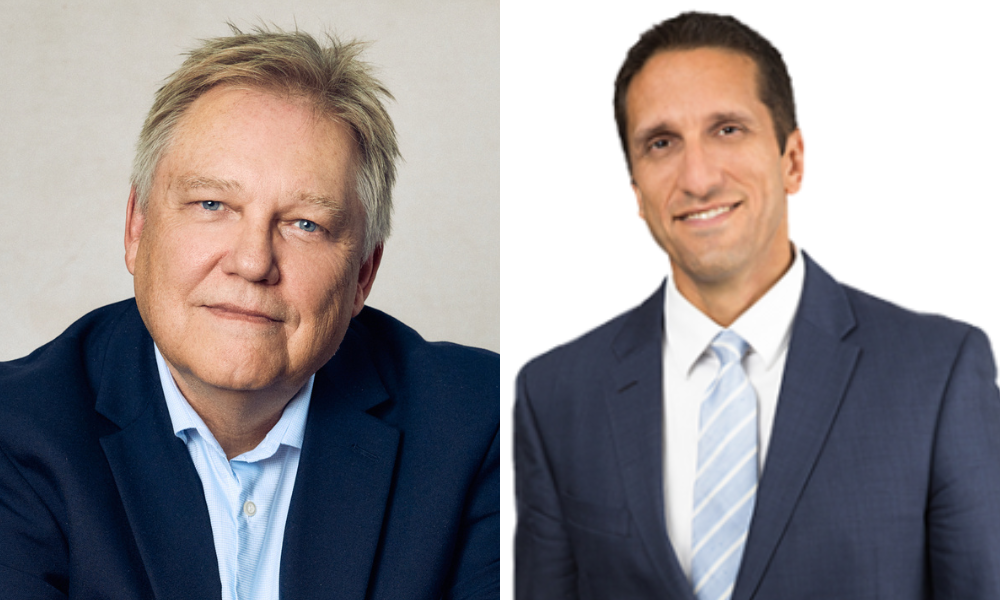
“Life doesn't work on a schedule,” says Ian Gellatly, professor of business and management at the University of Alberta.
“People often, in order to get some flexibility, have had to call in sick because that was the only way that they could get paid. We've got this program in place that seems to be rather benign and helpful on the surface, but what it really is doing is encouraging people to lie.”
The “vast majority” of reported sick times by employees are due to reasons other than personal illness, Gellatly says. Not only that, sick notes are easily attained and therefore not reliable proof of illness anyway, he said.
“If this whole system is kind of suspect anyways, maybe what we do is we think in terms of giving people three discretionary days or personal days.”
Ontario sick note ban ‘not going to have much effect’
The ban on sick notes is part of Ontario’s initiative “putting patients over paperwork”, which it says will cut 95,000 hours annually from doctors’ administrative tasks.
Lior Samfiru, partner at Samfiru Tumarkin in Toronto, says the fact that employers can still ask for sick notes for paid sick days off means the ban will not be exceptionally effective.
“As a practical matter, this is not going to have much of an effect,” says Samfiru, agreeing with Gellatly that sick notes are not difficult to come by. He also adds that many doctors attest to not seeing a patient until days after they were ill, lessening the effectiveness of notes even more.
“I think the better approach here would have been to say that every employee is entitled to a certain number of days a year without having to provide a sick note, whatever that number of days is, whether those days are paid or unpaid.
“So what are we really accomplishing?”
Another mistake Samfiru has observed employers making is requiring sick notes in too short a timeframe – setting employees up for failure and opening themselves up for wrongful dismissal claims.
“If you've tried to make an appointment with the doctor recently, you know you're not going to get an appointment tomorrow, in any event, and I have seen situations where employees get let go because they didn't provide that doctor's note fast enough,” he says.
“I would call that a wrongful dismissal.”
Eliminating sick notes as hiring, retention incentive
The Ontario Medical Association said family doctors spend 19 hours per week on administrative tasks, four of those on writing doctor’s notes and other forms for patients.
“Eliminating unnecessary sick notes is an important change for which the Ontario College of Family Physicians has advocated,” said Mekalai Kumanan, president. “While we know that much more needs to be done to address the administrative issues that take up to 19 hours a week, this is an important step to ensure that more Ontarians can see their family doctor.”
Aside from simplifying processes and reducing paperwork for employers and doctors, Samfiru says offering personal days instead can improve employee retention. Knowing they can take days off without risking their job or being asked for justification can be seen as a powerful perk for employees; personal days can also be an incentive when recruiting new talent.
“There's certainly a benefit for employees and for employers, it just makes life easier,” Samfiru says. “For some employers, you may get a substantial number of those personal days a year, and that could definitely be a significant part of the overall compensation package an employee has.”
Engaged employees don’t need doctor’s notes
For Gellatly, the idea of retention and talent attraction goes further than just not requiring proof of illness. Trust can start with environments where employees want to show up in the first place and feel accountable for their work and teams.
“We are moving into an era of more flexible work arrangements, both in terms of where we do our work and how we do our work and how we connect with other people,” he said.
“If we're building more cohesion, if we're fostering engagement, if we are focused genuinely on health and well-being, then people actually do like come into work – especially in these hybrid environments where people are feeling a little disconnected from the workplace and the culture.”
When employees feel connected to their teams, they will be more likely to call in when they’re ill, to make sure their work is accounted for and there is someone to cover their role where necessary, says Gellatly.
“Important things happen in our life, and sometimes we're going through a personal issue and we just need a little bit of a break from work,” he says.
“Why not do that? It helps coping, it helps people manage stress, and then they can come back and perform well.”



