Board votes to bring back co-founder despite independent probe into whether he was targeted by foreign intelligence effort
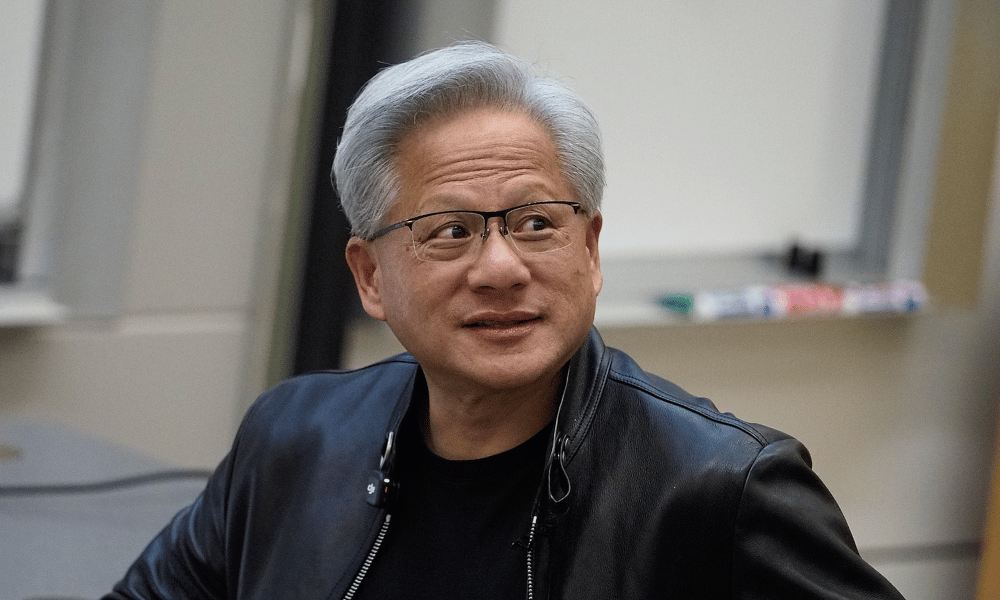
Nvidia has reinstated Jensen Huang as president, CEO and a member of its board, effective immediately, the chipmaker announced Monday, 11 days after he resigned amid reports of extramarital affairs, including one with a woman U.S. authorities have concluded was a Chinese intelligence asset.
The board said it voted unanimously to bring Huang back following a series of discussions and meetings with him, after which it was satisfied with respect to his candour and ability to lead the company.
Colette Kress, Nvidia's CFO, had been serving as interim CEO since Huang's departure on Nov. 12. She will continue as CFO. Harvey C. Jones, who was appointed the board's first-ever chair when Huang resigned, will remain in that role, said the company.
'I can't wait to get back to work'
Jones said the board believes Huang is the right person to lead the company.
"His reinstatement is in the best interests of our stockholders, employees, partners and customers," Jones said in the release. "We have every confidence in Jensen and look forward to working with him as he resumes his leadership of the Company."
Jones also thanked Kress for her service as interim CEO, carried out alongside her continuing responsibilities as CFO.
Huang, 63, said he was returning with humility and a renewed commitment.
"I am honored to return to NVIDIA and lead one of the most consequential technology companies in the world at the beginning of a new industrial revolution," Huang said. "I take this responsibility with the greatest humility and renewed commitment."
He thanked the board for its "confidence and deliberation through this process," singled out Jones, Kress and the executive staff for leading the company in his absence, and thanked employees, shareholders, industry leaders and partners for their support.
"Above all, I am grateful for the love and support of my family. I can't wait to get back to work," he said.
Board cites U.S. government input
In reaching its decision, the board said it received input from senior levels of the United States government. Based on that input, it said it is confident that Huang's reinstatement poses no national security risk.
The release did not identify which officials or agencies were consulted, or describe what they told the board.
Huang's ties to Washington had already drawn attention before his resignation. Reuters reported that his departure could affect U.S. chip export policy, given his push to preserve access to the Chinese market and his close relationship with U.S. President Donald Trump. Trump said earlier this month that Huang had done an amazing job for the country, and that Huang told him he had no idea the woman he had an affair with was a spy, Reuters reported
Investigation to proceed 'to conclusion'
Huang's return does not end the board's inquiry. Following reports that he had been the target of a foreign intelligence effort, the board formed a committee made up solely of independent directors to investigate, and that committee retained independent counsel. The board said Monday the investigation will proceed to conclusion, and that Huang fully supports it and is committed to co-operating.
The company also announced new governance measures aimed at national security and trade risks:
- A National Security and Export Control Committee, made up solely of independent directors, has been formed to oversee trade compliance and national security risks. It is engaging counsel with national security experience, who will in turn retain specialist advisers.
- Nvidia is starting a search for a new chief compliance officer, who will oversee compliance across the company and report to the board's Nominating and Corporate Governance Committee.
Nvidia said it will continue to co-operate with ongoing government investigations and inquiries. The BBC reported last week that Huang is expected to be questioned before multiple committees of U.S. lawmakers in the coming weeks.
From 'I own my mistakes' to reinstatement
Huang signalled his willingness to return less than a week ago. In his first public comments after resigning, posted on X, he said he would be "honoured" to come back as CEO if the board asked him, according to BBC News.
"I created problems for the Board that I deeply regret. I own my mistakes completely," Huang wrote, adding that he had "made serious mistakes in my personal life."
He said he had received an outpouring of calls from employees, investors and others urging him to return. "If the board of directors decides that my return is in the best interest of our shareholders, our employees, the company, and America, I would be honoured to answer these calls and return as CEO," he wrote.
At the time, a return looked unlikely. The BBC reported that the board was not considering bringing him back. Many technology executives had praised Huang's role in the AI boom, and an online petition calling for his reinstatement circulated, but by Nov. 16 many executives were not openly calling for his return.
Resignation rattled markets
Huang, who co-founded Nvidia and led it for 33 years, resigned as president, CEO and director on Nov. 12.
Pressure had been building after reports that he had an affair with Alice Huang, a former executive at Singapore-based cloud company Megaspeed whom U.S. authorities have concluded was a Chinese intelligence asset, according to Reuters. Beijing has denied she is a spy. The two are not related. Megaspeed was an official Nvidia cloud partner with priority access to its chips, and Washington has investigated the company over suspicions it helped China obtain advanced AI chips restricted under U.S. export controls, according to media reports cited by Reuters.
The board opened its investigation into whether Huang had been targeted by a foreign intelligence operation on Nov. 8, Men's Journal reported. CNBC reported that Huang admitted to the affair that weekend. On Nov. 11, the New York Times reported that Huang had also had an affair with Kimberly Powell, Nvidia's vice-president of health care, who reported to him.