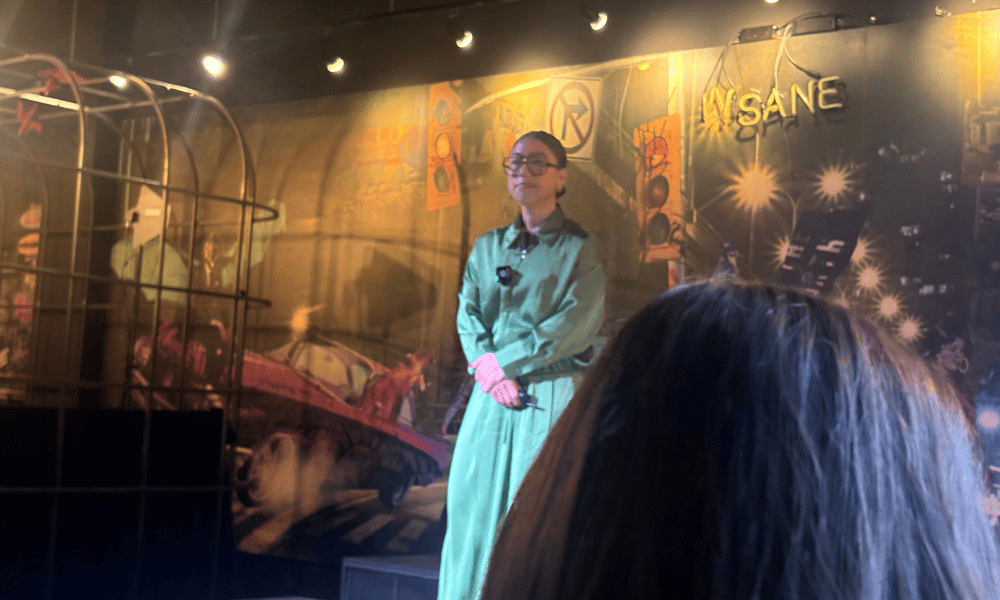
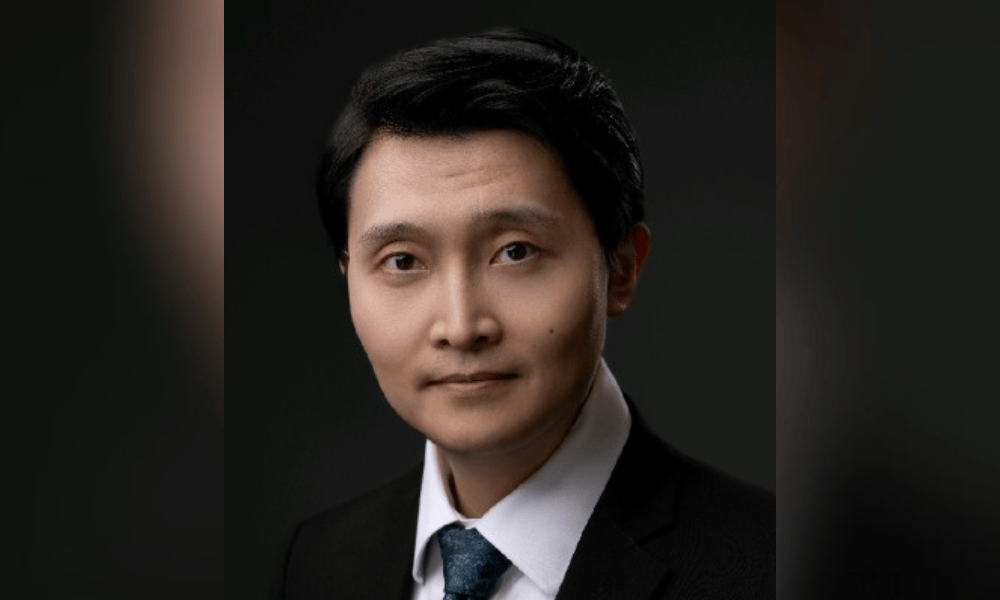
At HRFest Canada, Lyft’s head of HR and Ardene’s head of talent and culture discuss disruptions in 2026 and the year ahead
With constant changes happening in AI, geopolitical conflicts and immigration disruptions, HR leaders found themselves navigating many obstacles this year.
For two leaders — Casey Woods, head of HR Toronto at Lyft, and Martine Lamoureux, head of talent and culture at Ardene — the lesson they learned and are taking into 2027 is to get ahead rather than react first.
“These are quick pivots — no playbook. You’re like, ‘Okay, employees are getting really nervous. How can we help them?’” Woods says.
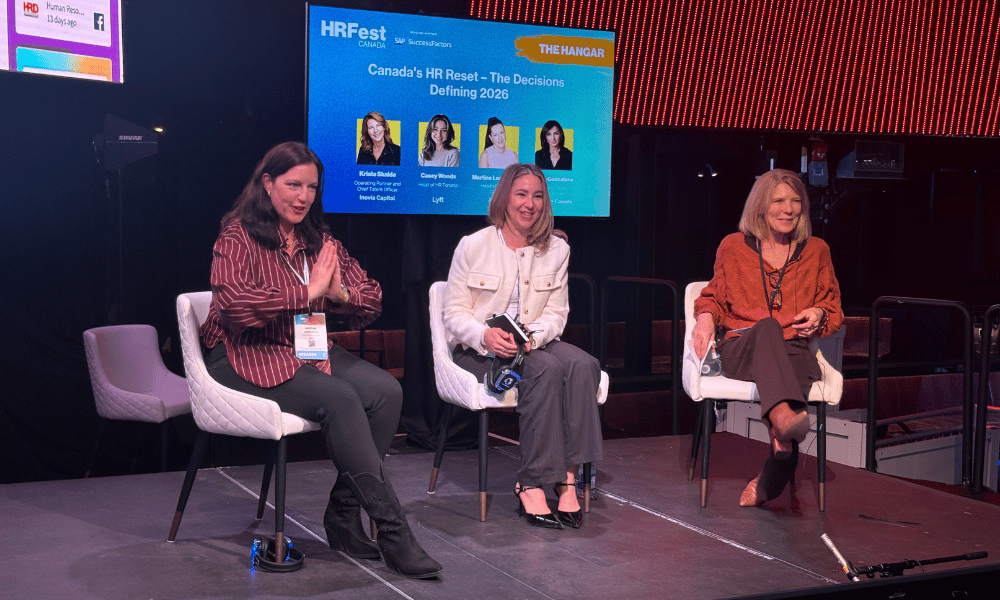
Both leaders spoke at HRFest Canada’s session “Canada’s HR Reset: The Decisions Defining 2026,” moderated by Krista Skalde, operating partner and chief talent officer at Inovia Capital, and held Nov. 10 at Rebel in Toronto.
Planning ahead instead of backfilling
For both leaders, workforce strategy and planning have been top of mind this year — in rethinking how to deal with constant changes in technology and investing in the right tools.
At Ardene, the focus has been on keeping headcount the same while also being efficient, through looking at internal talent, Lamoureux says. That has been done by investing in a human resources information system (HRIS) for both the payroll and HR side.
“The intention of this is to automate many of our processes, making sure that the brainpower of our HR and payroll and internal comms team members are spent on more strategic thinking, on more creativity, developing initiatives, and really supporting the business than doing those admin tasks,” she says.
Lamoureux says the right investment in technology creates a more seamless employee journey — and gives the organization the chance in 2027 to reinvest back into its workforce.
“How do we reinvest that talent into things that are really beneficial for the business and not in sending job offers, doing screening interviews and all of those types of things?,” she says.
From reactive to strategic workforce planning
For Woods, workforce planning is about having teams focus on the future rather than the now. With managers feeling uncertain, there is a need to push them to become “experts in org design,” she says.
“Managers that historically have just been able to have unlimited headcount and grow as they need to, or someone leaves, they know, ‘There’s an automatic backfill, I can just fill that role.'"
This type of automatic backfill , is what Woods calls a “reactive” instinct — organizations needs to be more planning ahead for what might be needed in a few months when things change again.
“Sometimes that’s a tough choice — waiting a month because you need two people to leave so that you can then use those funds for a more highly skilled, more highly competitive role, which is a really difficult thing for leaders to sit with,” she says.
This is where, Woods says HR, can play an important role — bringing data into the conversation about not just what the team needs today but what it needs to look like in six months.
Navigating the H-1B freeze
Early this year, the Trump administration froze H-1B visas — a visa specifically for temporary foreign workers in “specialty occupations.” The freeze created unexpected challenges for many companies and their employees, including Microsoft and Adobe. For Lyft it was no different, Wood says.
While Lyft is headquartered in San Francisco, the company also has a Toronto office that has grown from about 150 to 550 employees, with many requiring regular travel between the two countries, she says. When the border crossing process became more difficult and employees were having trouble travelling back and forth, the HR and operations teams focused on quickly finding ways to support employees first.
“We taught employees what to say, what not to say, just to make sure it was very clear that they’re going for meetings, they’re not going there to move there,” Woods says. “We had our HR operations team quickly build a process where employees could submit tickets and they would get letters on company letterhead so that they had that. A lot of the time, they didn’t need it.”
It is one of those quick pivots that might not be in the playbook — finding a way to support employees and the business at the same time, she says.
Lamoureux says with the current climate, more than ever, leaders must be quick at responding to employee concerns and questions.
“There is an importance on how we make our employees feel heard and how we respond as a business, because that quick follow-up — 'This is the position we have' — will bring that reassurance that might be created by fear,” she says.
When AI gives employees a new confidence
An unexpected challenge AI also brought this year is the “employee confidence” it has created, Lamoureux says.
“Receiving letters with all of those legal terms and accusations — it’s giving them knowledge that maybe they didn’t have before,” she says. “But the thing is also to question, ‘Is that knowledge right? Is that the right interpretation? Do they have the right perception of the situation?’”
This new challenge has been forcing HR teams to rethink how they respond, she says.
Woods adds that it brings back the need to lean into having difficult conversations.
“It is a real skill to be able to get on a phone call and defuse a highly confrontational conflict between a leader and employee around performance or an employee’s escalation,” she says.
The transition from pandemic-era virtual communication back to in-person has brought its own challenges, and HR needs to go back to being experts in the room, knowing how to handle the conversation and the emotions that come with it, Woods says, and “knowing when to take it off paper".
Building for 2027
For both leaders, building AI literacy and becoming experts in their own business — not just through an HR lens — are at the top of the list for the coming year.
HR has historically received the least investment in technology, but with the right tools, it has the ability to scale faster and do more with less, Woods says.
“I just wish that if I could go back, I would have maybe spent a bit more time learning how to Claude Code already and how to leverage the projects in Claude more efficiently, how to build my own agents."
Lamoureux says the lesson from 2026 is to approach the year with more balance — rather than putting everything into one major initiative — and keep more running in parallel.
“Set time aside to think strategy and set time aside to have a stronger plan — a stronger understanding of where we’re going and what will make a real impact on both supporting the business and our people,” she says.
One exercise Woods says she has been doing with leaders is creating a 2027 blueprint — a one-pager that rounds up team composition, job profiles and a mission statement for their organization.
The goal is for leaders to hold that blueprint throughout the year — so that while they are planning what they are going to build and sell, HR is planning how the team is going to be built around it, she says.
“What does good look like to you at the end of 2027? If you read this statement aloud and it was true, would you feel like we achieved something through the year?"