CPO Lawrence Hughes of Porter Airlines on coping with tariffs, fuel costs and unionization, and how they make leadership accountable
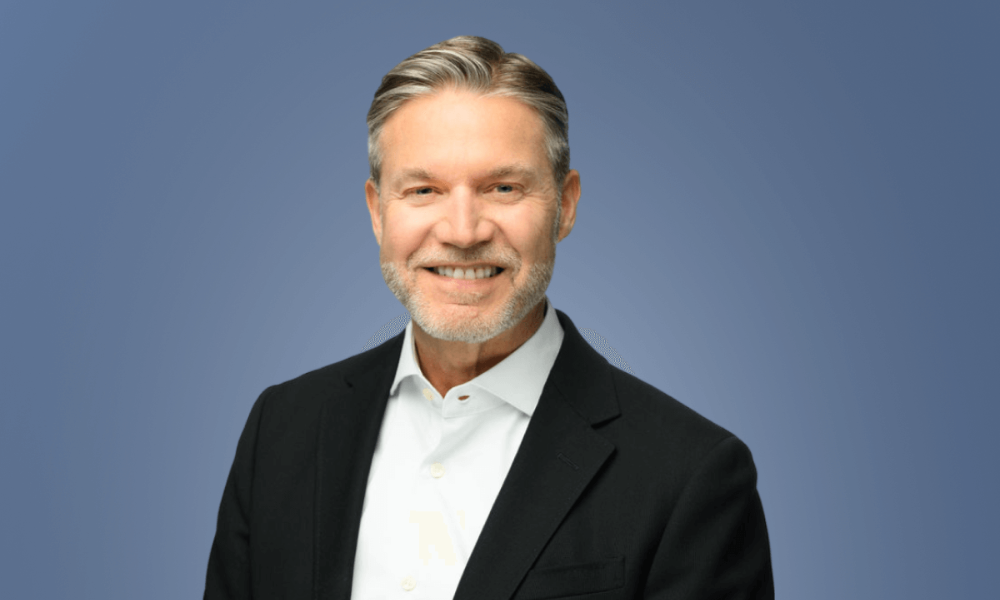
When U.S. President Donald Trump took office in early 2025, the new leadership and accompanying tariff environment hit Porter Airlines disproportionately hard.
“At the time, Porter only flew through domestic Canada and throughout the United States. We had no sun destinations into Mexico or the Caribbean," says Lawrence Hughes, executive vice-president and chief people officer.
“When the tariff war started in early 2025 and ‘elbows up,’ people stopped flying to the U.S., it really impacted our business more so than our competitors… so we had a very difficult year in 2025."
The response was rapid: Porter launched five sun destinations in the 2025–26 winter season and is preparing to add another 10 for 2026–27.
But a new challenge has replaced the last one, HE SAYS: "This industry doesn't work with these current [fuel] prices. So, it's getting worse instead of better."
To illustrate the stakes, Hughes describes a panel he sat on earlier this year with a room of about 60 senior HR leaders.
"I posed the question to the audience — ‘Show of hands if labour is your biggest expense.’ And, of course, 90% of the room [put their hands up]. I said, ‘Imagine if your labour costs doubled overnight. What would you be focusing on?’
"That's not too far from the truth [for Porter], so it’s a significant hurdle,” he adds.
Building out labour relations capability
Another big challenge for Porter was “unprecedented” unionization growth, rising from 10% in early 2025 to 65% today, Hughes says.
"We've been targeted by trade unions. Our growth means growth for them. And so we were disappointed but not surprised. We were almost 18, 19 years union-free, which is unheard of in a heavily unionized environment like aviation."
The jump meant building a labour relations capability largely from scratch. Hughes's HR function has gone from 12 people when he joined — including payroll — to just over 50, with the new hires concentrated in labour relations.
"We typically had always outsourced our bargaining because we've had a long positive relationship with Unifor for two small bargaining units at Billy Bishop. But dealing with the likes of ALPA or CUPE on in-flight and pilots, we needed to hire a significant labour relations team."
The stakes are high as the airline must negotiate four first contracts this year, he says: “That is a tall order considering you only have limited resources that can go from table to table."
The conversations are made more fraught by the business environment, says Hughes. "We're trying to say, ‘Listen, we're just doing everything we can right now to make sure that we have a business for our 4,500 team members to return to in 2027.’”
HR career in retail, telecom
As a senior HR leader, Hughes is more than prepared to take on these challenges, given his extended background in HR which includes telecom, retail and consulting.
Originally, he didn't plan to go into HR. For almost 15 years, he worked his way up through Zellers stores across Ontario, from assistant store manager to regional operations manager, the conduit between a corporate office in Montreal and 60 stores in the province.
The pivot came because of a colleague. His peer on the regional team was a regional human resources manager.
"Her and I got along just like two peas in a pod," he says. "We worked together on a lot of initiatives because there was always crossover between HR and operations."
When she left for Dylex — the retailer behind Tip Top Tailors, Thrifties, Braemar, Fairweather, and others — and was building out the HR function for Byway Stores, its biggest division at the time, she called Hughes. "She asked if I wanted to leave the Hudson's Bay Company [to take on] a senior human resources manager role at Dylex. And so that's how I ended up in HR,” he says.
He spent most of his career in retail, with a two-year stretch at Rogers Communications as head of HR for wireless before returning to the retail sector. When the 2008 financial crisis hit, Hughes’ options narrowed. "There were no senior HR jobs to be had. So, I started my own boutique consulting company, which I ran for almost eight years."
The work covered the breadth of generalist practice — leadership development, talent acquisition, employee relations, policy development — targeting small businesses without formal HR teams. It was successful but had its limits, according to Hughes.
“I missed managing and leading a team,” he says.
"From a consulting perspective, you're brought in and you do a project or you do this work and then you leave and you never really get to see the fruits of your labour — unless things come off the rails."
Growth at Porter: from 1,400 to 4,500
His decision to join Porter Airlines came via an interim assignment — four months covering a maternity leave, and his predecessor chose not to return.
“What I found coming to Porter was a real marriage between my values, my beliefs in terms of how people should be treated and how an organization should treat human resources,” he says.
“There are only five members on our executive committee, and HR is one of those individuals. It speaks volumes about the emphasis that we place on our people and our practices and our culture and our values.”
Hughes has now been at Porter for almost 12 years, and says he will likely retire from there: “But we'll see. There's no shortage of excitement here these days with our growth plans."
The scale of Porter's growth over the past few years is dramatic: Pre-COVID, the airline had roughly 1,400 employees; today it has roughly 4,500. The HR team has grown from about 12 to 50.
When COVID hit, the company made the very difficult decision to stop operating.
“We literally shut down our operation and furloughed 90% of our workforce for 18 months,” says Hughes, adding the effort they put into supporting laid-off employees during that difficult time paid off. "We started operating again in September of 2021. We restarted operations, we recalled our teams, and most, I would say if not all, of our pilots returned…and the majority of our corporate team and our crew and maintenance engineers returned.”
But growth at that pace creates its own pressures.
"Our board is very focused on making sure that we have the cultural attributes that can carry us beyond our regional roots," Hughes says, adding the airline has brought in an external consulting firm specializing in workplace culture.
Focused on measuring leadership
It really is about leadership, he says. "Leaders set the tone within the organization about how things get done around here, how we speak to people, how we make decisions, how we communicate."
Leadership development at Porter runs through a program called the Accountable Manager, which all leaders complete when they join. But the real accountability mechanism is built into the annual engagement survey.
If a leader has five or more direct reports, their name is piped into the survey. About a dozen questions tie directly to Porter's leadership competencies — such as “How often does a leader recognize their team for a job well done? How approachable are they?”
The individual scores don't come to HR, he says. "It is a remedial tool. It's not punitive in any way,” says Hughes. “We do know the scores at an aggregate level across the organization and by functional area. So, we’re able to target and pinpoint development.”
Within the incentive plan structure for leaders, engagement has two elements — one for a corporate component in terms of the incentive plan (EBIDTAR) and the other for corporate priorities, including engagement. Each leader is accountable for their department engagement score.
“It impacts their personal component of the STIP or short-term incentive plan. So, we measure it, we put emphasis on it and it’s in our reward systems as well.”
Hiring AI expertise
Also a growing priority at Porter is artificial intelligence, led from within. A longtime employee in revenue management — with a PhD in machine learning and artificial intelligence — has been pulled from his day job, backfilled, and joined the AI team, says Hughes.
"His responsibility is enterprise-wide, ensuring that we're leveraging the technology to the best of our ability across all functional areas," he says. "He is our senior director of AI and we're building a team underneath him."
However, with the focus on AI integration, there is no mandate to reduce resources or headcount, according to Hughes: “We're always adding resources. We're in growth mode. But it's more about efficiencies and productivity, and leveraging technology in that regard.”
Pride in the Porter brand
For all the complexity of the current moment — tariffs, unionization, fuel costs, AI — Hughes speaks highly of the Porter brand.
"When I meet people for the first time… and I tell them I work for Porter, there are three words that you hear out of everyone's mouth: ‘I love Porter.’"
“It’s an enviable position that we’re in and one that we don’t take for granted because passengers and consumers are fickle and if you just have one misstep, that can really erode your brand."
This year is Porter's 20th anniversary, and impressively, some employees are celebrating 20 years with the company, he says: "I think we're very fortunate to have a commercial brand that has incredible brand equity in the marketplace.”