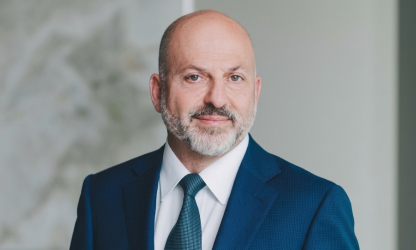
Bolt's Ryan Breslow says HR was creating problems that didn't exist – so he disbanded the whole department, created 'people-ops'
![‘Problems disappeared when I let [HR] go’: Bolt CEO scrapped HR to save a failing startup](https://cdn-res.keymedia.com/cdn-cgi/image/f=auto/https://cdn-res.keymedia.com/cms/images/chrr/stac_639148901768860823.jpg)
Most CEOs facing a near-total collapse in company value reach for a restructuring plan.
Ryan Breslow reached for the HR department.
The Bolt CEO, who returned to lead the San Francisco-based fintech in 2025 after a multi-year absence, has since dismantled the company's HR function, ended unlimited paid time off, and replaced the bulk of his leadership team – moves he says were essential to survival.
HR disbanded, 'people ops' installed
Bolt co-founder Breslow first stepped away as CEO in 2022, the same year the company hit a peak valuation of $11 billion US. By his return three years later, that figure had reportedly fallen to around $300 million – a decline of nearly 97 per cent. Layoffs had already thinned the ranks considerably.
Among his first moves: dissolving the HR team. Speaking at Fortune's Workforce Innovation Summit, he told editorial director Kristin Stoller the department had become a source of friction rather than a business enabler.
"We had an HR team, and that HR team was creating problems that didn't exist," Breslow said.
"Those problems disappeared when I let them go."
In place of a traditional HR function, Bolt introduced a smaller people operations team.
On LinkedIn, Breslow had previously written: "HR is the wrong energy, format, and approach. People ops empowers managers, streamlines decision making, and keeps the company moving at lightning speed."
The end of unlimited PTO
This isn’t Breslow’s first major HR restructure; in the middle of last year he reversed course on unlimited paid time off. In a mid-2025 LinkedIn post, he announced Bolt would shift to a structured four-week vacation entitlement with tenure-based accrual.
"When time off is undefined, the good ones don't take PTO. The bad ones take too much," he wrote.
"This leads to A-performer burnout. B-performer luxuries. And feelings of unfairness across the board."
A recent survey by HR platform Namely found employees with unlimited PTO took only marginally more time off than those with a defined cap – an average of 12.09 days annually in 2022, compared with 11.36 days for their peers.
"We believe a team executing at the pace and scale we do deserves real, protected time off, not vague promises," a Bolt spokesperson said.
"When we saw in our own data that our A-players weren't taking enough time away, we knew we had to fix it."
A culture reset with uncomfortable lessons
Beyond structural changes, Breslow described a deeper cultural problem. Employees hired during the company's growth years had, by his account, grown comfortable and disengaged from the demands of a startup-mode environment.
"There's a sense of entitlement that had festered across the company, and people who felt empowered, felt entitled – but weren't actually working hard," Breslow said in Fortune.
"And this is the number one thing that I had to battle. Ultimately, most of those people just had to be let go."
He gave the existing workforce 60 days to adapt. By his account, 99 per cent could not make the shift. Four-day workweeks and unlimited PTO were among the progressive policies abandoned in the reset.
"As someone who was a pioneer of conscious leadership," Breslow said, "I had to bring a company back to a very gritty place."
LiveMint reports that Bolt, which now operates as a financial super app offering payments, rewards, and cryptocurrency trading, says it is seeing renewed momentum, with Breslow stating: "Our customers are telling us, 'We haven't had this type of attention in four years'."