
Province requires employers to supply products at no cost to workers
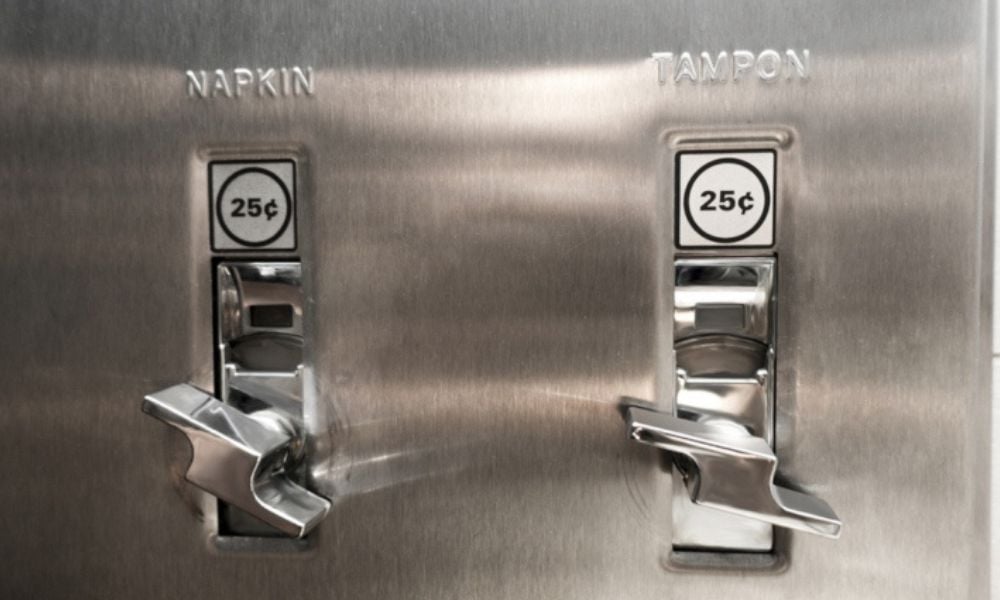
Manitoba employers have less than a week to comply with new regulations requiring them to provide free menstrual products in the workplace, with the Sept. 1, 2026 deadline fast approaching.
The rules, announced in March by Labour and Immigration Minister Malaya Marcelino, make Manitoba the first province in Canada to require employers to supply menstrual pads and tampons at no cost to workers. Marcelino called the change a matter of basic dignity.
"These changes are about dignity and fairness at work," she said. "No one should have to worry about access to basic menstrual products while they are doing their job. Periods are a normal part of life and workplaces should reflect that reality by making sure workers have what they need."
Anna Rothney, executive director of the Manitoba Federation of Labour, called the move an important step.
"This is a really important step for gender equity in the workplace, and for health and safety on the job," she said. "Treating menstrual products like the necessities they are will lead to healthier and more inclusive workplaces and reduced stigma around periods. It will help make life more affordable for many workers who are struggling to pay their bills."
As of Dec. 15, 2023, federally regulated employers are also required to provide pads and tampons to any employee who needs them while on the job at their workplace.
What employers must do
Under the new regulation, employers must provide at least one type of tampon and one type of pad, available at no cost, in workplace washrooms or another accessible private location. Covered disposal containers must be placed near each toilet. Supplies must be maintained and restocked as frequently as needed to ensure products are always available.
The requirements apply to all workplace washrooms regardless of how they are designated — men's, women's or universal. Workers must be able to access products without having to ask for them. The rules apply even in workplaces where no employees currently menstruate.
Employers are not required to provide special dispensers — they may choose whatever storage and dispensing method is appropriate for their workplace. They are also not obligated to provide products to clients or the public. If a washroom is shared with the public, products may be placed in an alternate private location accessible to workers.
Costs for employers
The province has emphasized the cost of compliance is modest. Federal estimates cited by the government suggest annual costs of $10 to $25 per employee who menstruates, with one-time dispenser and disposal container costs ranging from $20 to $300.
The Workplace Safety and Health Branch will enforce compliance through existing workplace inspections. Employers who fail to comply face administrative penalties ranging from $1,000 to $5,000.
Second and subsequent violations can result in penalties of $3,000 to $5,000.
How to handle non-compliance
Workers who believe their employer is not in compliance are advised to first raise the issue with their supervisor, manager or employer directly. If unresolved, the matter can be brought to the workplace safety and health committee or representative, where one exists, who can make recommendations to the employer.
If the issue remains unresolved, workers can contact the Workplace Safety and Health Branch at 204-957-SAFE (7233) or toll-free at 1-855-957-SAFE (7233). Anonymous tips and formal complaints can also be filed through the same number.



