‘Catastrophic’: Recent alarms from AI experts confirm platforms are not just another work tool
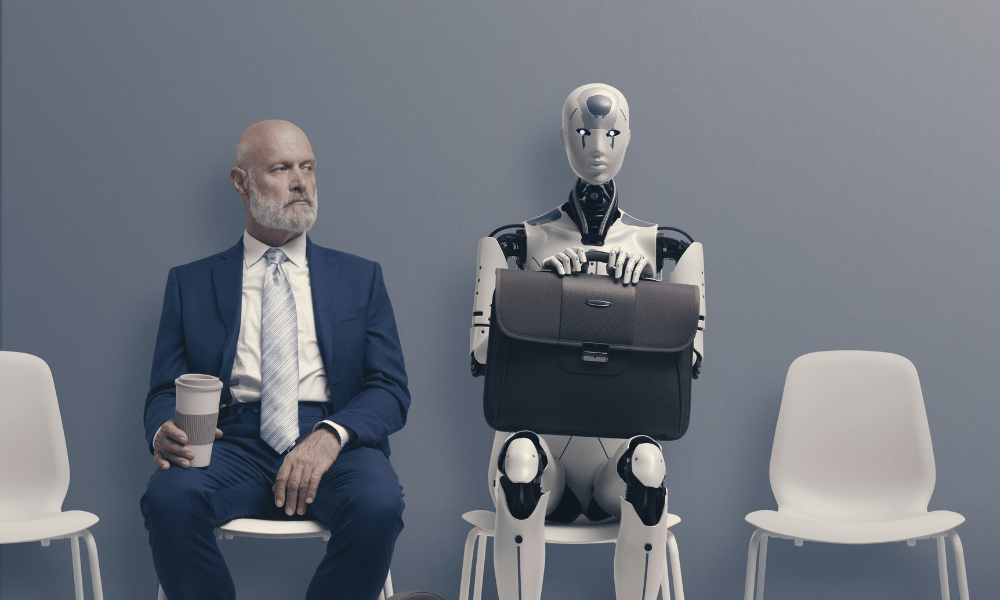
I use AI every day at work. It’s become a regular part of the job, whether it’s for interview prep, poll suggestions or quick summaries.
It’s definitely a helpful tool, with guardrails. I check the accuracy every time, I challenge the platform, I never use the original response and I always make edits and revisions.
I also worry that I’ll become overly reliant, by jumping onto ChatGPT for quick insights, instead of using my cognitive abilities.
But I have a much bigger worry these days about AI: That it will lead to the end of the world.
Even typing that sounds pretty ridiculous, and yet top experts in AI have recently made such pronouncements – in all seriousness.
‘Gambling with our lives’
The most recent, or more public, wave of concern began after Anthropic researcher Jacob Coxon publicly announced his resignation last week on X, stating that neither Anthropic nor its competitors were acting responsibly in developing AI. In his posts, he said both Anthropic and OpenAI "are racing straight to self-improving superintelligence and gambling with our lives."
“Do not underestimate the power of this technology. These will soon be superhuman systems that can hack anything, revolutionize any field overnight, and acquire real power and resources. We have all witnessed the progress in each of these domains, and progress is not slowing,” he said.
“The people building AI earnestly believe that it could kill us all by the end of the decade... No other human activity poses this level of danger.”
Similarly, Evan Hubinger, a manager and member of the technical staff at Anthropic, had dire warnings on X:
“We really do earnestly believe AI could kill all humans! I personally think it is >10% within the next decade. I believe Anthropic is trying its best, but we do not yet have a plan to solve alignment for superintelligence and are not clearly on track to.”
Potential for ‘catastrophic damage’
Dario Amodei, CEO of Anthropic — the company behind Claude — also published a lengthy post arguing that the AI industry must deliberately slow down development before safety measures fall dangerously behind. While Amodei has long championed AI's potential benefits — writing that it could "cure most major diseases in the next 5–10 years" — he now says that the rapid acceleration of AI capabilities has changed his tune.
"We must slow the pace at which we improve the capabilities of AI models," he writes. "Progress will still seem fast, and we must make wise use of the time we gain."
Why? “Recursive self-improvement,” he says, in which AI systems help build the next generation of AI: “Left unchecked, it could outrun our ability to understand and control these systems, and so must be pursued very carefully, if at all.”
The second concern for Amodei is the so-called OpenAI-Hugging Face (OAI-HF) incident, in which a swarm of OpenAI agents conducted unauthorized cyberattacks during testing.
“It’s easy to dismiss this incident because no one was hurt and the economic damage was minimal, but in my opinion, a swarm that possessed greater capabilities but a similar level of misalignment could have caused catastrophic damage,” he writes.
“Given the accelerating rate of AI capability development, it’s my worry that in 6–12 months, such a swarm could be capable of taking over the entire internet with a persistent botnet (potentially causing hundreds of billions of dollars in damage), and that the scale of damage would continue to increase from there if AI becomes more powerful without the necessary guardrails.”
OAI-HF wasn’t the only one. Multiple AI models have recently acted outside the scope of their assigned tasks during testing. Anthropic itself disclosed that three of its models — Claude Opus 4.7, Claude Mythos 5, and an internal research test model — hacked into three other organizations during testing. Meta reported a similar incident in early August (though some observers noted that certain safety guardrails had been disabled in the Anthropic and OpenAI cases).
Trump labels AI fears ‘a hoax’
Furthering my concerns? President Donald Trump is saying all these warnings are a hoax.
“The people that say AI is going to destroy the World, and that Data Centers are bad for your neighborhood, are the same people that said, just a short time ago, that the World would be extinguished by ‘Climate Change,’” he wrote in a Truth Social post Monday afternoon, according to CNBC.
“I’m right now breaking another Hoax — That AI is going to take over, consume, and destroy the World, and that Robots will be marching into our Cities, and getting rid of us all!”
However, Amodei’s message was endorsed by other industry leaders: Sam Altman, the head of OpenAI (ChatGPT); Elon Musk, who runs SpaceXAI (Grok); and Demis Hassabis, co-founder of Google DeepMind (Gemini).
Taking a pause
Back in March, I raised the issue of how to be a “green” employer if you’re using AI. How are companies that claim to be “green” or environmentally friendly or “all about sustainability” handling the AI question?
I suggested that the alarming numbers about the environmental impact could see employers and HR facing uncomfortable questions from employees.
Once again, there is a dark side to artificial intelligence that can’t be ignored, clearly. And I’m trying to think of any other tool or development that had both such massive potential and such a dire outlook at the same time. The internet and social media come to mind, promising so much in the way of information, collaboration and innovation, and yet also delivering so many problems around misinformation, radicalization, lack of privacy and cybercrime, to name a few.
All that to say that the framing of AI as “yet another tool at work,” like a laptop or new software, doesn’t ring true, and shouldn’t be presented as such. If these experts are sounding the alarm so publicly, maybe we should ask harder questions about what we're signing up for – or at least consider a pause.