
'Access to the right technology is a powerful force for inclusion'
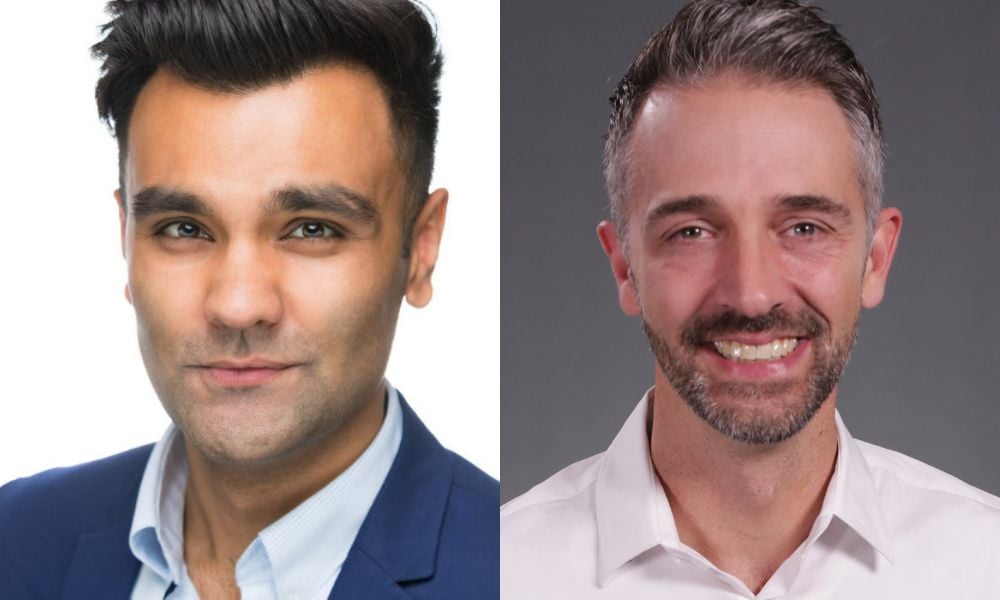
When Hamayal Choudhry was studying mechatronics engineering back in 2016, he was suddenly hit with a great idea to help someone he knew.
“A good friend of mine was born with an amputation, with a limb difference,” he says, and she told him that most prosthetics that were affordable or accessible “weren’t really super-functional” while the functional robotic devices “were very hard to access, and still quite limited in terms of the utility that you were able to derive from them.”
So Choudhry looked to newer technology to solve his friend’s problems.
“I thought, ‘Why not 3D-print something and supercharge it using AI to allow users to gain more utility out of devices like that?’ And so the idea was to stick a camera in the palm that basically looked at whatever it was you’re about to pick-up or interact with, and it used AI to figure out exactly how to do that,” he says.
Choudhry’s company, smartARM, then entered the 2018 Imagine Cup, which is a competition put on by Microsoft, where it won a mentoring session with Microsoft CEO Satya Nadella, $85,000 in cash and a $50,000 Azure grant.
The company will soon offer an “affordable” option for people who are disabled because of limb differences, says the founder and CEO.
AI in the workplace
The marriage of AI and physical tech should not be considered a niche idea, says a workplace accessibility expert, and it’s important for employers to recognize this when looking at how to best support the workforce.
“Statistically, a high percentage of the population do live with disabilities; one in five would be a broad standard but very few of them will self-identify and so, unfortunately, individuals just don’t feel safe, or feel that they have the venues through which they can raise those issues,” says Jason Brommet, head of modern work and surface and accessibility lead at Microsoft Canada in Mississauga, Ont.
Businesses who wish to support those workers must first create an environment in which employers are empowered to ask for accommodation.
“You do run into what are called bias and exclusion barriers, which is very much independent of the hardware or the software side of it, which is this discrimination or marginalization in the workforce due to their disability and so organizations or cultures may not be as open to or create environments where individuals feel safe in raising those asks for accommodations,” says Brommet.
Employers must always offer accommodations to disabled employees, says an employment lawyer.
Products such as smartARM might be employed more broadly, says Choudhry allowing organizations to bring in more workers who might in the past have been excluded from employment.
“Ultimately, there’s a variety of workplaces where it can be used, especially in fields where manual dexterity and precision are required. Up until now, there are a lot of things people might have been hesitant [about] or opposed to dealing with prosthetics, just because of where the current benchmark for precision and dexterity is.
“It could enable individuals who previously cannot perform certain tasks that the application does, [to participate] in a workforce and it includes things like manufacturing, healthcare, even creative fields, like art, or music.”
Technology as an inclusionary tool
But could these types of technologies make a real difference for differently abled employees?
“We believe at Microsoft access to the right technology is a powerful force for inclusion; we also believe that it is a fundamental right for individuals to have access to the computing, the technology and being able to participate fully, whether that be in work, whether that be in life, whether that be school, or whether that be in work,” says Brommet.
Adding more employees who are disabled is not only good for them but for organizations, according to Brommet.
“We know that individuals with disabilities are great employees. In many cases, we’ve seen data as high as 90% performed equal or better than their coworkers without disabilities and it says so much, which is they bring different experiences, different skills to the organization that enabled us collectively to be better.”
In order to make general improvements to the organization, perhaps an acronym change is in order, says Brommet.
Instead of focussing on DEI initiatives, “what I often will ask and inspire is to actually pivot that to be an ‘IDEA’ strategy so inclusion, diversity, equity, and accessibility because what I’ve often found is that accessibility gets forgotten or left off of the broader DEI strategy plan and there’s a moment for HR leaders and organizations to be far more intentional, which is just ensure that you have accessibility front in mind.”
AI and prosthetics could enable many disabled workers to take advantages of employment that able bodied persons may have taken for granted, says Choudhry.
“There are a whole host of disabilities that people have that prevent them or make it difficult for them to move their existing hands, paraplegia being one of them, so besides prosthetics, assistive devices in general AI can facilitate ologies like speech recognition for people with speech impairments, visual assistance tools for the visually impaired and predictive text or AI, or maybe wheelchairs for people with mobility issues.”
“In terms of building an inclusive society, AI combined with robotics can ultimately or will redefine the concept of accessible workplaces and creating an environment where disabilities do not limit an individual’s contributions,” he says.



