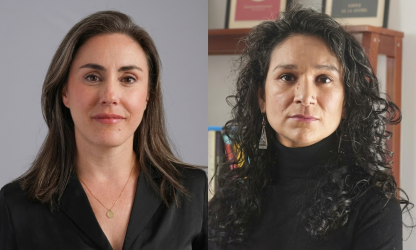
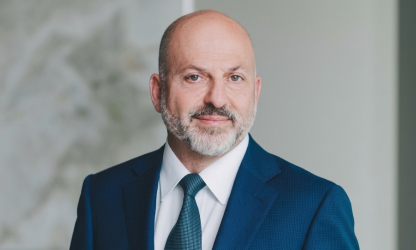
HR leaders from Second Harvest and High Liner Foods discuss skill gap mapping, building a learning culture and measuring what actually matters

For full video of roundtable, click here.
"Learning and development and internal mobility are intrinsically linked," says Heba Farid, director of HR at Second Harvest. "Employees are more likely to stay when they can see a future within the organization."
That connection between development and retention was a defining theme of a recent virtual roundtable on learning and development strategies, featuring Farid alongside Sarah Rajmoolie, VP of HR at High Liner Foods.
The discussion covered how organizations are identifying skill gaps, embedding learning into their cultures, approaching AI, and measuring the real return on their L&D investments.
Mapping the gaps at High Liner Foods
Both leaders are in active, multi-year efforts to formalize how they identify and address skill gaps — each taking a distinct approach.
At High Liner Foods, Rajmoolie says the organization recently undertook a journey to map out skill gaps and update its competency matrix, developing sub-competencies within the broader competency framework and mapping the specific skills needed to support growth.
"What does an overutilization of that competency look like? And what does an underutilization of that competency look like?" she says, explaining how the matrix is being designed to show both ends of the spectrum.
The organization is piloting the model with leaders across departments to build out role-specific skill requirements. Rajmoolie describes it as "a bit of a journey" — one that soft launched this year and will continue through the next, covering different departments and roles along the way.
“It gives people a much clearer idea of how they can work on those skills.”
Performance management at Second Harvest
At Second Harvest, Farid says the approach is embedded in the performance management cycle. Employees and managers co-create individual development plans that assess current skills and identify gaps, with future capability needs tied to employees' career goals.
"Managers play an active role in identifying promotion readiness, supporting development, and providing ongoing feedback," she says.
Annual performance assessments at Second Harvest include a dedicated professional development component that focuses on building skills, applying learning, and demonstrating growth, says Farid.
"We do that through a centralized assessment portal that supports consistent and fair objective review across the organization."
She adds that the organization is also building out internal career pathing and promotion frameworks using job descriptions, competency metrics, experience requirements and mobility criteria.
"We try to move beyond simply identifying the gaps and instead focus on creating clear development pathways that help employees build the capabilities they require for future opportunities," she says.
Learning culture as retention strategy
When the conversation turned to retention and internal mobility, both leaders were direct: L&D is not a nice-to-have.
At High Liner, the dynamic is shaped by the organization's flat structure, which limits upward movement, making lateral development and learning all the more critical, according to Rajmoolie.
"L&D has an even more important role to play as a result of that unclear path sometimes," she says. "You can't promote everybody every year as a result of a flat organization, but we can provide opportunities for everybody to learn and grow and develop throughout the organization."
Opportunities at High Liner include stretch assignments, cross-functional group projects, internal learning programs and external learning opportunities — all aimed at ensuring employees feel they have a future with the company.
Farid says Second Harvest views career growth as a shared responsibility among employees, leaders and the organization, with internal application and promotion policies designed to support “transparent career progression” and encourage managers to actively back employee mobility, she says.
Development opportunities range from formal courses and certifications to stretch assignments, job shadowing, mentoring and cross-functional collaboration — all embedded in the performance management process.
"Employee feedback consistently highlights that growth opportunities and promotions from within the organization are reasons why people choose to stay," she says.
AI: early days, clear direction
Both organizations are in the early stages of their AI journeys, though the frameworks being built reflect a consistent philosophy: AI as augmentation, not replacement.
Rajmoolie says High Liner has been working closely with its IT department to bring AI education to employees, recently launching a learning series focused on how AI can support daily workflows.
“We partner very closely with our IT function in order to ensure that [we] get that human and machine kind of learning that goes together because a lot of studies have shown that if they don't go together, AI will fail in the organization and you won't continue to get the ROI — or get any ROI, in fact — from your investment in AI overall.”
At Second Harvest, Farid says the organization has created formal AI policies requiring employees to complete AI literacy training before using AI tools at work, with an emphasis on responsible, ethical and secure use.
Examples include internal AI training sessions covering foundational machine learning concepts and prompt engineering, an early adopter program supporting tools such as Microsoft Copilot, and exploration of AI-enabled features in work management platforms such as Asana.
"We see AI as not a replacement for people but as a tool to augment productivity and help employees focus on higher-value work," says Farid.
Standout L&D programs
Among High Liner's best-attended initiatives was a learning series on predictive index (PI) — a behavioural assessment tool — that drew nearly 90% of the organization.
"That learning series really helped individuals determine what their PI profile is, how that impacts their work with others cross-functionally, as well as some behavioural watchouts for themselves and how that could impact their perception of others throughout the organization," says Rajmoolie.
“It really supported stress factors when you're experiencing change, as well as how you as a leader can support your team through change.”
High Liner is also running a "boot camp" for its manufacturing team — an initiative that pairs long-tenured employees, including several who recently marked 50 years with the company, with newer employees at plant locations across Canada and the US.
"It's really creating some mentoring, some networking, and things like that through our learning and development program, allowing them to share ideas, share best practices, and really get back to basics."
At Second Harvest, standout programs include a professional development stipend that gives every employee an annual fund to invest in learning aligned with their goals, as well as ongoing EDI learning initiatives focused on inclusive leadership and cultural competency.
"We have ongoing cultural competency and inclusion training that support the development of inclusive leadership and workplace practices," says Farid, adding that the organization is also expanding access to on-demand AI-assisted learning pathways through platforms such as LinkedIn Learning and Citation Canada
ROI over completion rates
Both leaders push back against the idea that measuring learning means tracking who finished a course.
"The ROI is much more important to us than who completes it or how many people complete it," says Rajmoolie. "We really want to focus on the value creation that these programs are giving to our employees. If we're just forcing people to go through it in order to track completion rates, I don't know that we're going to get that same level of value and that same level of engagement throughout the process."
Farid agrees, framing the distinction clearly: completion rates indicate participation; ROI indicates impact.
At Second Harvest, the focus is on capability building, readiness for future roles, and the application of new skills to stretch assignments and improved performance — alongside engagement and retention outcomes.
"The ultimate measure of success is whether learning changes behaviour, improves performance, develops future leaders, and enables internal career growth," she says. "Completion rates remain a useful leading indicator, but on their own, they cannot tell us the end of the learning initiative."