
Legal decisions around masking, privacy and compensation suggests safety efforts are paying off
Strictly speaking, from a legal perspective, there isn’t really much of a difference with the COVID-19 pandemic and most workplace safety considerations — employers have an obligation to take all reasonable precautions to protect employees from the hazards, says James Jennings, an associate at Filion Wakely Thorup Angeletti in Toronto.
“But, practically speaking, the hazards posed by COVID-19 are on a whole other scale,” he says.
“Normally, workplace hazards are something that arise from the conduct of business itself, such as moving machinery parts or someone leaves a bucket on the floor… whereas COVID, on the other hand, is brought in from outside.”
Most employers take health and safety very seriously, “but this is a dramatically different situation,” says Natalie Fisher, a lawyer at Sherrard Kuzz in Toronto.
Not only does COVID have an immediate impact on the health of employees, their families and customers, it “can also jeopardize an employer’s ability to continue operating,” she says.
The situation is almost unprecedented when you think about the safety requirements and obligations put on employers to follow the recommendations of public health to prevent the spread of the virus, says Fisher.
“It’s clear, these are extraordinary circumstances when it comes to addressing health and safety.”
Over 18 months of crisis, employers have had to step up quickly to address the situation. And despite the chaos of the early days and the subsequent waves of rising COVID cases and regional lockdowns, a look at recent decisions suggests employers’ efforts are backed by a legal system focused on safety in the midst of much uncertainty.
Bracing for legal challenges
For the most part, employers have looked to public health directives for an objective standard against which to compare their policies, such as the importance of wearing a mask, says Jennings.
“Ultimately, when adjudicators are looking at whether or not to enforce a policy, the employer has to demonstrate to the adjudicator that they have an objective reason for constructing the policy that they did. And those public health guidelines are in many ways the most objective sort of resource that most employers are going to ultimately have access to.”
Most protocols that are being implemented right now are what’s being recommended by public health or is required by the legislation, says Fisher, so employers are “in a very strong position to defend those policies, even as we’ve seen different requirements being implemented with little to no notice.”
Obviously, legal decision-makers are going to be closely guided by what the current science winds up saying. And, sometimes, the science is inconclusive, says Michael Lynk, associate professor in the faculty of law at Western University in London, Ont.
“What you will find is that many arbitrators would be guided by two principles: One is insisting upon a high justification for an intrusion on somebody’s body either through COVID-19 testing or through a mandatory vaccination; [and two is] being aware that some workplaces are a high risk with respect to COVID-19 infection, and in a higher-risk workplace, an employer would probably have to prove less in order to be able to establish the justification for their COVID-19 policy via testing, the mandatory vaccination or whatever else there is.”
Mask requirements
One of the areas generating pushback from employees has been around face masks in the workplace, reminiscent of previous legal challenges in the health-care sector, says Jennings.
Hospitals have instituted policies that basically say that an employee has the choice of either getting a flu vaccination or wearing a mask throughout the duration of the flu season.
“A number of arbitrators essentially found that those vaccination or mask policies were not reasonable for an employer to enforce, in part because the science in terms of just how efficacious the flu vaccine is or requiring employees to wear a mask in terms of minimizing the hazards posed by flu in the workplace to other people who are patients of the hospital wasn’t necessarily clear,” he says.
With COVID, the science has reached the point where it’s clear that mandatory masking requirements are helpful for cutting down on the spread of the virus.
“Arbitrators have essentially found that’s why it is reasonable to enforce it, because there is that uncertainty in the face of a global pandemic, when lives are on the line… even if the science isn’t there truly proving the efficacy, because of the unknown in the situation,” says Jennings.
Employees who have exercised their right to refuse work when it comes to mask requirements have not necessarily been successful. For example, one worker in the food industry did not want to wear an N95 mask because he felt other safety measures were sufficient and the mask limited his oxygen so it was a danger to his health, says Patrick Essiminy, head of the employment group for Montreal at Stikeman Elliott.
“His argument was categorically rejected by the court.”
In another case, employees did not want to work without an N95 mask because they were concerned about their safety, but, ultimately, “the court refused the order, saying that the scientific literature did not show that N95s were required... because it was determined that the surgical masks were sufficient,” he says.
Employee privacy concerns
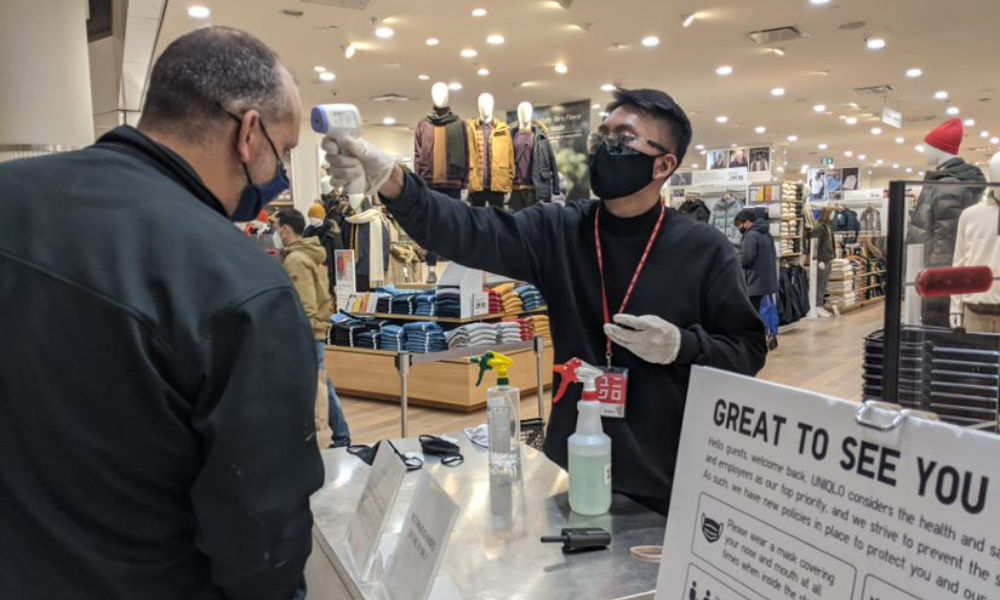
Another challenging area for employers? Employee privacy, when it comes to issues such as taking people’s temperature in screening for COVID or rapid antigen testing.
But, at the end of the day, employers have to protect their workforce from any harm. And during the pandemic, the harm could have terrible consequences, says Essiminy.
“It always becomes a balancing act between potential measures that could invade someone’s privacy by what is being basically sought out by these measures. And, in this case, the balancing act is yes, if you will take someone’s temperature or if you will ask someone to declare symptoms, it is because you also have an obligation to protect the health and safety of the workplace generally.”
Two recent cases demonstrate the challenges around employee privacy and workplace safety. In the December 2020 decision Caressant Care Nursing & Retirement Homes v Christian Labour Association of Canada in Ontario, the union had challenged the policy for employees to be tested for COVID every 14 days. They considered it an “unreasonable exercise of management rights” and an “intrusion on the privacy of employees, as well as a breach of dignities,” says Fisher.
But the arbitrator decided the intrusion and the policy were reasonable and necessary to protect the safety of workers as well as the residents, she says, and it didn’t make sense for the employer to wait until there was an outbreak before taking action.
Rising mental health issues
Employers don’t just have to worry about employees’ physical concerns when it comes to COVID-related safety measures — there is, of course, mental health as well. For example, in Review Reference #R0269567, a B.C. food service worker at a correctional institute was denied workers’ compensation for stress that she claimed came largely from overwork after an outbreak depleted staff levels. WorksafeBC ultimately disallowed the claim.
“There’s been a significant spike in mental health claims coming from Canadian workers during the pandemic. I wouldn’t be surprised [if] we see ongoing claims of the workers compensation level, and we might see employers who are challenging employees with respect to requests for time off or for particular benefits related to mental health,” says Lynk.
But because there is a much greater openness in Canadian society toward mental health issues, as well as among arbitrators, “that is something that employers would not be wise to want to come down hard on their employees,” he says.
Employers should not underestimate the potential for mental health issues that come out as we return to normality, working full time in a normal work environment, says Essiminy.
“I think that we’ll see some backlash at that point as well.”
Safety-related payment options
Unlike normal safety measures, COVID-19 could see employees having to leave the workplace to self-isolate, have a COVID test or get a vaccination. This presents a challenge for employers when it comes to compensating the time off work.
For example, one case saw a union for long-term care homes claiming that the collective agreements required the employer to provide sick pay when nurses received a positive COVID-19 diagnoses or were symptomatic or when nurses were required to self-isolate. While the arbitrator ruled that sick pay should be given when the staff were sick or symptomatic, they said this was not required when people had to isolate for 14 days if they hadn’t tested positive or were asymptomatic.
Generally, if an employee does not meet the criteria of sick leave and does not have a workers compensation case, the other option is applying for the employment insurance benefits that are offered by the federal government for people who cannot go into work because they have to isolate, says Essiminy.
“Employers, as far as I know, are not paying the employees to stay home and not work, unless the employees that are unable to come into work can be accommodated by doing remote work... But if someone’s not working, then the options are limited.”
When it comes to paying employees, there’s both a legal and a practical answer, says Jennings.
“The employer doesn’t really have a freestanding obligation to employ and pay employees for time that they’re not performing work, absent the terms and conditions of a sick pay plan or short-term disability plan entitling the employee to that.”
On the other hand, some employers have decided to sort of offer sick pay to workers awaiting COVID test results or self-quarantining, he says.
“Some employers want to roll it out because, frankly, they recognize that if you’re required to quarantine for 10 days, it might be financially difficult on their employees and they might be deciding to do right by their employees. But from a practical workplace management perspective, if an employer wants to try and avoid an outbreak in their workplace and disincentivizes employees from coming in when they’re experiencing symptoms related to COVID-19, [they might decide to offer pay].”
Disciplinary considerations
Despite best efforts, employers may face the dilemma of discipline when it comes to employees not following COVID-related safety rules. And while employee termination may seem excessive in the midst of a pandemic, it may be the best course.
Early results for employers have been fairly encouraging when it comes to the response of courts and arbitrators around their disciplinary actions, says Jennings.
“But by no means do they essentially give an employer carte blanche to terminate every employee for cause in relation to every violation of a COVID-related protocol, no matter how small it is.”
An employer will always need to determine the appropriate response based on the severity of conduct, the employee’s individual circumstances and any prior conduct issues — particularly ones that are safety related — as well as whether the worker expresses remorse for their actions, says Fisher.
But, generally, an adjudicator will not look kindly on a worker who puts their personal interests above the health and safety of other workers and the general public, she says.
“A violation of a public health or employer COVID-19 guideline is likely to be viewed as a very serious offence... irrespective of whether the risk of that was realized or not.”
Two recent cases illustrate this point. In Garda Security Screening Inc. v. IAM, District 140 (Shoker Grievance), the arbitrator upheld the termination of a unionized security guard at Toronto Pearson International Airport after she was tested for COVID-19 but then went back to the workplace.
“The issue in that case was whether the employee was aware of the requirement to stay at home and isolate... and the arbitrator held that the employer COVID-19 guidelines were clear and also brought to the attention of all workers,” says Fisher.
“By making the decision to go to work despite the employer’s guidelines as well as public health guidelines, the griever chose to put her coworkers and the general public at risk of serious illness.”
In LIUNA, Local 183 v Aecon Industrial, a construction worker who exhibited symptoms of COVID and was instructed to stay home until he was cleared to return instead chose to attend work.
“The arbitrator held that the griever’s decision to attend work, despite the employer’s warning, was again a deliberate attempt to circumvent those instructions and put his [interests] ahead of the risk he knew he presented to others,” she says, adding that the worker also had a number of previous safety infractions.
“It seems not to be relevant in either of these cases whether the employee actually had COVID-19, but the issue was their compliance.”
The next big question: vaccinations
Of course, the next big challenge facing employers in the COVID safety realm concerns vaccines: Should they be mandated among workers?
“One of the leading legal issues for the workplace in 2021 will be whether or not some employers can require a mandatory vaccination as a condition of work. There’s no cases that I’m aware of that have been decided on this issue,” says Lynk.
The closest comparison is probably flu shots, he says, citing as examples two cases decided in 2015 and 2018 in Ontario.
“Essentially, both arbitrators said a hospital cannot make a vaccine mandatory as a condition of employment if there are other less intrusive means of keeping the workplace safe, i.e., requiring workers to wear masks, such as nurses or any other staff in a long-term care facility or hospital, who come in regular contact with each other and with patients.”
But the argument for COVID vaccines is qualitatively different and the outcome is not determinative because COVID-19 is more infectious and more deadly than the flu, says Lynk.
Based on case law, it’s still not entirely clear whether or not employers will be able to enforce mandatory vaccination policies, especially with pushback from trade unions and employees, says Jennings.
“It will be highly context-dependent in terms of the nature of the workplace,” he says. “A lot will be somewhat contingent on where the science proves to be in terms of how effective COVID-19 vaccines are at actually preventing infection to begin with, and preventing transmission, as opposed to simply fighting symptoms. I think that the more that the science indicates that it impacts transmission, the better case employers will ultimately have in terms of trying to push for mandatory vaccines, because then it becomes a health and safety issue for other employees in the workplace.”



