
‘I want to be able to fix the bigger picture’: CHRO at the Toronto Zoo discusses academia, employee wellness and AI challenges
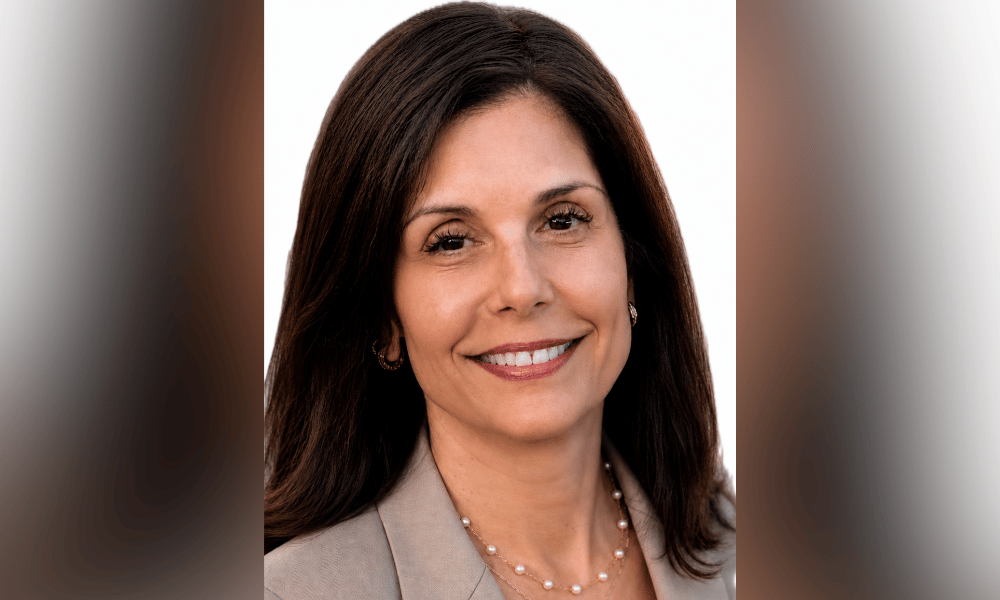
Valerie Peticca is six-and-a-half years into what might be one of the more unusual HR jobs in the country. As CHRO at the Toronto Zoo, her portfolio spans the full people function — plus health and safety, standards, policy and privacy.
And the workforce she oversees swings between roughly 350 employees in the off-season to up to 800 at peak.
To top it off, Peticca started the position in April 2020 — one month into the pandemic.
"It was really about hitting the ground running," she says. "The priority was really getting over COVID and bargaining a new collective agreement. I just got in at that point."
HR career in academics
Peticca didn't set out to become an HR professional. She originally wanted to be a teacher and then a social worker.
"I've always been drawn to people problems and figuring out in the bigger picture how to solve problems with people, together, through collaboration," she says. "By happenstance, I started [working] at a university, and I just progressed through the ranks and… it blew up from there in a really good way."
That trajectory took Peticca through more than 15 years in HR roles at York University followed by the University of Toronto, George Brown College and Loyalist College, before the zoo.
"I love academics, I love learning. I wasn’t always the best student but I just love being in that environment," she says. "I'm very interested in the research part of learning so it was an environment where I felt I thrived.”
What drew Peticca to stay in academic HR for so long was the variety.
"When you're in HR here, it's a city within a city. So, you’re in HR but you have different client groups, so many different jobs. It's very interesting in terms of the diversity."
HR leadership at Toronto Zoo
That interest in academic partly explains Peticca’s move to the Toronto Zoo in May 2020. Encompassing 287 hectares, the zoo is the largest in Canada and averages around 1.2 million visitors a year
"I saw this job and it just spoke to me because it's a learning environment, it's a research environment," she says. "Their conservation science program, their learning and development, their research and all the different roles here really intrigued me."
The organization’s passion for conservation science also was inspiring, says Peticca, along with its ability to make an impact.
One of her first priorities at the zoo was modernizing, in looking at HR holistically, she says, and “strategically looking at that function and building it out for the immediate and the future… it was a small department, it served well for the time, but things were changing.”
Five years in, Peticca’s mandate expanded significantly in inheriting the health and safety portfolio, and then the standards portfolio.
“That's been another highlight of my career in terms of integrating all those three portfolios and coming up with a strategy for the organization and how to move things forward as a team,” she says.
Rather than treating them as separate silos, Peticca worked to pull them together.
"They were silos in a way, so we really needed to integrate that because they all really need to work together in order for that to be successful. It was just bringing the teams together, understanding the shared vision of the organization."
Caring for all employees
One of Peticca's points of pride is the staff wellness program. The Zoo's TZ Cares initiative has earned external recognition.
"There's much more care in terms of what we provide in the workplace,” she says, but it can't be a one-size-fits-all approach.
"It used to be like, ‘OK, we'll buy this package and we'll do this,’ but now you have to really take a look at what's going on and build a great program for your staff.”
Another area where academic HR prepared her well, she says, is labour relations, and the fundamentals hold across sectors.
"I've been dealing with employee and labour relations for so many years, I just get it — you agree to disagree and I love that,” says Peticca. “Without the union on board, it's really tough to move ahead."
AI, data and the challenges ahead
Like most HR leaders right now, Peticca is navigating the question of what AI means for her organization — and she's measured about where they sit.
"We are just starting, the zoo just built a policy, did some training. We have LMS training on AI. I think there's a lot that we can do, but… we're just starting to hit the surface there."
The zoo has built out a dedicated data and AI department over the past year-and-a-half, with data scientists working on metrics, reporting and policy, she says.
"We're really excited to see how that will come to fruition and help us."
Advice for those starting out
Recently, Peticca started teaching HR management through Toronto Metropolitan University (TMU) — helping to develop one of the programs in the certificate — and is candid about what she tells students at the outset.
"There are so many different paths: ‘Do you want to be a generalist? Do you want to be a specialist? If you want to be a specialist, what areas intrigue you?"
She says she tried out many different things until she figured out she didn’t want to focus on one thing.
“I want to do strategy. I want to be able to look at the bigger picture.”
Pettica’s advice, in short: "Dip your toes in some areas and then take it from there. I bet there's going to be something that really intrigues you."
.



