
'It's not about getting something down on paper and sticking to it, but having a guiding principle and adapting as we go,' says Susannah Crabtree
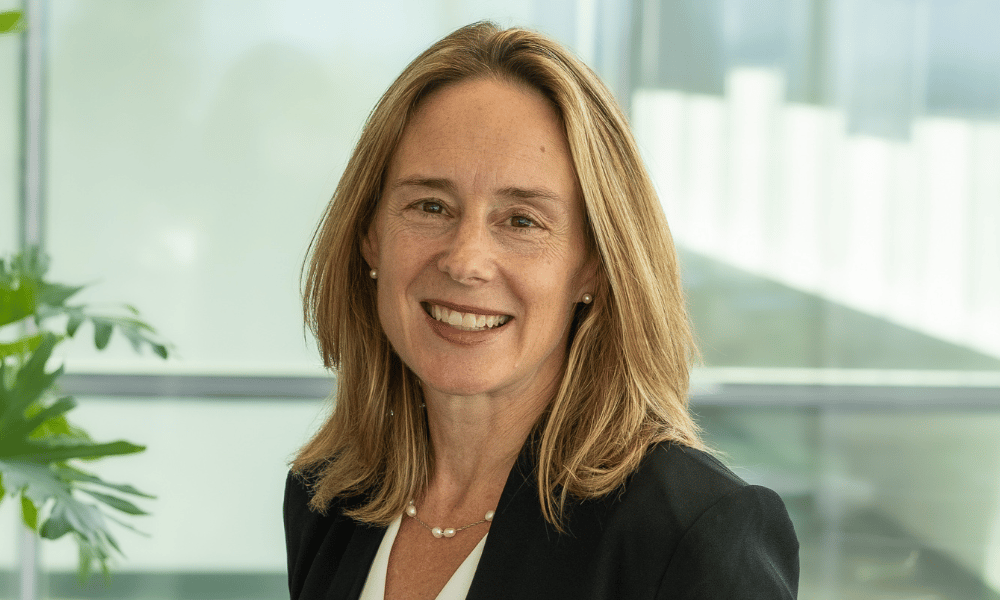
When Susannah Crabtree moved from HR consulting to in-house HR, she had one concern: Would it be too cyclical and less inspiring?
Fortunately, those concerns quickly disappeared.
“Consulting is always about the newest and greatest thing. And [in HR] it’s a pleasant surprise to find that, in fact, there are new challenges that come up every single day,” says the senior vice-president of people and culture at Export Development Canada (EDC).
HR having at the seat at the executive table of a strategic organization with an exciting mandate means the people and culture team has an opportunity to do more than just the cyclical or operational elements of HR, she says.
“We’re invited to help set the people strategy of the organization, which is really the most important part. Without people being engaged and empowered, we're not going to achieve what we want to achieve.”
As a result, with more than 25 years under her belt, Crabtree can look back and say the HR path has definitely been rewarding.
“HR is an exciting career and really meaningful and you can make a measurable difference — day to day and year over year.”
‘Roundabout journey’ into HR
After attaining an Honours Bachelor of Science in psychology and mathematics from McGill University, Crabtree’s path into HR was “a bit of a roundabout journey,” she says, in starting her career as a pension and benefits actuary in the consulting space, working closely with HR and finance teams.
“Early on, I started to have the perspective of how HR helps to drive organizations from the view of my clients. So… that set the foundation.”
The second part of Crabtree’s career involved leadership roles in HR consulting for about 15 years, as she took up progressively more senior leadership roles with Mercer. She then moved to Odgers Berndtson, broadening her knowledge.
“I spent time as the managing partner of an executive search firm which was valuable experience in terms of some of the other aspects of HR I wouldn't have known as well — like succession planning and governance and leadership.”
In 2019, she rejoined Mercer in Canada to lead the talent consulting practice, saying that being a member of the Canadian executive team with a talented team and great client exposure rounded out her HR experience to every facet of the profession.
Transferring consulting skills
In July 2023, Crabtree joined EDC to lead their people and culture team. The organization has about 2,300 employees, with roughly 1,500 in the national capital region and the rest in a few locations across Canada and globally. A financial Crown corporation, it offers companies financial products and knowledge to support them to enter new markets, reduce financial risk and grow their business.
And she says she felt ready for the role, given her breadth of consulting, business and leadership experience.
“In addition to the subject matter expertise that I would have gained across all of those areas, I… developed a keen sense of business operations strategy and saw firsthand how the people agenda really impacts business strategy,” she says.
“Sitting on a cross-functional executive team to lead a business, which I also do now in my role, was really great transferable experience.”
Working in executive search also enhanced Crabtree's critical thinking skills and ability to recognize leadership strengths, she says.
“When you're supporting a board committee to select the CEO of an organization, you have to understand how that business works and its priorities. And executive search consultants have a real opportunity to go deep into business strategy with their clients.”
HR priorities at EDC
When asked about market volatility and its impact on workforce planning, one of the big HR priorities at EDC is preparing the workforce for the future, and part of that is a link to how quickly technology is advancing, according to Crabtree.
“There's a real cultural implication to that because people understand that the way we are working is evolving, but it also means changes to their day to day. So, it's exciting and uncomfortable at the same time, and change management is a critical element, so our employees feel secure along the way."
EDC deals with clients every day who are coping with these challenges, she says.
“Our people see firsthand what uncertainty means for Canadian businesses, and how easy it is to be reactive to day-to-day market volatility. From a workforce perspective, we have to look beyond today and think longer term on the strategic workforce planning."
3 pillars of organizational strategy
The people and culture team at EDC recently launched an HR strategy, which is fundamentally based on enabling the organizational strategy.
"The HR priorities are linked to a much bigger picture for EDC," she says.
The HR strategy has three main pillars, says Crabtree, which include identifying and developing the skills and competencies of the future.
“For us, it's not necessarily about reducing the size of our workforce but more about changing the type of work that people do — allowing them to automate routine tasks and focus on the more strategic parts of the role.”
Also a pillar is a focus on leadership, in giving current and future leaders the right tools so they can enable and empower their teams, she says: “We need our people to be equipped in order to move at the speed and scale of business.”
Thirdly, there’s a focus on operational excellence, says Crabtree, citing the need to update technology and processes that “can be quite cumbersome” by focusing on streamlining and efficiencies.
“Operational excellence, especially in HR, means that our employees are going to have a better experience and they're able to better focus on their role priorities."
Importantly, this new strategy is not inflexible and changes when needed, she says.
“Truthfully, some of our priorities have already started to shift a bit, but in a positive way. So, for me, it's not about getting something down on paper and sticking to it, but we are aligned to our north star and then adapting as we go to make sure that we're meeting the needs of the organization.”



