Travis Titley of Burgundy Diamond Mines recalls career steering employers through booms, busts and everything in between
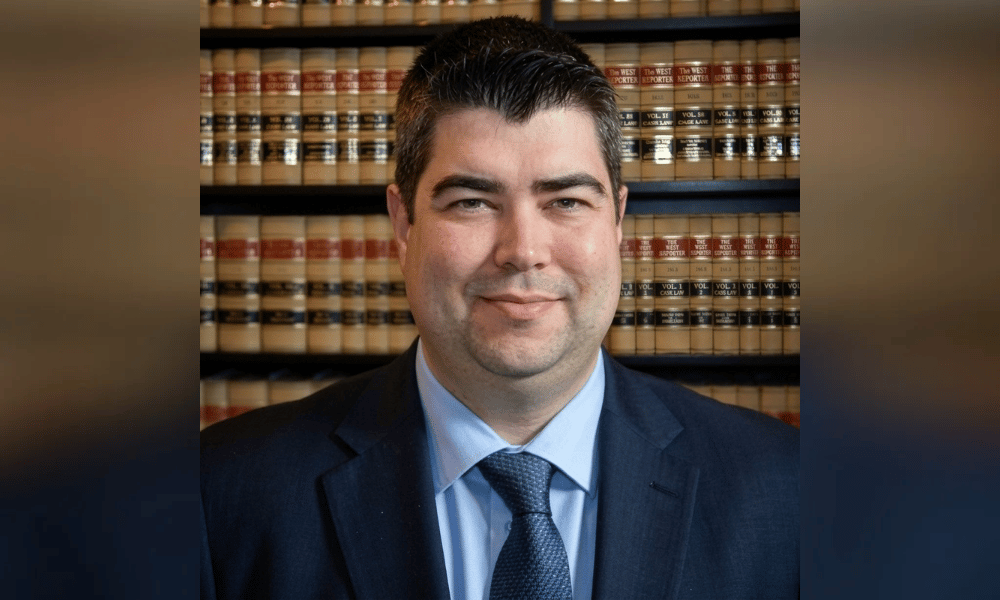
Travis Titley is, by his own account, one of the last senior leaders left at the Canadian arm of Burgundy Diamond Mines.
He joined the company, which operated the Ekati Diamond Mine in the Northwest Territories through its subsidiary Arctic Canadian Diamond Company, last summer and is now head of HR, communications and communities.
"They had some labour relations needs and I wanted to sell my services. But, in fact, they had a lot broader needs," he says. "The diamond market was collapsing at the time. The tariffs were just the latest nail in that coffin."
The challenges included a tough relationship with the union, a lack of strategy around attraction and retention, being “hollowed out” by a mergers and takeovers, and a previous bankruptcy, says Titley.
"I ended up with this big conglomeration of portfolios because I'm a businessperson, I pitch in wherever. But the challenge there was cost savings, streamlining, and retaining people with uncertainty [in the business]."
Insolvency and end of diamond mining
Arctic Canadian filed for creditor protection under the Companies' Creditors Arrangement Act (CCAA) in late 2025, and in July 2026 the Canadian subsidiary ACDC entered receivership.
"The company is insolvent now and being run by the receiver," he says. "We've turned it into a remediation company, essentially."
All of their neighbours have pretty much shut down, says Titley: “There will be no more diamond mining in Canada. It's over."
Why? Part of the problem is substitution.
"Millennials don't buy expensive natural diamonds. They're buying cheap, synthetic diamonds," he says. "We don't call them diamonds [they’re] man-made carbon crystals, and they cost less than one-tenth the price of natural diamonds."
The regional impact is tough to hear. "It's certainly sad to watch an industry that employed 4,000 or 5,000 people — not just us, all of our neighbouring mines — out of a population of 45,000. That was about one-fifth of the GDP of that region of Canada,” says Titley.
The diamond industry will be replaced by the building of highways and air bases, but new mining is also on the horizon, in four or five years, he says.
“Lithium and gold, silver and iron will replace diamonds, but it's going to take time to get it done."
Delivering bad news well
With no executives left, Titley also took on the communities portfolio, including First Nations relationships.
"Dealing with the stakeholders and doing that in a way that's honest, authentic and empathetic was satisfying for me. I mean, it's very bad news," he says. "I'm telling partners that have relied upon payments from us, ‘You're not going to receive the money that was promised because we don't have it. Here's what's most likely to happen next, and how can I help you?’"
The company laid off three-quarters of its employees, says Titley, but they “did it well."
That, he says, is a lesson from the oil sands. "I probably went through three peaks and maybe four valleys in my 15-year career in the oil sands."
"When you have to reduce the size of the workforce, it's what you did to them and how you made them feel that they remember, not the words you said. And the people who remain are watching, and it is for them as well, that you behave in a certain way, that you're organized, you're professional, that it makes sense, that you're not taking advantage of people."
From psychology to Petro-Canada
Titley first studied psychology at Western University and expected to become a clinical psychologist; instead, he became interested in business in his fourth year.
"I'd always thought that I would work in a human-facing job and realized that there's a lot of demand for supporting employees and employers with systems — that human capital is one pillar of business," he says. "I probably should have done a business degree, but I realized that very late in a psychology degree."
A one-year postgraduate diploma at Sheridan College got him into an HR department and Titley landed at Petro-Canada in the early 2000s.
"They hadn't hired at Petro-Canada for many years. They'd grown through mergers and reductions, lots of layoffs. And there was a department full of people with 20 years of service, the survivors from the mergers," he says. “I was fortunate to be one of the few younger people, and I got a lot of great mentorship and development."
Titley started as a recruiter, then moved into business partnering, and when Petro-Canada and its partners began building the Fort Hills oil sands mine, he says he jumped at the opportunity to move and get into the mining side of things.
Then came the 2009 merger with Suncor, one of Canada’s largest outside of the banks, says Titley, who moved into leadership in Fort McMurray and later served as people readiness lead for Suncor's autonomous haulage systems.
"These things are the size of houses. And if you don't have to have people inside of them, they don't get hurt. They don't ever lose their attention, and they do exactly what you ask them to do every time."
That experience, he says, "gave me perspective where strategic HR can play at the executive table."
HR leadership at Sherritt, SMS Equipment
After nearly 14 years at Suncor, Titley joined Sherritt International, where he worked on operations and assignments including Cuba and interaction with the joint venture in Madagascar. He led "a teardown and redesign of that organization" — his first general manager-level role. But the business was buffeted by politics: "We had Barack Obama elected, rapprochement with Cuba, and then Trump term one, and of course everything fell apart."
Six years at SMS Equipment saw the opposite problem, as they were poised for growth.
"We doubled the size of the company," he says. "We went from an HR manager, HR advisor, doer sort of service model to an HR business partner with centres of expertise and centres of excellence model, where we had centralized tasks and automation of tasks that can be automated, reduced cycle times to hire, increased retention, outsourced the things that need to be outsourced."
Titley started with five reports and finished with 38. Physical locations grew by 25 per cent. The company, owned by Japan's Sumitomo, is now the world's largest Komatsu dealer, he says.
"They are wildly successful because they got their human capital agenda in order."
Education: From Master of Laws to AI
Ongoing education has been an important part of Titley’s career. He holds an executive MBA from Queen's University's Smith School of Business and a Master of Laws from Osgoode Hall Law School, and has taught HR credit courses in Alberta.
"HR is an apprenticeship," he says. "As a practitioner, you definitely don't have what you need coming out of school with a four-year BCom focusing on HR or any other related diploma."
"I find teaching helps to make you a better leader and practitioner as well. You reflect on the foundations. So as a teacher, you're also a learner."
Titley also recently finished an AI program through MIT. He says automation is reshaping mining, from autonomous haul trucks to underground operations.
"These mines will operate themselves," he says. "Automation, AI in the application of mining itself is a game-changer for human resources: screening, training, dispatching. There's so many workface and workforce management applications that I think it changes what an HR practitioner is."
Titley sees two streams when it comes to HR.
"People who are specialists in helping business leaders make smart human capital decisions, and you're going to have people who are HR systems people, who are the few overseeing the repetitive and rapid, highly structured, rules-based work."
As for what's next, Titley expects to stay in mining.
"Remote mining, I think, has certain challenges that I've learned a lot about. I'm excited about the mining sector in Canada."