At HRFest Canada, Fairmont’s Jackie Dacanay says empowering people drives more L&D impact than budget
For most HR and L&D leaders, being asked to do more with less is not a new experience. However, a small budget for training does not make the expectations any smaller — organizations still expect training to change culture, improve leadership and drive engagement.
Leaders can try to make it work by fitting a two-day workshop into two hours or consolidating roles and finding efficiencies. But will that drive the results the organization wants?
For Jackie Dacanay, regional director of learning and development at Fairmont Hotels and Resorts, it is an experience she knows well.
For more than 25 years, Dacanay has worked in hospitality human resources. One of her biggest challenges was executing an L&D program on a very small budget — and not just because of the expectations that come with luxury hospitality but also in managing a multigenerational workforce.
“We have colleagues that have worked there, on average, 25 to 30 years, sometimes in the same role, so they have a set way of doing things. It is difficult to change their mindset and the way that they think,” Dacanay says.
Through that experience and implementing her own successful program, she learned that the budget was never really the problem, she says.
“What if it’s less about the amount of money that you have, but more so about the people that you empower?”.
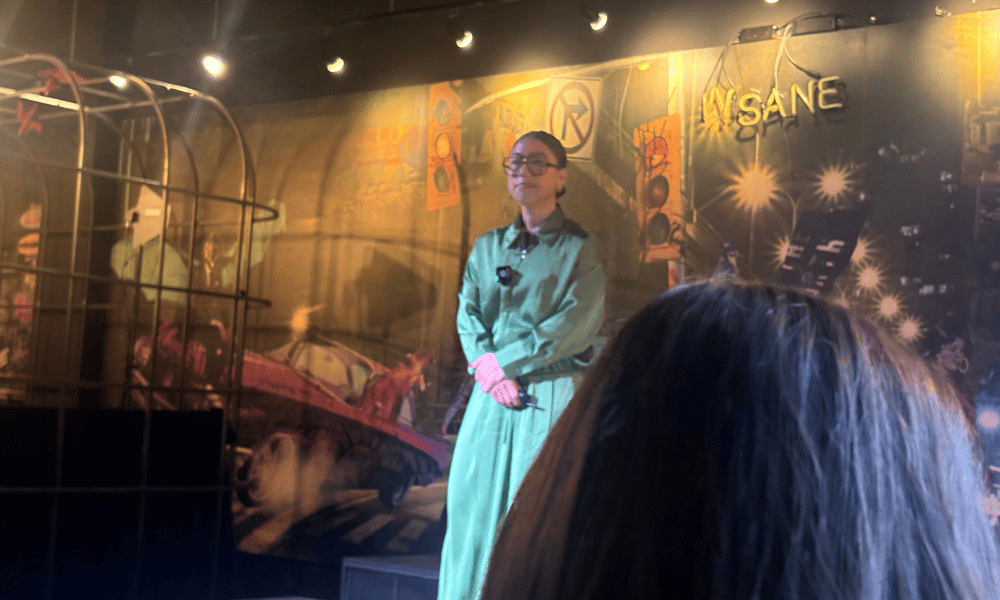
At HRFest Canada, DeCane led the session “Learning and Development on a Diet,” exploring how HR and L&D can still drive results by empowering people. The session was held Nov. 10 at Rebel in Toronto.
Focus on human behaviour over PowerPoint
“Our engagement scores were declining, and our guest service experience scores were also declining,”Dacanay says.
Just like many other hotels, robust training programs were already in place — but the training was not resonating. The issue, she quickly realized, was that traditional L&D was treating symptoms rather than getting to the root of the problem — human behaviour.
“It’s incredibly difficult to stick someone in front of a PowerPoint and say, ‘Change now,’” Dacanay says. “We all come to work with our egos, our own motivations, our vulnerabilities, our unique characteristics and our own ideas of what good service is. We don’t show up as blank slates.”
Instead of focusing on getting all employees into a training course, the focus became understanding human behaviour, she says.
“I needed to get on the floor and see in the operation what these behaviours look like".
Through that, she identified three shifts that would move L&D out of the classroom and into the culture.
First: find the influencers
Rather than trying to change behaviour from the top down, the change needed to start with the influencers, Dacanay says.
Going beyond the leadership chart and job titles, she focused on finding people who were already influencing the workplace had built trust with their peers and were already helping shape the norms of the culture.
“I needed to go and find those people and see ‘How are they doing this?’ ‘How are they naturally, organically coaching their peers so that they see the behaviours that they want to see?’” she says.
These people had always been part of the workplace but were never intentionally utilized. They could help drive business change, she says.
Coaching over telling
Shifting from a culture from "telling" to coaching was a key component that made the difference, Dacanay says.
Instead of explaining or telling employees what to do, the focus shifted to asking curious questions — especially around guest interactions.
“Going up with a bellman and asking, ‘What was something interesting that you learned about that guest? How did you feel about your approach, building that relationship with that business guest? What would you do differently? How do you know if your approach worked to build that human connection?’” she says.
The goal was to create a safe space for employees to think differently and practice with every guest interaction.
Learning as a daily practice
However, the most important aspect of changing behaviour was making sure learning was day to day and not just a one-time moment, Dacanay says.
It is an experience most L&D professionals face — where learning can be hard to move away from being seen as a single event, she says.
“We check a box and we move on. We don’t ever really measure or have a way of seeing currently — there’s no framework to understand, ‘Did I actually change any behaviour?’”
That combination of influencers and coaching is what made learning stick beyond the classroom.
“It was to create a space where everyone was naturally, organically, consistently coaching each other in a way that they were using their influences in their relationships and conversations and the environment around them,” she says.
Since taking this approach, the hotel has seen the highest service scores in its history — and they have continued to sustain those, Dacanay says.
The future of L&D, should not be focused on budgets alone — but on embedding learning and development into the culture itself, she says.
“We can no longer rely on traditional methods of measurement of how many classes did I hold, measure based on the content that we create, the number of attendees that went to each session. We have to reconsider what our role looks like in learning and development,” Dacanay says.
“This shift is again to create a learning and development environment that outlasts you — that continues within the spirit of the people around you, regardless if the tenure is 25 years or one year.”