'A lot of app-based studies are around engagement... that's a good metric, but I don't think it's the only one'

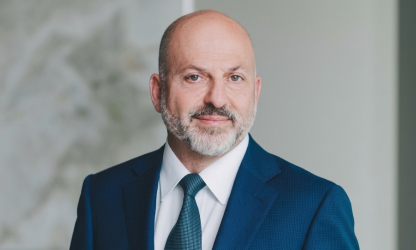
Passionate about mindfulness, David Klemanski recently was involved with a study looking at the use of an app-based approach.
Chief of the Division of Psychology and director of postdoctoral training at Harvard Psychiatry's Cambridge Health Alliance and a faculty member at Harvard Medical School, he came to mindfulness through clinical work with patients diagnosed with anxiety disorders and borderline personality disorder.
“I was just amazed that when we teach people how to use mindfulness properly — so not the pop concept of it, but the proper use of it — how effective it can be in terms of regulating emotions and learning to tolerate distress,” says Klemanski, highlighting the importance of controlling anxiety, instead of the other way around
Recently, he partnered with wellness platform Caravan Wellness to look at the question: Can a short, app-based practice improve people’s wellbeing?
Participants were assigned to one of three groups — mindfulness, physical movement or a wait-list control — and asked to use the app for 10 minutes a day over two weeks.
"We wanted to approximate what it might be like for someone to just download an app and try it," says Klemanski. "So, we gave them very little training."
The mindfulness condition included breath-awareness exercises, mindful walks, and body-based practices that could be done from a desk chair. The movement condition was closer to light stretching than cardiovascular exercise.
Within each condition, participants could choose from a menu of videos and audio tracks — some repeated the same session nearly every day; others varied their approach throughout.
The study included about 35 to 40 participants per condition and measured emotional state, stress, anxiety, quality of life, sleep, physical activity, and motivation at baseline, then tracked outcomes at one- and three-month intervals.
"A lot of app-based studies are around engagement," says Klemanski. "’Do people stick with our app? Do they use it?’ I think that's a good metric, but I don't think it's the only one.”
Improvements in wellbeing
Both active groups reported improvements in well-being by the end of the two-week window. But the stronger signal appeared in the follow-up data.
"We found that people that continue to use the app, the ones that sustained its practice, had actually even bigger changes in their pre-study scores to their post-study scores," says Klemanski — with lower anxiety and higher overall well-being than those who stopped after the trial.
Motivation also shifted. Participants who started with low enthusiasm often ended with more.
"We did find that some of those people who are like, ‘I'm kind of motivated, but I'm more just here for the interesting part of the study,’ they actually developed some motivation along the way after doing the app," he says.
He draws an analogy to dieting: when people begin to see results, they find reasons to keep going.
'One more tool for the repertoire'
Of course, mindfulness should not be considered a solution for issues of burnout or overwork — those are separate problems to be addressed. For mindfulness to truly work, Klemanski says timing is important.
"I want to teach people that doing this stuff in advance of those moments is what really matters. It's more about mitigation by developing a healthy lifestyle that sets you up for resilience rather than reacting.”
If someone is in the middle of an emotional storm and having a really tough day, that's not the day to learn, he says. "The day to learn mindfulness is another day when your mindset is a better space so that you can employ it when you need to."
Klemanski also says the app can be used as a bridge or a buffer to learn the skills so that when it comes time to dive deeper or talk with a therapist or counselor, people have the skills in place “to manage anxiety when it pops up in a much more intensive way," he says.
"I always think about pairing it rather than saying it's separate. It's just one more tool to add to the repertoire of tools that people have, rather than assume that this is a one-size-fits-all curative thing."
The Caravan study is currently being prepared for publication. A follow-up is planned with a larger and more diverse sample — the current study skewed toward women and white participants — and with a longer intervention window of up to four months, to better understand how sustained practice shapes outcomes over time, says Klemanski.