Stigma, trust, accommodation and mental health claims tied to performance issues dominate candid discussion at HRFest Canada
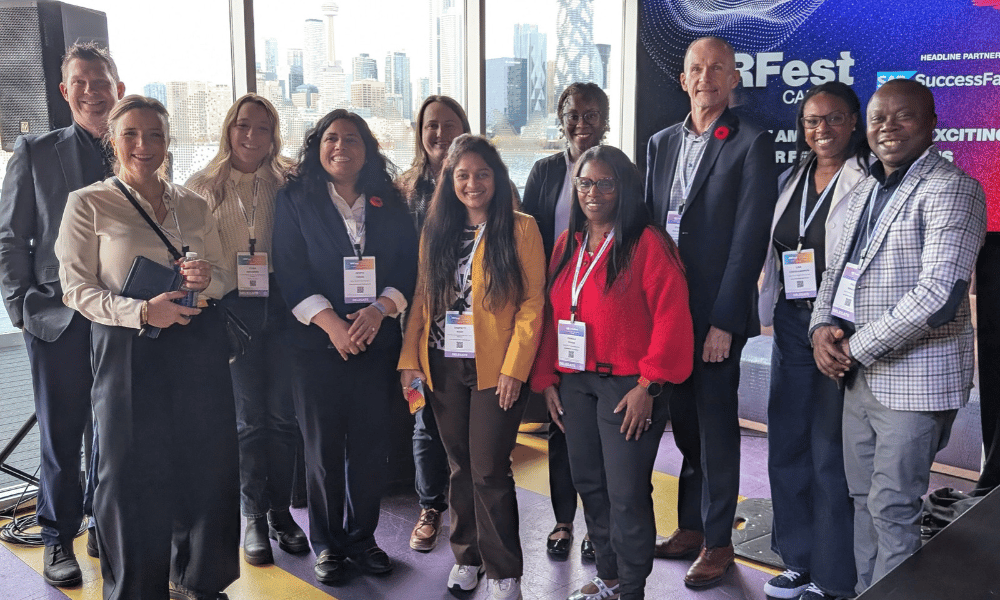
Last week at HRFest Canada, I had the privilege of sitting down with two groups of HR leaders to talk about employee benefits.
As part of our exclusive Breakfast Discussion Tables, 10 to 12 individuals from a variety of sectors and locations sat cozily around the table early in the morning of Nov. 10 and 11 before the full conference started. With Lake Ontario and the cityscape of Toronto in the background, participants laughed and cried, so to speak, in both commiserating about the challenges of employee benefits and relaying possible solutions.
In moderating the discussion on benefits — sponsored by CAA — I met with HR leaders who represented employers both large and small, from the public and private sector, both unionized and non-unionized, or both. Sectors included hospitality, manufacturing, transportation, utilities, finance, not-for-profit, and the arts.
The range of participants made for a great discussion, with surprising commonality and comradery despite the differences.
We delved into questions around: the value of employee benefits, and how exactly that should be defined; how to measure the success of a benefits plan; the cost considerations and importance of utilization rates and awareness; and how essential employee communication is to the whole process.
In looking to better understand their workforce, many of the HR leaders talked about their use of employee surveys — though they admitted this allowed for only one or two questions on benefits. One participant said they rolled out a survey devoted entirely to benefits, which provided more in-depth insights.
One of the more notable topics included the challenge of a multi-generational workforce, with different ages looking for different types of benefits, along with the decreased interest in traditional retirement planning among younger employees.
Several of the HR leaders touted their flexible health plans, saying these have worked well in catering to the spectrum of employee preferences and needs — though some emphasized the importance of anticipating a rise or shift in costs with that kind of move. Others mentioned the challenge of switching back to a traditional plan if the flexible option ends.
Mental health front and centre
Perhaps not surprisingly, mental health became a big part of the discussion during both morning sessions. Many of the HR leaders talked about their challenges in trying to support struggling employees through measures that would make a real difference, while others in the group were clearly frustrated by employees who were unwilling to effectively or genuinely engage in the accommodation process.
They also mentioned challenges around diversity, in terms of cultural differences or language issues among employees when it came to mental health. The HR leaders debated somewhat as to whether there was an issue with stigma and people being reluctant to ask for help, or an issue of trust, in terms of the confidentiality of the process and potential repercussions for their job if they revealed their struggles.
As we’ve heard before, the whole issue of performance management and mental health is another sizeable hurdle to overcome, with HR leaders saying employees are increasingly filing claims when they feel unappreciated — when it’s not necessarily a mental health issue.
The role of providers also came up, in terms of how they handled mental health claims, and in transitioning an employee from a short-term disability leave to a long-term one. Or when LTD runs out and the employee is still reluctant to return — and when the situation might lead to a frustration of contract.
More highlights: Cybersecurity and EVPs
After the Breakfast Discussion Tables each morning, I spoke with several HR leaders at HRFest Canada throughout the day. Plenty of conversations could be overheard at the two-day event, with attendees discussing the workplace, and it’s always amazing to me to see how easily HR professionals connect at these industry gatherings, eager to share their stories and experiences.
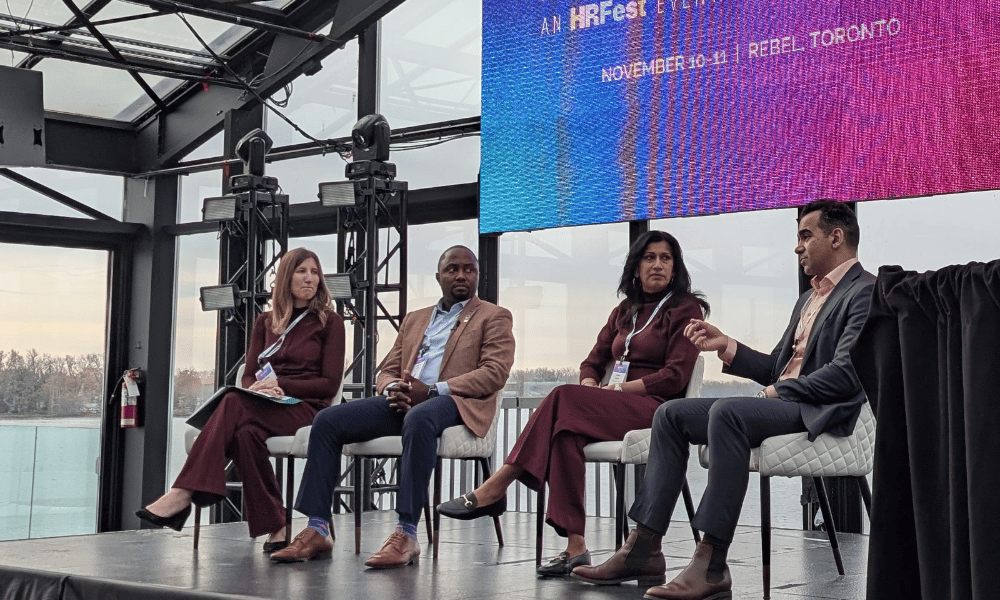
I attended a few sessions in between interviews and was impressed by the candour and expertise shared by the HR panellists on stage. In the one on cybersecurity, for example, the experts argued that controls only work if people follow them, which makes cyber a culture problem as much as a tech one.
They also said the biggest insider risk is well-meaning employees, not malicious ones, as people take shortcuts to get work done, like pasting sensitive data into AI tools, sharing credentials, or giving AI agents broad permissions.
And in a Nov. 10 session on the employee value proposition (EVP), Cannex Financial’s Margot Perlmutter said overpromising leads to a disconnect and turnover. The company tells candidates upfront that it pays around the 50th percentile and has no corporate ladder, but offers above-average benefits and direct access to the C-suite, she said.
Plus, flexibility and autonomy are what employees value most, according to Sania Sanzgiri of Neo Performance Materials. The company has no formal sick-day policy and trusts people to take time off when needed, and scored 4.5 out of 5 on an engagement question about how employees do their work.
Once again, HRFest Canada provided plenty of insights, and we hope you’ll join us next year as HR professionals face a new set of challenges!