VP of HR Katrina Stevens on acquisitions, engagement and a new people strategy at Pinchin as HR faces challenging times
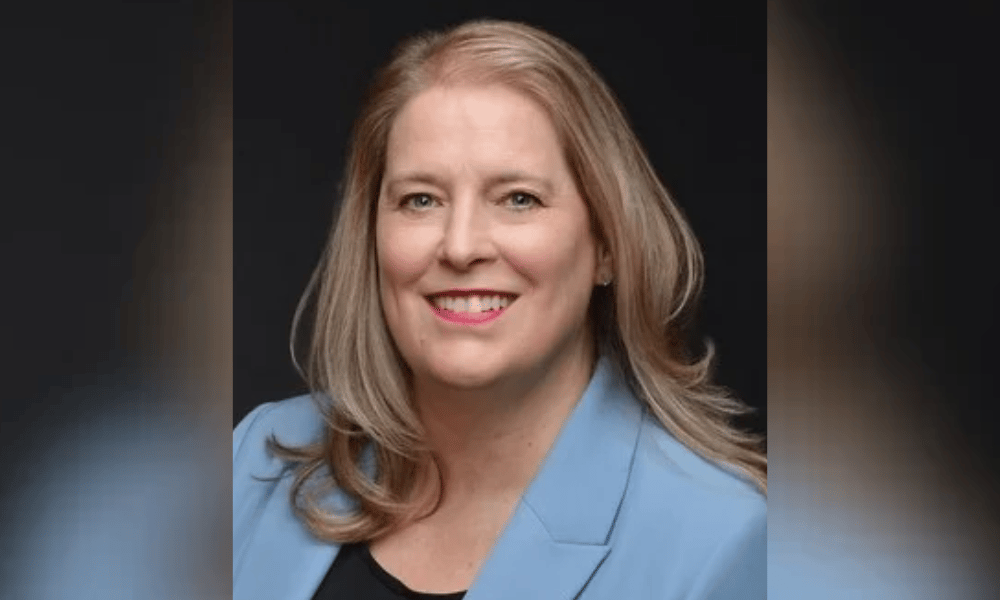
Katrina Stevens has a message for the rest of Pinchin: stay tuned.
Since she joined the environmental and engineering consulting firm as vice-president of human resources in March, the people and culture (P&C) team has been listening to leaders and employees in both a formal and informal way.
That means asking, “What are pain points, what’s a priority to them, what [would they] like to see from the P&C team, what needs a little more scrutiny?” she says.
“And then also with the employees: What are they feeling? What are they wanting from their experience in working at Pinchin?”
That listening is driving a people and culture strategy, set to launch in the new year, which hasn’t been done for some time at Pinchin, according to Stevens.
“We’ve got support at the leadership level,” she says. “So, we’re excited to be able to tell the rest of the business ‘Stay tuned, it’s coming.’”
Career growth at Pinchin
A big part of the strategy is career growth. Some employees are more interested in driving business results, while others are “completely focused on the science of what it is that we bring to our clients,” says Stevens. The goal is to show both groups they have “a menu of options” and their entire career can be satisfied at a place like Pinchin.
Employees are already seeing results, she says, with internal movement and promotions approaching 10 per cent.
“They’re seeing actual proof of ‘Hey, Sue was in job A at the beginning of the year, then got put on a stretch project here, and then by the end of the year, got elevated into that role.’”
Leadership’s focus on people was part of what drew Stevens to the company. Pinchin’s strategy to 2030 has only two tenets, she says, and one involves people.
“When the entire business goes through a really important exercise, right from the ground up, of defining the strategy, and people is one half of the equation, you have to know, walking into a VP HR role, that it’s not going to be that hard of a sell,” she says. “It’s more about timing, execution, priority — how do you sort all that out?”
Taking an HR generalist path
Stevens says she got into HR because of a crisis in her first year of university.
“[I realized] I absolutely would hate teaching because I got myself in a classroom situation and realized how isolating it was, how demanding it was, and furiously sought out career options that went to my academic strengths,” she says.
“My love of legislation and law and history and an appetite for business kind of all combined together to find what was then called the Industrial Relations Program at U of T.”
What kept Stevens in the field was the generalist path.
“I am just dangerous enough to understand each aspect of the various areas of expertise that you can have in human resources — the legislative components, the total rewards, the technology — so that I can juggle things, because I love the absolute variety of it,” she says.
“That’s what gets me up every day: we as HR people can make things better — by a lot.”
People as the product
One of Stevens’ first roles was at a company doing leading-edge software and hardware engineering for rail systems.
“We hired lots of ex-NASA, ex-Canadarm people,” she says. “I get really entranced and enchanted with smart people.”
Over time, Stevens gravitated to professional services, where people were the product, she says. That included two law firms, Osler, Hoskin & Harcourt and Miller Thomson, along with architecture and engineering firms B+H Architects and IBI Group.
“Whether it’s architecture or legal, it’s about billing your expertise direct to the client,” she says. “The human resources systems and programs are really bent in a particular way when you’re working in a partnership model or in a model where time is the product.”
In some ways, that makes HR an easier sell, according to Stevens.
“When you’re taking money out of somebody’s wallet, it keeps you very honest as an HR executive and a leader to say, ‘I know this is going to make your life better,’” she says.
“I can be extremely pragmatic… It’s about taking that strategy of the business and showing with action how you get things done, and done faster, more efficiently, and driving results.”
Acquisition best practices
Along the way, Stevens gained considerable acquisition experience from both ADP and IBI Group, where she was global director of HR from 2018 to 2022.
The main lesson: get involved early. “You have to take certain steps to prove your credibility and your worth about why you should be in the room,” she says.
“Even when the organization is looking at the list of potential acquisitions, the value of the HR function in that phase is almost unquantifiable, because culture gets overlooked, as we know.”
A key person list and knowing “the value of the deal” are critical, says Stevens, citing her involvement in nine acquisitions over roughly 10 months at IBI.
“We became like a machine and learned from every acquisition,” she says. “[It’s about] bringing those people in in a meaningful way that really counted, so that they understood that they were better off being part of our organization than staying the way they were.”
That meant positioning people, using buddy programs, and having a very structured change management and communications plan, according to Stevens.
“It’s really making it real for those new employees and then proving it fast, having exemplars to stand up.”
‘Virtuous cycle’ for engagement
At Pinchin, Stevens reports to the chief people officer. The company has just over 1,000 employees in two countries, she says.
She says her current employer is “very bought into understanding how employees are feeling and listening in a very impactful way” — but employee engagement is not just an HR program.
“It has to be owned by the business for it to really, truly succeed,” she says. “It’s a bit like a healthy lifestyle. It’s the consistency that drives stable and powerful results, even though it’s hard and you want to slip and eat the bag of chips sometimes.”
That “virtuous cycle” means doing a survey, sharing the results, creating action plans, involving people, hosting focus groups, and communicating back.
“I started my career, I’m not embarrassed to say, 30 years ago. And this business model doesn’t die for a reason,” she says. “It’s not just Richard Branson and Virgin Records who understood happy employees, happy clients, happy financials — industry itself understands that.”
‘There’s a lot to be worried about’
However, these are challenging times, which doesn’t make for an easy job, according to Stevens.
“If you’re an HR person in Canada and around the globe right now, there’s a lot to be worried about,” she says.
“Aside from the sociopolitical environment, it’s about creating a place of safety and stability and why people should choose with their hearts and minds to come to your employer every day.”
Employee retention continues to be a challenge, she says, and turnover tends to run even higher in professional services.
That makes employer brand more critical, along with “creating a compelling story for the people who are already here about giving their best, giving their extra discretionary effort to propel the purpose of the company.”
She points to Pinchin’s work in air quality and remediation, and a growing insurance business with same-day responsiveness.
“You have to really have people that buy into the absolute purpose and that sort of discretionary, almost emotional connection that they have,” she says. “With everything that’s going on in society right now, there’s so much polarization. That connectivity becomes even more critical.”
Caution with new tech
For the coming year, Stevens is focused on the employee experience.
“We’ll be focusing on looking at some of the things that we can make easier for the employees to interact [with] and get what they need so they can go on to their jobs,” she says. “We’ll be focusing a lot on process optimization, continuing automation and going even faster for the business.”
Not surprisingly, that includes AI.
“The team uses all the tools available to them, including Copilot, to bring the best to bear when we’re acting in an advisory capacity with the business,” she says.
However, that also involves considerable caution, according to Stevens.
“A lot of the conversation that we have is being mindful to apply critical thinking and being careful with our sources.”
She calls herself “a huge devotee” of futurist Sinead Bovell, and she attended an AI program at the University of Waterloo “to understand the precipice of this industrial revolution we’re facing and the safeguards that are needed.”
Those safeguards “seem to be absent” across the industry in general, says Stevens.
“I’m proud to say that my team are mindful of that in the delivery of their work.”